Travel is an experience that should be defined by discovery and ease, yet for too long, staying connected abroad has been a headache of logistics. In the past, landing in a new country meant frantically searching for an airport kiosk to buy a physical SIM card, trying to communicate in a foreign language to set it up, or—even worse—giving in to the exorbitant, hidden costs of traditional international roaming. Recently, however, travel eSIMs have revolutionized the way we roam by allowing us to purchase digital data plans instantly. Motorola is now taking this convenience to the next level by integrating this technology directly into its ecosystem, essentially turning your smartphone into an all-purpose travel companion that is ready to connect the moment your plane touches the tarmac.
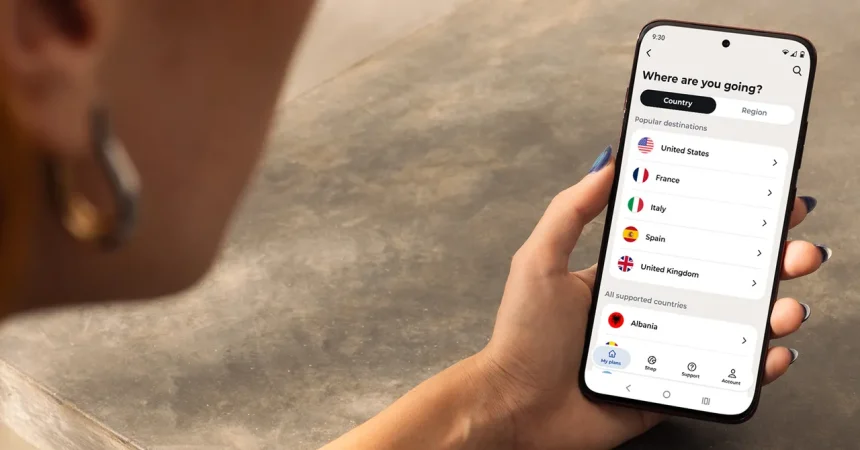
The heart of this new development is an app called “Global Connect,” which serves as the bridge between your Motorola device and high-speed data networks globally. While it currently requires a download from the Google Play Store, Motorola’s vision for the future is to have this functionality baked directly into the phone’s operating system from day one. What is truly notable is the inclusivity of this move; instead of restricting this ease of use to their top-tier, luxury folding phones, Motorola is making it available across their entire range of eSIM-capable devices, including budget-friendly models like the Moto G Play. While the rollout is currently focused on select Latin American markets, the company has ambitious plans to expand into the UK, Germany, and the broader European region in the coming weeks.
At its core, this service is designed to remove the friction from international travel. Powered by the infrastructure firm Gigs, Global Connect allows users to purchase and manage their data entirely within a Motorola-branded interface. It simplifies the user experience significantly, effectively hiding the complex backend of telecom negotiations and instead offering a straightforward, pay-as-you-go model. Because these are data-only plans, they bypass the need for traditional phone numbers and expensive voice roaming. For most modern travelers, this is hardly a drawback; services like WhatsApp, FaceTime, and FaceTime Audio have become the standard for keeping in touch, making traditional cellular calls almost obsolete when you have a reliable data connection.
Industry experts emphasize that moves like this are a direct, consumer-friendly response to the outdated pricing models of legacy carriers. For years, major network operators have leveraged their roaming partnerships to charge travelers astronomical premiums, often providing half the data for double the cost of what an eSIM provider offers. By bringing this technology in-house, Motorola isn’t just selling phones; they are offering a value-added service that protects their customers’ wallets. As Sidhhant Cally from Counterpoint Research points out, the shift to digital eSIMs has been driven by the sheer logic of cost-efficiency and the desire to save time. It is a win-win: users get cheaper, seamless connectivity, and they get it without the stress of managing physical hardware.
To encourage adoption, Motorola is offering an enticing incentive: a free 1GB data trial for new users entering the ecosystem. Once that trial is exhausted, the pricing structure is remarkably aggressive, with plans starting at just $3 for 1GB over a 30-day period. Because the service spans over 160 countries, a frequent traveler can keep the same digital profile for subsequent trips, moving away from the era of having to set up a new SIM card for every single destination. According to Sudhir Chadaga of Motorola, the goal is simple subtraction—specifically, the subtraction of the anxiety that usually accompanies international travel. By eliminating the hurdles of finding a connection, they are letting travelers focus on the destination rather than the device.
Ultimately, this integration marks a turning point in how we view the hardware in our pockets. We have moved beyond the days where smartphones were merely containers for apps; they are now becoming essential travel gear that proactively solves problems before they arise. While competitors have flirted with similar concepts in the past, Motorola’s commitment to weaving this feature into the very fabric of their diverse product line shows a clear understanding of what the modern, global consumer actually wants. As the service continues to expand beyond its current footprint, it will likely set a new standard for smartphone manufacturers, pushing the industry toward a future where “roaming” is no longer a word that signals frustration, but rather one that signifies freedom.