August 2026 is shaping up to be a landmark month for anyone who finds wonder in the night sky. For astronomy enthusiasts and casual observers alike, the calendar is packed with a rare convergence of celestial events that promise to turn the heavens into a theater of light and movement. Because these phenomena are largely visible to the naked eye, you don’t need an expensive telescope or a degree in astrophysics to enjoy the show—just a clear patch of sky, a bit of patience, and a reliable weather app. As we look toward the middle of the month, the cosmos is aligning to provide a display that reminds us just how dynamic and beautiful our universe truly is.
The magic begins in earnest with the Perseid meteor shower, long considered the crown jewel of annual meteor displays. On the night of August 12, Earth will pass through the debris trail of Comet 109P/Swift-Tuttle, resulting in a flurry of “shooting stars” as these ancient particles burn up in our atmosphere. This particular year is especially exciting because the peak coincides with a new moon, leaving the night sky pitch-black and free from lunar glare. While the meteors will appear to originate from the constellation Perseus, they will dance across every corner of the canopy above. It’s the perfect excuse to grab a blanket, head away from the city lights, and spend the early hours of August 13 looking up in quiet anticipation.
Just as the meteor shower provides a rhythmic dance of light, the daytime sky on August 12 will offer an even more profound spectacle: a total solar eclipse. This is a rare, life-altering event where the moon slips perfectly in front of the sun, casting a fleeting shadow across the Earth. For those fortunate enough to be in the path of totality—which slices through parts of Iceland, Greenland, Portugal, and Spain—the day will turn into twilight at sunset. For the Iberian Peninsula, this is a historic moment, as it will be their first total solar eclipse in over a century. For the rest of the world, while the sun won’t disappear entirely, the event serves as a powerful reminder of the intricate mechanical dance of our solar system, with agencies like NASA providing live streams to ensure no one misses the grandeur.
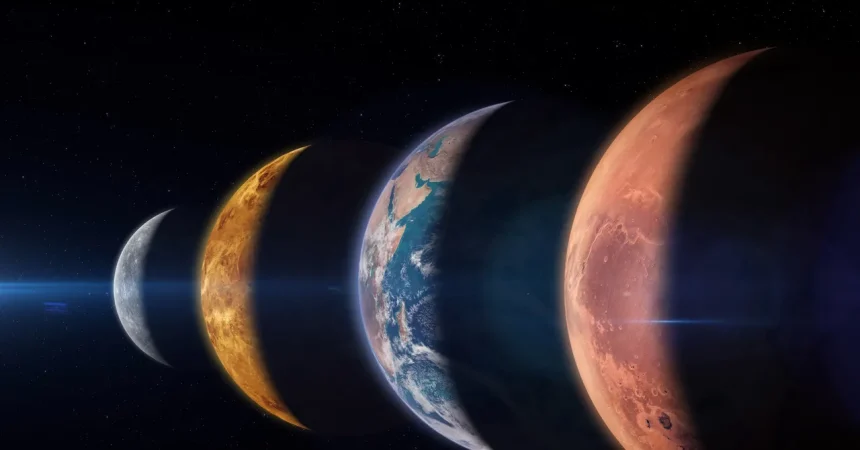
As if a meteor shower and a solar eclipse weren’t enough to fill a single day, the early morning of August 12 holds a hidden alignment of six planets: Jupiter, Mercury, Mars, Uranus, Saturn, and Neptune. This planetary parade creates a rare, graceful line across the sky just before the sun begins to rise. While the outer giants like Uranus and Neptune remain shy to the naked eye, requiring a telescope to truly appreciate, the inner planets—Mercury, Mars, and Saturn—should be visible as steady, brilliant points of light near the horizon. It is a subtle, quiet event, but one that rewards those who are willing to wake up before dawn to witness the planets gathered together in their celestial formation.
The excitement of August doesn’t end with the mid-month rush; the final act arrives on August 27 with a partial lunar eclipse. Unlike the solar eclipse, which demands specialized eye protection and a specific travel itinerary, this lunar event is a more accessible, leisurely affair. Nearly 96 percent of the moon’s disk will be obscured as it passes through the Earth’s shadow, creating a dramatic, ruddy spectacle visible across almost the entire Western Hemisphere, from the frozen reaches of Canada down to the southern tip of Argentina. Because you don’t need any gear to watch the moon change, it is the perfect event for a family night out or a quiet moment of reflection under the vast, shadowed lunar glow.
Ultimately, August 2026 invites us to step outside, disconnect from our screens, and reconnect with the vastness above. Whether it is the streak of a meteor, the sudden dark of a total eclipse, or the slow, rhythmic movement of the planets, these events offer a sense of perspective that is increasingly rare in our fast-paced world. By taking the time to track these occurrences, we are reminded that we live on a vibrant planet within a cosmic neighborhood that is always active and full of wonder. So, mark your calendars, find your favorite dark-sky spot, and prepare to be humbled by the sheer, beautiful scale of the universe during this unforgettable month.