Paragraph 1
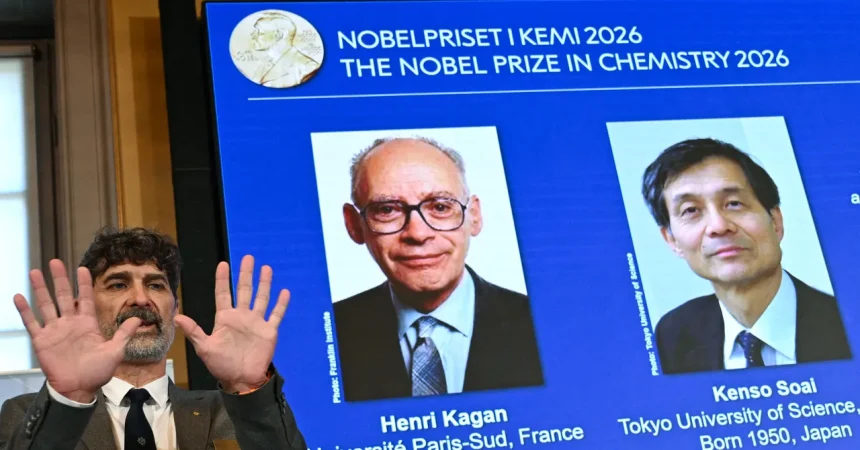
Imagine looking at your own hands. They are nearly identical, and yet no matter how you twist or turn them, you cannot place your left hand into a right-handed glove without discomfort. This strange kinship between mirror-image forms runs far deeper than gloves and hands. It reaches into the very chemistry of life. Most of the molecules that make up living organisms come in two versions that are mirror images of each other, just like your two hands. Chemists call this property chirality, and each version is known as an enantiomer. The mystery that puzzled scientists for more than a century is this: living nature almost always uses only one of the two mirror-image forms. Amino acids in our proteins are overwhelmingly left-handed, while the sugars in our DNA and RNA are overwhelmingly right-handed. This selective preference is known as homochirality, and it is so consistent that it seems to be a silent rule written into the fabric of life. Why should nature have chosen one hand over the other? Why is there no balanced coexistence of both forms? In 2026, the Nobel Prize in Chemistry was awarded to Henri Kagan and Kensō Soai for cracking this puzzle wide open. Their work did not simply explain the origin of nature’s chemical asymmetry. More importantly, they discovered how to bend this asymmetry to human will, allowing chemists to design reactions that produce the exact version of a molecule they need. This breakthrough has enormous implications for pharmaceuticals, materials science, and any field where molecular shape determines function. The Nobel Committee’s announcement described their achievement as solving the enigma of nature’s chemical asymmetry. But beneath that neat phrase lies a series of brilliant experiments, decades of patient study, and a profound realization: that tiny imbalances in chemistry can snowball into overwhelming outcomes, and that a molecule’s handedness can mean the difference between a medicine that heals and a poison that harms.
Paragraph 2
To understand the importance of Kagan and Soai’s work, it helps to slow down and appreciate what chirality actually means. A molecule is chiral if its mirror image cannot be superimposed upon it, just as a left hand cannot be superimposed on a right hand. The two forms are called enantiomers. Their physical properties are almost identical: they boil at the same temperature, dissolve in the same solvents, and have the same atomic composition. But when they interact with other chiral objects, such as enzymes or receptors in the human body, they can behave completely differently. The Nobel Committee offered a simple and memorable analogy: imagine a locksmith who makes two keys that are mirror images of each other. Only one of those keys will fit the lock. If a customer tries to use the other key, the lock might jam or be damaged. This is exactly what happens when a drug is made in both chiral versions, and one is meant to act while the other is not. In the development of new medicines, many of which are built from amino acids, sugars, or other chiral starting materials, the presence of the wrong enantiomer can cause serious harm. One version might cure a disease, while its mirror image could cause side effects, or even interfere with the healing process. The problem is that ordinary chemical synthesis often produces a mixture containing equal amounts of both forms. This is like getting fifty left-handed keys and fifty right-handed keys when you only needed fifty right-handed ones. For decades, chemists struggled to control which form their reactions generated. They could not simply ask nature to be more selective, because nature’s own selectivity remained mysterious. Kagan and Soai’s Nobel-winning research arose from exactly this frustration: scientists wanted to produce molecules with a specific handedness, but the fundamental rules that allowed nature to achieve this feat seemed elusive. The key to solving the problem was not merely finding a better catalyst, but understanding how a tiny initial preference could be amplified so powerfully that one enantiomer essentially crowds out the other. This idea, once understood, transformed the way chemists think about asymmetry and opened the door to designing reactions that reliably produce the desired form.
Paragraph 3
The story of chirality is as old as modern chemistry itself, and it begins with a curious observation made by the French scientist Louis Pasteur in the nineteenth century. Pasteur noticed that certain crystals of tartaric acid occurred in two forms that were mirror images of each other. More surprisingly, when these two forms were exposed to bacteria, they reacted very differently. One form was consumed by the microorganisms, while the other was left untouched. This was one of the first hints that living systems could distinguish between enantiomers, and that biological chemistry is not indifferent to handedness. Pasteur’s discovery was fascinating, but it raised more questions than it answered. Why did bacteria favor one form? Could this preference be recreated in a laboratory flask? For many years, researchers tried to repeat nature’s selectivity by conducting chemical reactions that might produce more of one enantiomer than the other. Their early attempts, however, produced equal amounts of both forms. No matter how carefully they designed their experiments, the result was always a fifty-fifty mixture, a perfect balance that gave no clue about how life broke the symmetry. At the beginning of the twentieth century, a German chemist named Willy Marckwald made a crucial advance. He designed an asymmetric reaction that was capable of producing a slightly greater amount of one enantiomer than the other. He did this by using a chiral catalyst, a substance that could speed up a chemical reaction without being consumed and, at the same time, favor the formation of one particular hand of molecule. This was a remarkable achievement, but the effect was modest. The ratio between the two versions changed only slightly, nowhere near the near-perfect selectivity seen in nature. It was as if Marckwald had managed to tilt the scales by a gram, while nature seemed to tip them by a ton. The challenge, then, was not just to create a small preference, but to find a way to amplify that preference until it became overwhelming. This challenge would require both new theories and bold experiments, and it would eventually lead to the work for which Kagan and Soai were honored.
Paragraph 4
The theoretical foundation for solving this problem came from an unexpected place: the world of physics. In 1953, a theoretical physicist named Charles Frank proposed a mathematical model that outlined the conditions necessary for homochirality to emerge spontaneously. Frank argued that three ingredients were needed. First, there had to be an asymmetric reaction that favored one of the two enantiomers, even if only slightly. Second, that small imbalance had to be amplified, somehow magnified until it became dominant. Third, and most intriguingly, the reaction itself had to produce the catalyst that drove it forward. This last property is called autocatalysis, and it creates a kind of positive feedback loop. Imagine a small crowd of people standing in a square, with one person starting to sing a song. If the others begin to join in, and if the more people who sing, the more attractive it becomes for others to sing, then within minutes the whole crowd is singing the same tune. The initial preference for that tune may have been tiny, but the amplification made it overwhelming. In chemistry, autocatalysis works in a similar way: a reaction produces a substance that accelerates the same reaction, and when that substance happens to favor one molecular shape, its advantage grows at an ever-increasing rate. Eventually, one enantiomer takes over almost completely. Frank’s model was elegant and powerful, but it remained theoretical for decades. It was Henri Kagan who began to turn these ideas into practical chemistry. Starting in the early 1980s, Kagan focused on refining asymmetric reactions by studying the behavior of catalysts in exquisite detail. At that time, scientists generally used catalysts that combined a metal atom, which served as the engine of the reaction, with a chiral molecule, which acted as a steering device. Most researchers assumed that if you used a mixture containing equal amounts of the two versions of that chiral steering molecule, the results would also be balanced. Kagan decided to test this assumption, and what he found surprised everyone. His experiments revealed that the relationship between the chiral catalyst and the product was not as straightforward as expected. Under certain conditions, even a tiny deviation from a balanced mixture in the catalyst could lead to a much larger imbalance in the product. This was the first hint that amplification of chirality was not only theoretically possible but could be observed in real chemical systems. Kagan’s careful work laid the foundation for the final breakthrough.
Paragraph 5
The final piece of the puzzle came from the Japanese chemist Kensō Soai, who performed a series of experiments that stunned the chemical community. Soai took the concept of autocatalysis and combined it with asymmetric synthesis in a way that had never been done before. He designed a reaction in which the product molecule itself acted as a chiral catalyst for its own formation. This meant that once even a tiny amount of one enantiomer was created, it would help create more of itself, and then those new molecules would help create even more, in a self-reinforcing cycle. Soai’s reaction began with a mixture that had only a minuscule imbalance between the two enantiomers, an imbalance so small that it would normally be considered negligible. Yet, because of autocatalysis, that tiny preference was amplified to an astonishing degree. The reaction did not simply produce more of the favored product; it produced almost exclusively that product, with the other form almost completely absent. This was a direct demonstration of Frank’s theoretical model, and it showed that homochirality could emerge spontaneously from a nearly balanced starting point. Soai’s breakthrough was not just a laboratory curiosity. It provided a plausible explanation for how life itself might have begun with a preference for one molecular hand. In the prebiotic world, perhaps a random fluctuation created a tiny excess of one enantiomer somewhere on Earth. Once that excess existed, autocatalytic reactions could have amplified it over and over until the entire biosphere came to share the same handedness. What was once a philosophical mystery became an experimentally supported insight. For chemists, the practical implications were immediate. If a reaction could be designed so that the product reinforces itself, then a very small amount of a chiral catalyst, or even a small seed of the desired enantiomer, could be used to drive the synthesis in the intended direction. This made it possible to produce pharmaceuticals with far greater precision, reducing the risk of harmful side effects caused by the wrong enantiomer. Soai’s discovery, built on Kagan’s earlier work, turned the dream of controlled asymmetric synthesis from a hope into a reality.
Paragraph 6
The work of Henri Kagan and Kensō Soai is a reminder that the most profound discoveries in chemistry are not always about creating new materials from scratch. Sometimes they are about understanding the hidden rules that nature has followed all along. For more than a century, scientists looked at life’s overwhelming preference for one molecular shape and wondered why. Pasteur saw the mystery; Marckwald glimpsed the first solution; Frank described the theoretical path; Kagan demonstrated that amplification was possible in practice; and Soai proved that a tiny initial nudge could be magnified into near-total dominance. Together, their contributions form a complete story, one that begins with a simple observation about crystals and ends with the ability to control the handedness of molecules in a laboratory flask. This control matters enormously. In the pharmaceutical industry, many drugs are chiral, and the difference between the mirror-image forms can be the difference between a life-saving treatment and a dangerous mistake. The methods developed from Kagan and Soai’s work allow chemists to produce almost pure versions of the desired enantiomer, making medicines safer and more effective. But the significance goes beyond drugs. The same principles apply to the manufacture of agricultural chemicals, electronic materials, and advanced polymers, where molecular shape can determine whether a product is flexible or brittle, conductive or insulating, reactive or stable. More deeply, their research touches on the oldest philosophical question in chemistry: why is there something rather than nothing, and why is that something so specific in its handedness? By solving the enigma of homochirality, Kagan and Soai have shown that nature’s asymmetry is not an accident that defeated us, but a puzzle that we were capable of understanding. Their work embodies the spirit of chemistry itself: taking the seemingly chaotic and discerning the elegant order within it. The 2026 Nobel Prize in Chemistry is not merely an award for two scientists, but a celebration of human curiosity and our persistent ability to make sense of the seemingly impossible. It invites us all to be amazed by the humble fact that life, and the molecules that compose it, have a hand, and that human intelligence can now choose which hand to hold out.