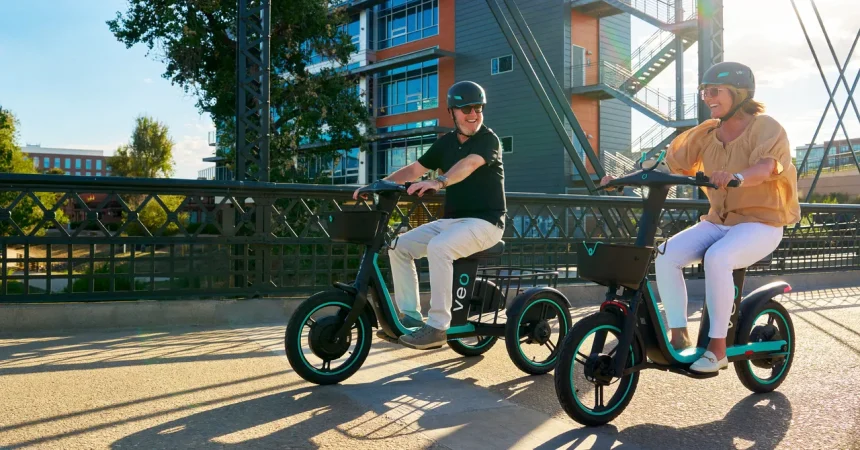
The landscape of city travel is shifting beneath our feet, as the once-familiar sight of dockless electric scooters and bicycles continues to evolve into a more diverse ecosystem. We have grown accustomed to the convenience of unlocking a ride with a quick tap on our smartphones, but until now, these rentals have largely excluded those who struggle with the physical demands of balancing on two wheels. Enter Veo, a micromobility company currently operating in roughly 60 smaller cities, which is aiming to bridge this gap. This week, during an event in Denver, the company unveiled its latest innovation: the Rover. This three-wheeled electric tricycle is designed to be as approachable and intuitive as possible, signaling a potential turning point in how we define urban transit accessibility.
At its core, the Rover operates on the same familiar premise as the e-scooters that clutter our sidewalks: you download an app, pay a small unlock fee, and hop on. However, the experience of riding is fundamentally different. Measuring just 2.5 feet wide, the Rover is intentionally engineered to slot perfectly into existing bike lanes, bypassing the need for new infrastructure and keeping users safely away from heavy car traffic. While most rental e-scooters are capped at 15 miles per hour to balance efficiency with safety, Veo has consciously limited the Rover to 10 miles per hour. This deliberate choice prioritizes the comfort and security of the rider, ensuring that the machine feels like a manageable, friendly mode of transport rather than a nerve-wracking piece of speed-focused technology.
What makes the Rover particularly intriguing, beyond its stable three-wheeled design, is its utilitarian appeal. The vehicle is powered by the same battery technology as the rest of the Veo fleet, providing a robust range of roughly 45 miles on a single charge. More importantly, it features a spacious rear cargo basket capable of hauling up to 100 pounds of groceries, work materials, or luggage. This transforms the commute from a simple point-A-to-point-B journey into a functional errand-running experience. By turning a micromobility vehicle into a small, motorized cargo hauler, Veo is effectively positioning the Rover as a legitimate car replacement for short, local trips, whether you are heading to the supermarket or navigating the final mile of your journey home.
Veo’s aggressive push into Denver is the driving force behind this rollout. Recently, the city signed an exclusive contract with the company, effectively replacing the infrastructure previously provided by industry heavyweights like Lime and Bird. As the sole provider of shared micromobility in Denver, Veo now has a powerful, high-visibility stage to demonstrate its commitment to inclusive design. While other players in the space, like Lime and Bird, have experimented with “accessibility programs” or specialized rental requests to accommodate users with different physical needs, those options often feel secondary or siloed. Veo is attempting a different approach: rather than offering an accessible vehicle as a niche service, they want the accessible vehicle to be a standard, widely available member of their general fleet.
The design philosophy behind the Rover is rooted in deep consultation with those who know the challenges of mobility best. Veo collaborated with organizations such as the Disability Mobility Initiative, the Parkinson’s Foundation, and the AARP to ensure that the tricycle wasn’t just a gimmick, but a truly usable tool for people of all ages and abilities. Because the vehicle is self-balancing, the constant anxiety of a bike tipping over or the physical strain of wrestling with a kickstand is removed. For an older demographic or those with mobility challenges, this stability is not just a luxury; it is the fundamental requirement that turns “micromobility” from an exclusive club into a public utility that actually serves the entire community.
Ultimately, this move aligns with an increasing societal expectation that private companies operating in public spaces should take on the same responsibilities as public transit providers. Just as buses and trains are built with ramps and lifts to accommodate various needs, the companies that fill our streets with rental tech are now being asked to step up. Alexander Keating, Veo’s vice president of policy and partnerships, notes that cities consider this a baseline requirement for permits. By making the Rover a central piece of their fleet, Veo is betting that the future of city transit isn’t just about making things faster or more high-tech—it’s about making things easier, safer, and open to everyone, regardless of their physical ability or the size of their grocery bag.