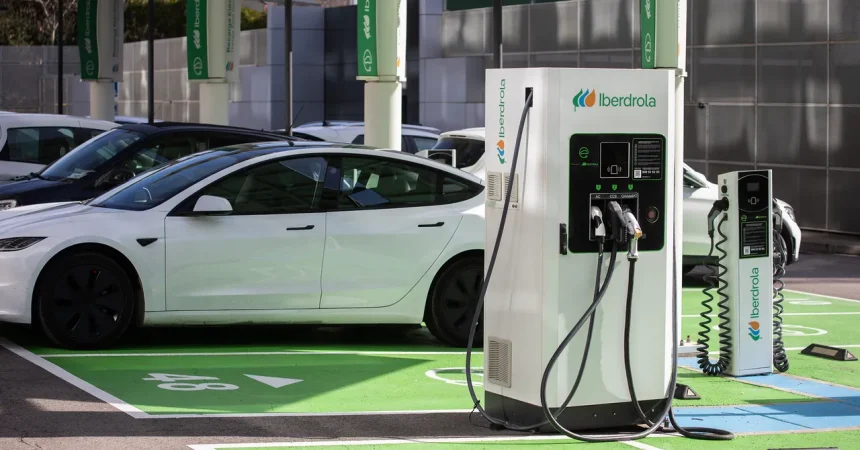
The global transition toward electric vehicles (EVs) represents one of the most significant shifts in modern transportation, promising a cleaner, more sustainable future. As millions of drivers trade combustion engines for battery-powered alternatives, the landscape of our roads is evolving rapidly to keep pace. This surge in demand has triggered a race to install charging infrastructure that is fast, accessible, and efficient. However, beneath the convenience of these roadside power stations lies a complex digital reality that researchers are only just beginning to map. While we focus on the hardware—the physical cables and glowing displays—the hidden complexity of the networks powering them has created a massive, often overlooked, digital security blind spot.
Cristina Alcaraz, a prominent infrastructure-security researcher at the University of Malaga, warns that our charging stations are becoming a double-edged sword. By integrating a vast array of physical components with deeply interconnected digital systems, these chargers have become sophisticated hubs of data. While this architecture is necessary to keep our cars charged and the energy load balanced, it also serves as a gateway for malicious actors. These vulnerabilities aren’t just minor technical glitches; they pose a genuine threat to the widespread adoption of EVs and the stability of the national electrical grids that support them. If we don’t treat charging stations as the critical infrastructure they are, we risk leaving the door wide open for systemic failures.
To address these looming threats, experts at the University of Malaga’s NICS lab have developed a forward-thinking proposal that looks to artificial intelligence for salvation. Their solution involves deploying “AI agents” directly into the charging infrastructure to act as digital sentinels. These agents are designed to be proactive rather than reactive, constantly scanning for red flags. They aren’t just looking for simple software bugs; they are built to identify everything from petty energy theft—where a user might attempt to manipulate their bill—to sophisticated, large-scale cyberattacks aimed at disrupting or even damaging the integrity of the power grid itself. By embedding intelligence into the chargers, the team aims to turn vulnerable endpoints into active defenses.
The foundation of modern EV charging is the Open Charge Point Protocol (OCPP), a standard language that allows chargers to communicate with centralized management systems. Currently, this protocol manages the intricate “choreography” of EV charging: verifying user identities, balancing electrical loads, and running technical diagnostics. While this central oversight is efficient for daily operations, it has a significant weakness. Researchers note that current monitoring methods are too sequestered, focusing only on individual network traffic or isolated local events. This “siloed” approach leaves operators blind to the broader picture, making it nearly impossible to trace where an anomaly originates or how a cascading attack might be spreading across a regional network.
This is where the power of collaborative AI comes into play. Rather than relying on a single, overwhelmed central hub, the team’s proposal utilizes a network of AI agents distributed across individual charging stations. These agents function like a neighborhood watch program; they assess their local environment, collect data on performance and security, and immediately share those observations with their peers. By communicating with nearby stations and aggregating that data, the agents build a comprehensive, contextualized map of the entire network’s health. This allows for the rapid identification of threats that would be entirely invisible to a system looking only at one charger at a time, moving us from fragmented oversight to a unified, intelligent perimeter.
Perhaps the most fascinating aspect of this research is its grounding in a mathematical framework called “opinion dynamics.” Inspired by how humans exchange information and reach consensus within social networks, this approach allows the AI agents to “negotiate” the validity of the data they see. If one station reports a potential breach, the neighboring agents compare their own observations and gradually adjust their assessments to reach a collective, evidence-based conclusion. Published in the International Journal of Critical Infrastructure Protection, this study suggests that by modeling our machines after the way humans build trust and agreement, we can create more reliable, resilient, and secure energy networks. It is a compelling reminder that as our technology grows more complex, the best solutions may lie in mastering the art of coordination.