Attending Vivatech in Paris earlier this month felt like stepping into an existential debate about the future of human intelligence. The atmosphere was charged with a palpable anxiety: a widespread fear that the world is sleepwalking into an era where every decision, nuance, and cultural expression is filtered through American AI models built on specifically American values. While the United States and China are currently locked in a high-stakes arms race for technological supremacy, France and Germany—nations that rightfully pride themselves on world-class engineering—feel increasingly like bystanders in their own technological evolution. Throughout the conference, the term “sovereignty” was tossed around so frequently that it became a running joke; yet, behind the repetition lay a desperate desire to reclaim agency in a digital landscape that currently feels like an American monopoly.
Having covered the tech industry for decades, I’ve seen countless countries attempt to manufacture their own “Silicon Valley” by pouring money into startups and hoping for a miracle. The reality is that the unique, chaotic, and high-risk ecosystem that birthed giants like Google and OpenAI is incredibly difficult to replicate. Currently, the math is sobering: the capital flowing into American AI ventures dwarfs the investment in Europe by astronomical margins. To put it into perspective, a single funding round for a company like Anthropic—totaling roughly $65 billion—surpasses the total annual investment seen across the entire European and UK AI startup scenes combined. It is a David versus Goliath struggle, yet European leaders are not throwing in the towel; they are looking for a shift in the wind that might just work in their favor.
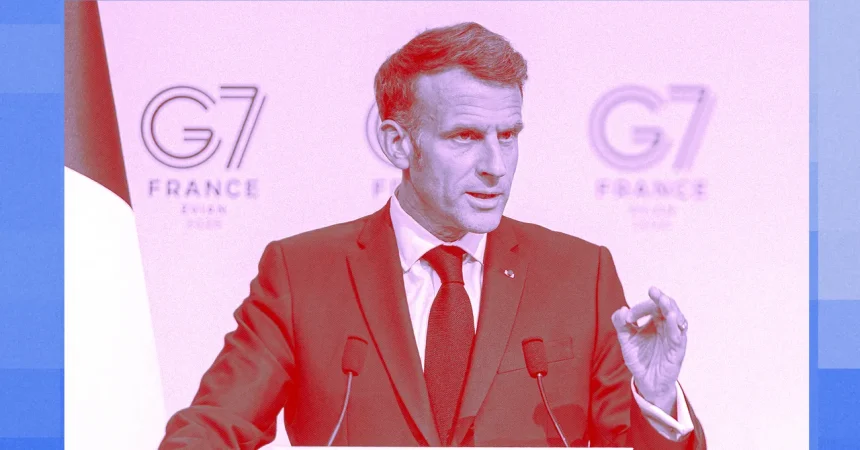
Interestingly, much of the optimism at Vivatech was tied to a rather unpredictable wild card: the potential for a shift in American political leadership, specifically the prospect of a Donald Trump presidency. While it sounds paradoxical, many European tech leaders view the potential for American isolationism as a catalyst that could force Europe to finally unite. Simultaneously, the G7 summit held nearby in Evian provided a stage for French President Emmanuel Macron to issue a stern ultimatum, warning that if the U.S. remains committed to a brand of “nationalistic AI,” Europe must be prepared to go it alone. Leaders like Cohere CEO Aidan Gomez echoed this sentiment, emphasizing that the global democratic community is dangerously close to lacking a legitimate, non-American alternative in the AI arms race.
For Europe to successfully carve out a second-best AI position, the transformation required is monumental. It is not just about building better software; it is about fundamentally reforming a continental culture that has historically stifled innovation with layers of red tape and a paralyzing fear of failure. To compete, Europe would need to harmonize the goals of over 20 separate nations, a feat that is notoriously difficult, and pivot from a risk-averse mindset to a bold, “moonshot” mentality. However, there are signs of movement. Macron’s “Choose France” initiative has already successfully courted massive pledges, including a staggering €75 billion commitment from Softbank to build out the necessary data center infrastructure. While these are still subject to the usual bureaucratic hurdles, the scale of the commitment is unprecedented.
The current strategy among European powerhouses appears to be one of collaboration rather than isolation. Companies like Cohere are actively weaving a web of partnerships, working with firms like Germany’s Aleph Alpha to share engineering talent and infrastructure. This “sovereign-first” approach is mirrored by similar moves in Spain, where tech leaders are signing inter-governmental agreements to ensure their local industries are not left behind. The idea is to move away from the “go-it-alone” model and toward a shared European architecture, one that prioritizes local industrial needs and collaborative growth rather than relying on a singular, external provider that may or may not have the best interests of the European public at heart.
Perhaps the most compelling vision of the future comes from AI pioneer Yann LeCun, whose “Project Tapestry” proposes a daring alternative to proprietary closed-source models. LeCun argues that instead of trying to win a game of corporate scale, governments should join forces to create an open-source, frontier foundation model. By providing this as a public, global resource, businesses and governments could build their own specialized assistants tailored to their specific languages, cultural nuances, and political values. It is a democratic ideal for a digital age: a shared foundation that preserves local identity while utilizing the full power of modern machine learning. Whether Europe can bridge the gap from debate to execution remains to be seen, but the urgency is finally starting to match the ambition.