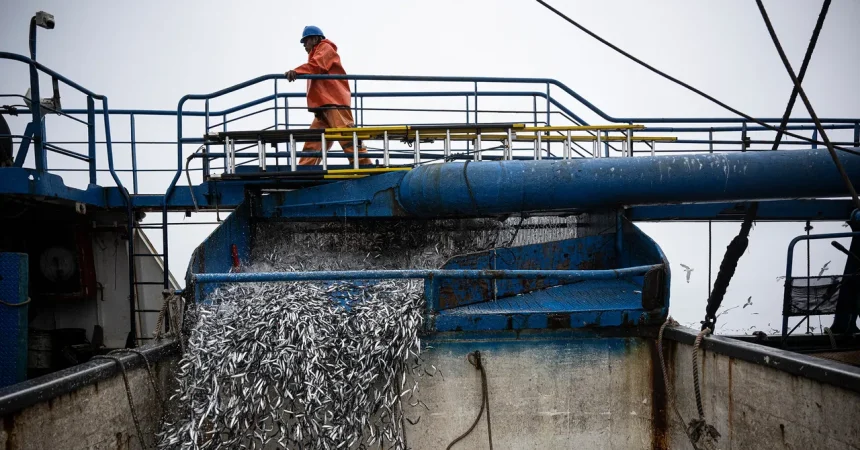
The dawn of a “super” El Niño has sent shockwaves through the global fishing industry, creating a volatile landscape where the ocean’s bounty seems to be shifting overnight. While we aren’t even a month into this atmospheric event, we are already witnessing a dramatic reconfiguration of traditional maritime economies. In Peru, the government has been forced to pull the plug on the anchovy season—a move that impacts not just local livelihoods, but global supplies of fish oil and animal feed. On the other side of the globe, India is steeling itself for a lackluster harvest of Indian mackerel, while off the coast of Southern California, the unexpected arrival of warm water has triggered a surprising gold rush for tuna anglers. This contrast highlights the unpredictable nature of our climate, where one region’s catastrophe becomes an unlikely windfall for another, leaving those who depend on the sea in a state of constant, anxiety-ridden adjustment.
For those who make their living on the water, this instability is becoming an exhausting new normal. Fishermen are increasingly forced to move away from specialized practices and toward seasonal diversification, constantly toggling between different species to keep their businesses afloat. It is a precarious way to survive, and as experts like Juan Carlos Sueiro of Oceana Peru point out, this is a trend with no end in sight. With climate change fueling the intensity and frequency of these El Niño cycles, the fragility of our marine food systems is being laid bare. The apprehension among fishing communities is palpable; they are finding that the wisdom passed down through generations is no longer a reliable guide in an ocean that is rapidly and violently changing its behavior.
To understand why this is happening, we have to look at the elegant, fragile clockwork of the Pacific Ocean. Under normal circumstances, trade winds drive the ocean’s gears by pushing warm surface water toward Asia, which allows cold, nutrient-rich water to surge upward from the deep—a process essential to the life cycles of countless marine organisms. When an El Niño hits, these trade winds falter and stall. Without that crucial “upwelling” of cold water, the nutrient-dense basis of the food chain vanishes. Species like the anchovy, which rely on the algae supported by these nutrients, find themselves starving or forced into deeper, cooler waters to survive. Once they descend beyond a certain depth, they become essentially invisible to traditional fishing methods, effectively shrinking the harvestable population while fueling a deeper, harder battle for survival.
Conversely, this same disruption creates a playground for warm-water species that usually prefer to steer clear of these once-chilly coasts. As the Pacific warms, fish like skipjack tuna are drawn toward the Americas, venturing into territories they would typically avoid. For the localized commercial and recreational fleets in places like Southern California, this creates an unnatural, temporary abundance that can mask the underlying ecological disruption. It is a strange irony of the climate crisis: while some find their nets suddenly brimming with unexpected guests, others are counting the empty spaces where their primary catch used to flourish. It turns the entire global fishing industry into a high-stakes, erratic game of musical chairs where the rules change every two to seven years.
The ripple effects of these shifts are already beginning to move from the docks to our dinner plates. When a collapse in one species occurs, such as the North American salmon becoming too lean to market—often referred to as “snakes” by fishermen—the scarcity inevitably drives up prices for consumers. In Peru, the situation is even more immediate and personal; families are already reporting that the cost of local staples like jack mackerel and corvina has doubled, forcing them to abandon seafood and pivot toward chicken as a cheaper alternative. While some commodities, such as shrimp, might become more affordable due to their population booms during an El Niño, the overall result is a chaotic fluctuation in food prices that hits vulnerable communities the hardest.
Ultimately, these disruptions serve as a sobering reminder of our deep connection to the rhythms of the planet. What began hundreds of years ago as a simple observation by Peruvian fishermen—who named the cycle after the baby Jesus because of its occurrence around Christmas—has evolved into a global economic and environmental challenge. As we grapple with the current “super” El Niño, we are seeing firsthand how quickly the ocean’s balance can be tilted. We are learning that in an era of rapid climate change, the old ways of extracting resources are increasingly at risk. For fishermen, restaurateurs, and families alike, the ocean’s new volatility is demanding a fundamental change in how we perceive and value the food that comes from the deep.