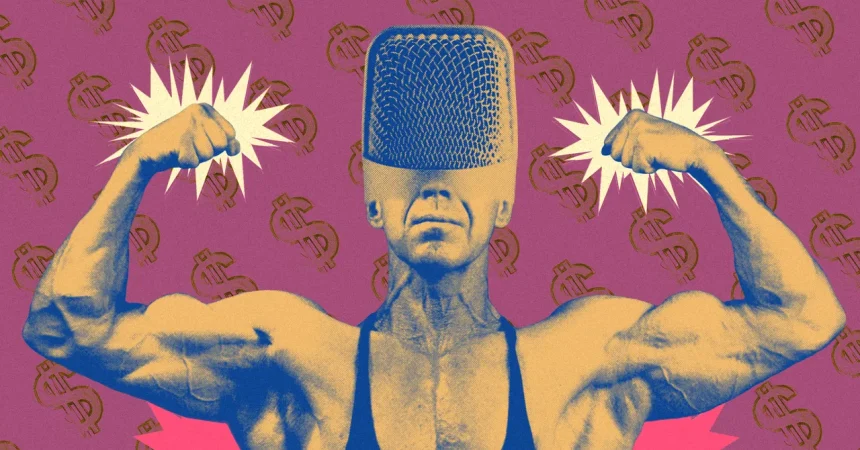
The pervasive question regarding the state of modern young men—why they seem increasingly drawn to political extremism, misogynistic rhetoric, and high-risk financial behaviors like crypto-gambling—has become a defining anxiety of our time. We see a generation struggling with profound loneliness and rising rates of undiagnosed depression, often manifesting in volatile ways. While the 2024 election saw a wave of young male support for a brand of “meathead machismo,” the political landscape remains unstable, with Gen Z men now showing signs of rapid disillusionment with the very figures they once championed. For years, the popular narrative has framed this shift as an organic, grassroots “manosphere” movement—a spontaneous right-wing rebellion fueled by a genuine cultural awakening. However, this interpretation ignores a more insidious reality: these men aren’t just forming a community; they are being harvested as customers.
A groundbreaking report titled “The Grift Economy,” produced by Reset Tech and Equimundo, strips away the facade of ideological warfare to reveal a cold, profit-driven mechanism. Rather than a political movement, the digital ecosystem targeting young men is, in essence, a sophisticated, multibillion-dollar pyramid scheme. The research suggests that “masculinity” has been transformed into a commercialized product, carefully curated and incentivized by those who benefit from keeping men in a state of perpetual agitation. This industry relies on a predatory feedback loop: it identifies a vulnerable young man looking for guidance on fitness or finances, lures him in with aspirational content, and then pivots to manufacturing a sense of victimhood that requires a paid solution.
The process of “red-pilling” is, according to the report, a masterclass in psychological exploitation. It begins by taking real, documented problems—such as economic instability and the genuine difficulty of finding success in a hyper-competitive job market—and reframing them as a deliberate, coordinated attack on men. By redirecting legitimate anxieties toward convenient scapegoats like women, immigrants, or foreign workers, bad actors manufacture a sense of shared grievance. This “manufactured victimhood” acts as the glue that holds their audience together. Once a young man feels he is part of a “brotherhood” bonded by common enemies, he becomes a prime target for the next stage of the funnel: the sale of dubious goods.
This is where the “grift” becomes industrial in scale. Influencers and digital entrepreneurs have built massive empires on the back of this manufactured insecurity, selling everything from life-coaching programs and exclusive digital clubs to unregulated supplements. Take, for instance, the controversial figure Andrew Tate, whose subscription-based “education” platform reportedly generates hundreds of millions in revenue. The report highlights that these systems are often characterized by predatory tactics: recycled information, deceptive testimonials, and “cancellation barriers” that make it nearly impossible for participants to opt out once they realize the content is subpar. It is, as the researchers note, “fraud at scale,” designed to extract wealth from those who are already struggling to find their footing in the world.
The financial scope of this industry is staggering, and it highlights why the “manosphere” is so difficult to dismantle. When top-tier streamers are pulling in tens of thousands of dollars per hour, and major podcast hosts command speaking fees exceeding $200,000, the incentive to maintain the status quo is incredibly high. These figures aren’t just commentators; they are entrepreneurs whose bottom lines depend on keeping their audience angry, isolated, and reliant on their specific brand of advice. By turning the challenges of modern manhood into a subscription service, these creators have ensured that the “culture war” is not a battle to be won, but a product to be sold repeatedly.
Ultimately, we must stop viewing the struggles of young men through a purely ideological lens and start seeing them as the victims of a predatory digital economy. These young men are being sold a false sense of belonging and a fake promise of wealth, all while their real needs—connection, economic security, and mental health support—go unmet. Until we address the algorithmic architecture that rewards those who profit from division and the economic conditions that leave men feeling discarded, the “grift economy” will continue to thrive. We need to shift the conversation from asking “What is wrong with young men?” to asking “Who is exploiting them?” because, as this research demonstrates, the crisis of the modern man is not a byproduct of his own nature—it is a profitable business model.