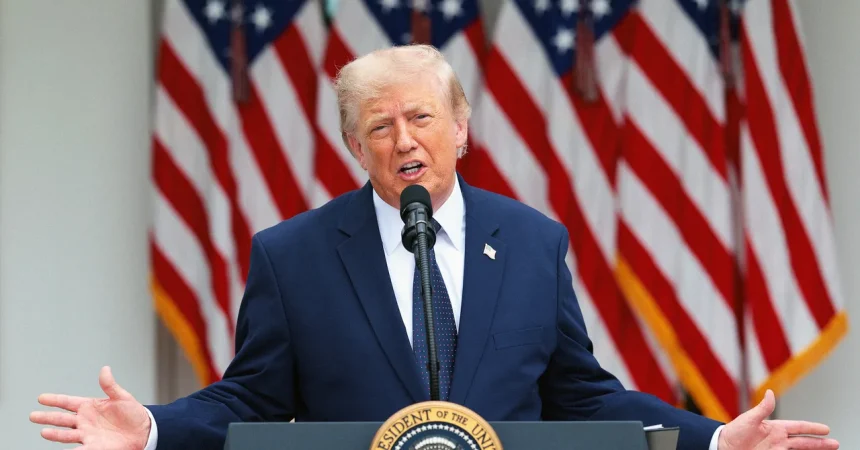
In a highly anticipated address, former President Donald Trump recently promised to unveil bombshell revelations regarding interference in the 2020 election. However, the resulting speech and accompanying documentary release fell short of the high-stakes drama his supporters expected. Instead of providing the “smoking gun” evidence he touted, the President relied on a familiar collection of sweeping claims—alleging shadowy “deep state” cover-ups, vague Chinese involvement, and the debunked narrative that non-citizens were flooding the polls. While the White House portal featured a document dump intended to validate these assertions, the files themselves lacked the hard evidence necessary to support such grave accusations, leaving many to wonder if the spectacle was more performative than substantive.
Despite the lack of tangible proof, the response from Trump’s most ardent base was electric. Rather than demanding cold, hard facts, his loyal followers framed the speech as a brilliant strategic move. Figures like Patrick Byrne and conspiracy theorist Alex Jones hailed the address as a “grand slam,” even comparing its potential impact to the release of the JFK files—ironically ignoring that those documents had already been declassified previously. For this segment of the public, the speech was not meant to be a rigorous legal or historical argument; it was a rallying cry. To them, the lack of traditional evidence was irrelevant, as the underlying narrative of a government working against the people had already been firmly established in their minds.
The discourse surrounding the speech quickly shifted from the contents of the past election toward a darker, proactive vision for the future. Whispers began circulating among prominent election-denial influencers about the potential invocation of the Insurrection Act. The theory, gaining traction on platforms like Telegram and X, suggests that Trump is “laying the predicate” to deploy the military and federal law enforcement to polling stations. By painting a picture of an election system under siege by foreign and domestic enemies, these influencers believe they are witnessing the necessary setup for an executive intervention to “save the Republic.” To these groups, the speech was not an end in itself, but the first step in a larger plan to control the outcomes of future midterms.
This reaction has deeply concerned experts who monitor the health of American democracy, who see the speech as part of a dangerous, recurring strategy. Alexandra Chandler, a veteran of the intelligence community, suggests that the White House is essentially running a “tired playbook.” By mixing cherry-picked intelligence with raw, discredited reports, the administration creates a veneer of national security urgency that serves as a pretext for potentially lawless action. According to this perspective, the goal is not to address the reality of the 2020 election, but to build a bridge toward the 2026 midterms—effectively deputizing supporters to challenge future results if they don’t like the tally.
The backlash from those directly responsible for election integrity and legal oversight was swift and blunt. State officials like Nevada’s Secretary of State Cisco Aguilar dismissed the claims as “bullshit,” while Representative Jamie Raskin labeled the speech “gibberish” and “drivel.” These critiques underscore a growing frustration among public servants who are forced to contend with a narrative that appears designed to erode public trust in the voting process. For these officials, the rhetoric isn’t just misguided; it is a direct assault on the mechanics of democracy that they are sworn to protect, regardless of their own political leanings.
Perhaps the most ironic turn in this saga came from within the administration’s own camp. John Solomon, a conservative journalist known for his sympathy to Trump’s worldviews, was brought into the fold specifically to review the very documents the White House claimed would prove interference. Yet, the findings were contradictory to the President’s public claims. Notably, the released documents included an assessment that identified Russia—not the targets Trump often points to—as the primary actor attempting to meddle in the 2020 election by specifically targeting his opponent, Joe Biden. By trying to force a narrative that wasn’t supported by his own files, the effort ultimately highlighted the disconnect between the political theater on display and the actual intelligence record.