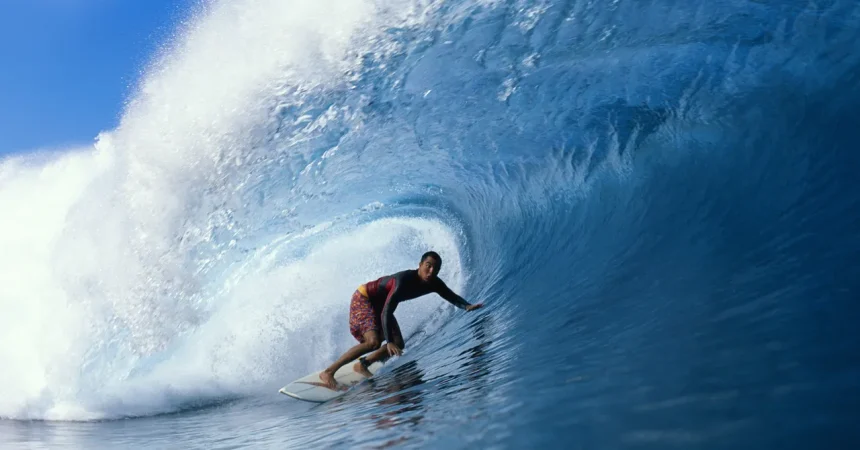
Imagine a wave that has been breaking in the same place for centuries, a slow, glassy point peeling around a headland or a hollow beach barrel thumping onto a sandbar. For surfers, such a wave is more than a thrill. It is a landmark, a companion, a reason to wake before dawn and drive down dark coastal roads. It is also, according to a sobering new study, an endangered natural phenomenon. The climate crisis is coming for some of the world’s greatest surf breaks, submerging some as sea level rises and destroying others as classic waves are crushed against coastal development. Researchers looked at dozens of famous waves protected by World Surfing Reserves, a program launched by Save the Waves Coalition in 2009, and found that more than three-quarters are at high risk because of changing tide levels, hardened shorelines, and shifting sands. The study, published in the journal Climatic Change and reported by The Guardian as part of the Climate Desk collaboration, analyzed 57 surf breaks in all but two of the 13 World Surfing Reserves, spread across eight countries. The findings are a reminder that the climate emergency is not only about heatwaves, floods, and melting ice. It is also about the quiet disappearance of the places where people go to find joy, solitude, and connection. And because surfing is a multibillion-dollar global industry, the loss of these waves would ripple far beyond the water, through the economies and identities of coastal communities that depend on them.
What makes a surf break so special? It is not just the size or power of a wave, but the way the ocean floor shapes it. A reef, a sandbar, a river mouth, or a rocky point can bend and focus swells that have traveled thousands of miles across the sea. The perfect wave is a moment of alignment: the right swell direction, the right wind, the right tide, the right depth. Change any one of these and the wave can disappear or become unrecognizable. Dan Reineman, an associate professor at California State University Channel Islands and coauthor of the study, described surf breaks as “incredibly unique oceanographic phenomena—a confluence of all these factors that fit together just right to make the wave happen—and so those processes are really sensitive.” This sensitivity is exactly why climate change is so dangerous. As the planet warms, sea level rise is changing the depth over reefs and sandbars, causing waves to break earlier, later, or not at all. More intense storms are rearranging the seabed, moving sand away from some breaks and dumping it on others. Changing rainfall patterns are altering the flow of rivers and the amount of sediment they carry to the coast. Meanwhile, human attempts to hold back the sea—sea walls, jetties, groynes, and other hardened structures—prevent beaches and dunes from shifting inland as they naturally would. The result is that waves are being squeezed between rising waters and immovable concrete. Many are losing the very conditions that made them famous, and the process is happening faster than many people realize.
The new research is notable not only for what it found but for how it was done. Instead of relying solely on satellite images and computer models, the study drew on the intimate knowledge of local surfers—people who paddle out almost every day and can notice when a sandbar has shifted by a few feet or when a wave that used to break left now breaks right. Save the Waves Coalition, which established the World Surfing Reserves program in 2009, asked these local experts to help assess the health of their home breaks. Nearly 200 surfers, scientists, and coastal managers contributed to the analysis, covering 57 surf breaks in all but two of the 13 World Surfing Reserves. The results were alarming. More than three-quarters of the assessed breaks were rated at high risk from the combined pressures of climate change and coastal development. The list includes the “bombing barrels” of Croyde Beach in North Devon, UK; the long, perfectly peeling point breaks at Noosa in Australia and Oriente Salvaje in El Salvador; and the iconic reefs of Santa Cruz, California, with names like Sewer Peak and Wind and Sea that have been part of surf lore for decades. Some of these waves are being drowned by sea level rise, while others are being ground against sea walls as beaches narrow. The researchers say that thousands of other waves outside the small network of protected reserves are probably facing similar dangers, but the WSR program offers a rare chance to study the problem in depth and to test solutions. It also gives local communities a reason to pay attention, because the waves they love are officially recognized as part of the world’s coastal heritage.
For the communities that live beside these waves, the stakes are not abstract. Surf tourism is a major economic engine, especially in rural and coastal areas that may have few other industries. When the waves are good, visitors come from around the world; they rent surfboards, book lessons, stay in hotels, eat in restaurants, and fill the car parks. Adam Hall, a cofounder of the North Devon World Surfing Reserve and one of the local surfers who contributed to the study, explained why his corner of England is so special. “North Devon is so special. We have Saunton Sands, a world-renowned longboarding wave with really long, mellow rides, and the UK’s best beach break at Croyde. We’ve got left- and right-hand point breaks and a sheltered spot for when it gets too windy and too big. Whatever you want to do, we’ve got it.” Hall also pointed out that surfing carries the local economy through the darkest months. “Surfers will come throughout the year. They fill up the pubs, restaurants, and car parks when the swells are good in January, February, and March, where if you go to any other tourist destination that doesn’t have surf, they’re dead on their knees.” In places like North Devon, the waves are not a luxury. They are the foundation of the town’s identity and survival. Surfers often describe the ocean as a church, a therapist, or a sanctuary. Losing a surf break would mean losing more than a recreational spot; it would mean losing a cultural landmark, a source of mental and physical health, and a connection to the natural world that has shaped generations of people. It would also mean losing jobs, tax revenue, and the vitality that comes when a town is known as a place where the waves are worth the trip.
Yet the study is not entirely doom and gloom. It also reveals that some coasts are better equipped to survive than others. The key difference, the researchers found, is natural space. Where beaches and dunes are allowed to move, a coastline can respond to sea level rise by shifting inland, carrying sand with it and preserving the underwater topography that creates waves. Where the shoreline has been hardened with concrete and rock, there is no room for that adjustment, and the wave breaks against an immovable object until it collapses. Reineman and his colleagues documented this pattern across the World Surfing Reserves: the more developed the coastline, the more vulnerable the surf break. Trent Hodges, a coauthor of the study and senior programs manager at Save the Waves, said the observations of local surfers should be seen as an early warning system. “Climate change will impact surf breaks all over the world in different ways, depending on their unique geographies. We learned directly from the local surfers how they are seeing their waves change. It’s a canary in the coal mine too—when a wave changes, that often means the beach is changing, and everybody enjoys the beach.” The study’s conclusion is stark: “Climate change and coastal management both have significant negative implications for the future viability of multiple surf breaks of global significance and, therefore, the myriad distinct local communities, cultures and economies they support.” In other words, the future of surfing depends not only on cutting greenhouse gas emissions but also on how we manage the coast today. Every seawall that replaces a dune, every jetty that traps sand, every development that pushes a beach against the rising sea is a decision about whether a wave will survive.
Surf breaks are not merely swimming pools with waves; they are living expressions of the planet’s complexity. They are shaped by geology and weather, by currents and storms, by the slow movement of sand and the daily rhythm of tides. They are also home to ecosystems, places of recreation, and sacred sites for the people who have spent their lives watching them. The surfers who paddle out at dawn are often the first to notice that something has changed—that a sandbar is a little lower, that a reef is a little deeper, that a wave no longer breaks where it used to. Their knowledge, collected through the World Surfing Reserves program, is an invaluable tool for protecting these places. The climate crisis is already here, and some waves will be lost no matter what we do. But many can still be saved. We can choose to slow climate change by reducing emissions. We can choose to remove or redesign coastal defenses that choke natural processes. We can choose to give beaches room to migrate inland, allowing the waves to find a new balance. And we can listen to the people who know the water best. Protecting a surf break is not just about preserving a sport for the few who can ride a tube. It is about protecting the beach for everyone—for swimmers, for families, for birds, for the children who will one day build sandcastles where their parents and grandparents once paddled. The water is rising and the sands are shifting, but the story is not over. The next time you see a perfect wave, remember that it is not a given. It is a gift—one that depends on the careful balance of a changing planet, and on the choices we make to keep it alive.