Think about the last time you made a decision and never found out what would have happened if you had chosen differently. That quiet unease—the ghost of a road not taken—is one of the central emotional engines of The Expanse. The nine-book sci-fi saga isn’t a clean story of good versus evil. It’s full of people doing their best under impossible circumstances, making choices that feel right in the moment, and then carrying the unknowable weight of those choices forever. The universe never offers a verdict. As Naomi Nagata puts it in the TV adaptation, “The universe, utterly indifferent black box that it is, never tells us if we did right or wrong.” That line has become the adopted slogan of The Expanse: Osiris Reborn, an upcoming video game developed by Owlcat Games that wants to turn that existential unease into a playable experience. If the game succeeds, you won’t just be pulling a trigger in zero-G; you’ll be living with tomorrow’s consequences of today’s dialogue choices, and the game isn’t going to give you a clean answer. You might never know whether you made the right call. That’s a bold promise for a video game, because games usually run on feedback loops: do something, get a reward, see a direct result. The Expanse suggests that in real life, cause and effect are messier, slower, and silent. Osiris Reborn has taken that idea as its north star, and it’s exactly what makes the project feel so intriguing and so risky.
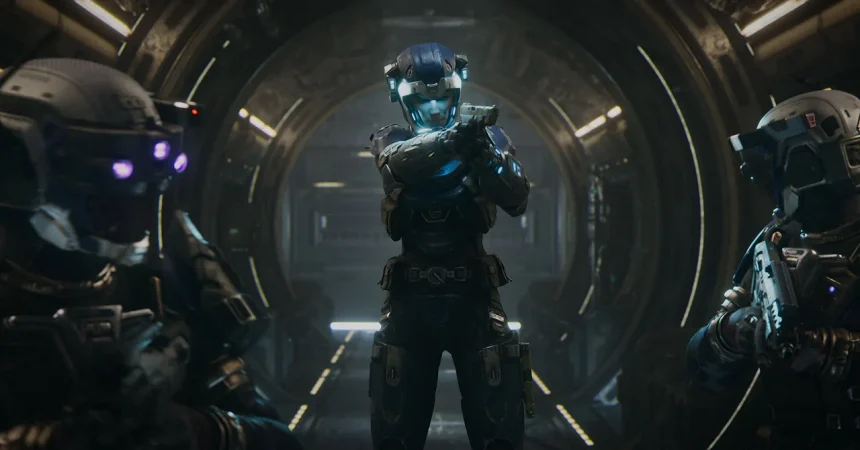
Owlcat Games is an interesting fit for that ambition. The Cyprus-based developer built its reputation on dense, top-down role-playing games like Pathfinder: Kingmaker and Warhammer 40,000: Rogue Trader—games that drown you in text, stats, and branching quest lines. Osiris Reborn, by contrast, is a third-person shooter and RPG. That’s a major pivot, and the studio has expanded its team to make the leap. You play as a spaceship captain leading a found-family crew of misfits across a colonized solar system, fighting enemies and drifting through hard-vacuum environments under the harsh physics that made The Expanse famous. The game is set to arrive in spring 2027, and from what Owlcat has revealed so far, it sounds like a love letter to the narrative side of Mass Effect: dialogue wheels, cutscenes, relationships with crewmates, and a carefully stacked series of big moral decisions. You can choose your captain’s backstory and appearance, but there are no skill classes in the traditional sense. Instead, your character is meant to evolve based on the decisions you make. Your crew can also be mentored in different directions, so the people around you are shaped by how you treat them. It’s a structure that promises to treat choices as weight-bearing walls, not just cosmetic decorations. For a studio that usually looks down at its characters from a tactical top-down camera, making players feel physically present in emotionally charged scenes is a whole new muscle.
That promise got tested in April, when Owlcat released a beta version. The reaction was, as you might expect, a mixed bag. Players generally liked what they saw in the gunplay and the environments. The combat was sharp, the zero-gravity movement felt appropriately disorienting, and the visual identity captured the grimy, industrial beauty of The Expanse’s worldbuilding. But the story and voice acting took some hard hits. Many testers felt the dialogue lacked the texture and grit of the source material, and the game reportedly didn’t include Belter creole, the beloved hybrid language that makes the Belters in the show and books feel so distinct. For a lot of fans, Belter creole isn’t just flavor. It’s a marker of identity, class, and rebellion. Seeing a game set in that universe without it felt like something was missing. Owlcat took the criticism seriously. The studio said it is addressing the issues, including recasting at least one voice actor. It’s worth remembering that a beta is not the final product, and the whole point of putting a build into players’ hands early is to identify these problems. But the feedback reveals just how high the bar is for a franchise with such a specific, beloved tone. People don’t just want a passable Expanse game. They want something that feels like it was made by people who understand why the books and show made them feel so invested in a group of ragtag space workers and soldiers.
Adapting The Expanse is a delicate balancing act. Osiris Reborn doesn’t try to retell the entire nine-book saga. Instead, it takes place around the same time as the first two novels, when the solar system is fractured into three competing powers: Earth, Mars, and the Belt. The player has to work with—or against—these factions, and Owlcat has already warned that keeping everyone happy will be a tightrope walk. “Keeping good relations with everyone won’t be easy—you’ll only get one chance to stay on everyone’s good side,” the studio says. That’s a recipe for anxiety by design. The Expanse was never a simple “good guys versus bad guys” story. Earth has its bureaucratic inertia, Mars has its nationalist ambitions, and the Belt has its justified anger and internal divisions. A game that makes all three sides viable friends—but refuses to let you easily befriend them all—could feel like a political simulator as much as a shooter. The source material is full of characters who make principled choices that lead to disastrous results, and any respectful adaptation has to honor that messiness. The challenge is to make those choices legible without making them feel like a math problem. You want the player to weigh loyalties, worry about consequences, and sometimes make decisions out of fear or hope rather than simple calculation. That’s the real Expanse way.
The engine behind all this choice-making is an internal system Owlcat calls Etudes. It’s basically a set of narrative flags and triggers that track player decisions, even small ones, and carry them forward through the game. Design director Leonid Rastorguev answered questions over email instead of a live interview, and he was quick to note that choice is not new ground for the studio. “This isn’t our first game where the sheer number of choices and consequences is a core part of the experience,” he wrote. Those consequences, he said, can be as small as a cosmetic change or as large as a character dying, a whole quest path becoming unavailable, or an entirely different ending sliding into reach. There’s no class system to define your role; your character instead becomes a product of your behavior. If you consistently choose reconciliation, you may evolve into a diplomat. If you choose violence, you may become a killer. The word “consequence” here is not just a marketing buzzword; the game is trying to build a web of outcomes that remembers you. It’s a system that rewards paying attention, and potentially punishes players who speed through scenes without thinking. Whether it can live up to the kind of truly transformative choices seen in a game like Baldur’s Gate 3 remains to be seen. But it’s encouraging that Owlcat is openly thinking about how a tiny decision in the first act can quietly close a door in the third.
So will Osiris Reborn actually make you feel the way The Expanse makes you feel—that nagging uncertainty about whether your choices mattered, without anyone ever handing you the answer? It’s a very difficult design goal. Games are supposed to be legible. Players want to know if a choice was right or wrong. The Expanse likes to live in the gray area, where there is no right answer, only consequences. Owlcat has the experience to build enormous interlocking story systems, and it seems to understand that adapting the Expanse is not just about shooting in space. It’s about making the universe feel indifferent even while it is full of human drama. The game won’t release until spring 2027, which gives the studio time to absorb feedback, sharpen the dialogue, and maybe learn a little Belter creole. In the meantime, the premise is already doing something rare: asking you, the player, to trust that your choices will be recorded in a silent universe, and that you’ll have to live with them without applause or condemnation. That’s a very Expanse way to make a video game. Whether it succeeds, we’ll have to wait to find out. And even after we do find out, the universe may still never tell us if it was right.