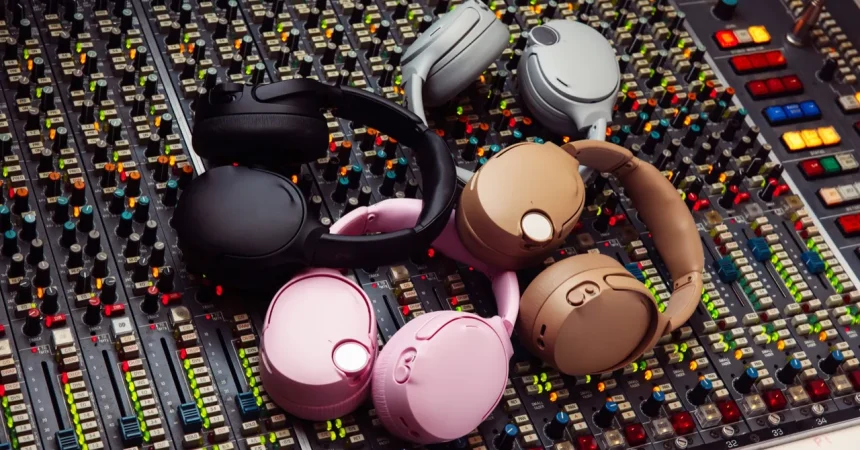
For years, Skullcandy has occupied a distinct but contentious corner of the audio world. Born on a snowy chairlift in Park City, Utah, in 2003, the brand became synonymous with the board-sports culture—snowboarders, skaters, and the perpetually young-at-heart. While they mastered the art of community building and street-cred marketing, they often fell short when it came to serious engineering. To many audiophiles, the name “Skullcandy” signaled stylish, budget-friendly hardware that sacrificed sonic clarity in favor of aesthetics. For a long time, the brand seemed content with this trade-off, prioritizing lifestyle over the high-fidelity soundscapes favored by their competitors.
However, a significant transformation is currently underway. Recognizing that their reputation for lackluster audio was becoming a ceiling for their growth, Skullcandy has spent the last year aggressively reinventing itself. This pivot isn’t just a marketing ploy; it is a fundamental shift in their engineering philosophy. The turning point arrived in 2025 with a strategic partnership with audio giant Bose, a move that yielded the Method 360 ANC earbuds. These $130 wireless units surprised critics by delivering genuinely capable noise cancellation and, more importantly, a high-quality sound profile that proved the company was finally ready to play in the big leagues.
The centerpiece of this reinvention is the evolution of the “Crusher” line, the brand’s most notorious and beloved product. For over a decade, the Crusher headphones have essentially functioned as portable subwoofers. With their signature physical thumb wheel, users could crank up bone-rattling bass vibrations, turning their music into an immersive—if somewhat muddy—physical sensation. While fans loved the “front row of a concert” feeling, the heavy bass often bled into the rest of the soundstage, drowning out the mids and highs. Transforming this messy, bass-heavy legacy into a refined, audiophile-grade product was the company’s next great engineering hurdle.
Enter the new Crusher 1080 ANC, which the company unveiled during a recent event in New York City. This launch represents the culmination of Skullcandy’s collaborative efforts with Bose. According to CEO Brian Garofalow, the biggest challenge was decoupling the intense bass-boosting technology from the acoustic profile of the headphones. By leveraging Bose’s expertise, Skullcandy claims to have successfully isolated the low-end vibrations. Theoretically, this allows the listener to turn the bass up to its maximum setting without sacrificing the razor-sharp clarity of vocals or the crispness of treble notes—a feat that previous generations of the hardware simply couldn’t manage.
This “Sound by Bose” integration goes well beyond tone management. The 1080 ANC model pulls heavily from the Bose playbook, incorporating their acclaimed noise-cancellation technology, which remains effective even when the bass driver is rattling away at full blast. Additionally, the headphones feature a spatial audio profile designed to mimic a sophisticated surround-sound experience and an advanced six-microphone array that aims to bring professional-grade call quality to a product previously known primarily for its vibrating ear cups. It is a comprehensive upgrade package designed to silence critics who once viewed Skullcandy as a lightweight in the audio industry.
Ultimately, this move signals a maturation for Skullcandy. CEO Brian Garofalow admits that while they have always been “great at community building and nurturing culture,” they haven’t always been the strongest on the technical side of innovation. By admitting their past shortcomings and bringing in a titan like Bose, they are attempting to bridge the gap between a lifestyle brand and a serious audio manufacturer. The Crusher 1080 ANC is more than just a new pair of cans; it is a statement of intent, suggesting that the era of choosing between “cool” and “accurate” may finally be coming to an end for the Park City-based company.