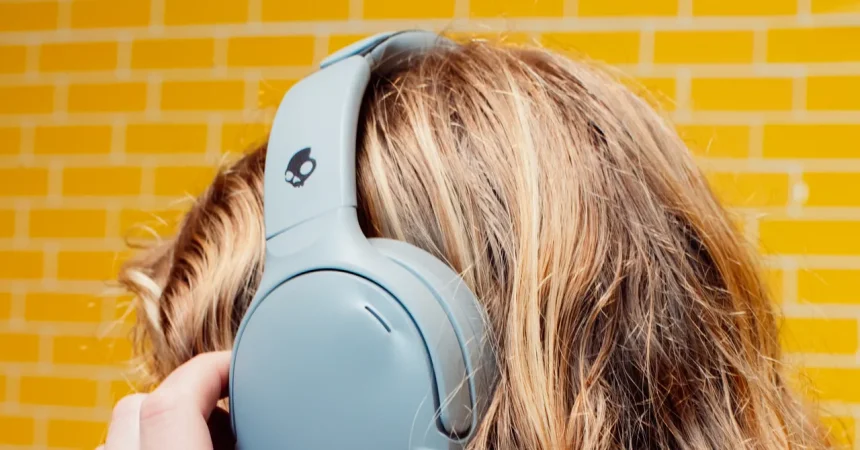
Earlier this week, Bose, the company that basically wrote the book on premium noise-canceling headphones, announced it is buying Skullcandy, the colorful, bass-first audio brand that has long been more about attitude than audiophile perfection. From the outside, this looks like an odd marriage: Bose has built its name on restraint, clarity, and high-end engineering, while Skullcandy built a following with aggressive style, affordable price tags, and a deep connection to board sports culture. The gap between these two worlds has always felt enormous. Bose is the brand you see in airport lounges, on business calls, and in the hands of people who care deeply about whether a pair of headphones can reproduce a symphony accurately. Skullcandy is the brand you see strapped around the neck of a skateboarder, blasting the latest hip-hop track, with a design that is loud in every sense of the word. But the deal isn’t a blind leap. Skullcandy will remain its own separate company inside Bose’s Premium Consumer Audio business and will keep its headquarters in Park City, Utah. That’s an important detail, because it suggests Bose isn’t trying to absorb and erase Skullcandy’s identity; it’s trying to learn from it. Bose wants the credibility, the community, and the cultural relevance that Skullcandy has earned over more than two decades. For Bose, this isn’t just about adding another brand to the portfolio. It’s about getting access to a younger, more diverse, more action-sports-oriented audience that doesn’t necessarily see Bose as its brand. With the acquisition, Bose gets a foothold in that world without having to build it from scratch. And for Skullcandy, the deal means access to Bose’s deep engineering and audio research, which could help the brand shed its old reputation as a gimmick and finally get the respect it has always wanted. It’s a partnership that sounds strange on paper, but in practice, it might be exactly what both brands need.
The most interesting part of this announcement is that it didn’t come out of nowhere. For the past year, Bose and Skullcandy had already been working together under something called Sound by Bose, a licensing program where Skullcandy handles the look, fit, and general vibe of a product while Bose contributes the audio know-how. This wasn’t just a simple logo deal; it was a real engineering collaboration. Their first project together was the Skullcandy Method 360 ANC earbuds, which launched in 2025, and they followed that with the Crusher 1080 ANC headphones in July. When reporters spoke with Skullcandy CEO Brian Garofalow about the partnership in July, he was refreshingly honest about what his company is good at and what it isn’t. Skullcandy, he said, knows how to build community and culture, especially around board sports. He pointed out that the very first Skullcandy product was designed on a ski chairlift, which is about as perfect an origin story as you can get for a brand that lives in the world of snow and skate parks. But he also admitted that Skullcandy was never the greatest at the engineering part of innovation with products. That admission is rare and also crucial. It tells you exactly why this relationship makes sense. Skullcandy brings the soul, the community, and the street-level energy. Bose brings the science, the sound tuning, and the research labs. It’s a bit like a talented band teaming up with a legendary producer: same passion, but suddenly a much better record. You can almost hear the potential. If Skullcandy can keep its personality while letting Bose polish the sound, the next generation of its headphones could be something special. It’s a deal that feels less like a takeover and more like a natural evolution, and that’s probably why Bose felt comfortable making it official.
Bose is no stranger to acquisitions, though this one might be its most mainstream. In 2024, Bose acquired the McIntosh Group, which owns McIntosh Laboratory and Sonus Faber, two luxury brands beloved by serious hi-fi enthusiasts. That deal was about moving further upmarket, into a world where amplifiers cost more than most people’s cars and speakers are treated as furniture. It was a bold statement that Bose wanted a slice of the ultra-premium audio world. But Skullcandy is a completely different animal. It’s not about gold-plated connectors or handcrafted wooden cabinets. It’s about plastic earbuds that come in neon colors and are designed to be dropped, lost, and replaced. Bose CEO Lila Snyder made it clear that the company is not collecting brands just for the sake of size. She explained that when Bose looks at potential partners, it asks whether the brand stands for something real, whether it has meaning for consumers, and whether it can connect with people that Bose isn’t reaching with its own name. McIntosh, Sonus Faber, and Skullcandy all fit that bill, she said, but Skullcandy is the one that genuinely opens a door to a customer base that Bose has largely missed. That’s a pretty striking admission from a company as established as Bose. It’s essentially saying: we know we can’t be everything to everyone, and we’re okay letting a beloved brand with a different voice lead the way. That’s also why Bose has no plans to move Skullcandy out of Park City, Utah. Snyder called Park City the epicenter of board sports culture, and she wants Skullcandy to stay right in the middle of it, exactly where it has always been. To her, moving the brand out of that environment would be like pulling a plant out of its soil. The vibe, the connections, the authenticity—it would all get lost. Bose isn’t buying Skullcandy to turn it into a corporate clone; it’s buying it because it wants a little bit of that mountain air, that youthful energy, that cultural edge. It’s a smart strategy, and it shows a lot of self-awareness.
The money picture also makes sense. Skullcandy products are affordable, especially when you stack them against Bose’s own flagship headphones or the luxury gear from McIntosh and Sonus Faber. Bose has long occupied the premium end of the market, with products like the QuietComfort Ultra line often costing hundreds of dollars. Skullcandy, on the other hand, has made its name giving younger, budget-conscious shoppers a way to get decent sound without emptying their wallets. By owning both, Bose can now play at both ends of the audio market: it can sell a pair of Skullcandy earbuds at a skate shop for a couple of bucks less than a night out, and a pair of Bose noise-cancelers at an airport boutique for what feels like a plane ticket. That’s a lot of ground to cover. But there’s another layer here that’s more cultural than financial. Skullcandy isn’t just a cheaper alternative; it’s a statement brand. It’s loud, bold, and occasionally even a little obnoxious, but that’s exactly why people love it. It’s the brand you wear when you want the music thumping in your skull and the world to know you’re not trying to be subtle. Bose, by contrast, has always been about invisible magic—silencing the noise around you so you can focus on the music. The two brands are almost opposites in personality. And that’s precisely why the acquisition is so interesting. Bose doesn’t want Skullcandy to become a mini-Bose. It wants Skullcandy to keep doing what it does, only better, with a lot more engineering muscle behind it. It also means that Bose can finally have an answer when someone walks into a store and says, “I don’t want to spend three hundred dollars on headphones, but I also don’t want garbage.” Skullcandy, boosted by Bose’s sound tuning, becomes that answer. It’s a way to win over a whole generation of buyers before they graduate to Bose’s premium line—or to keep them happily loyal to Skullcandy forever.
As someone who reviews headphones, I’ll be honest: Bose and Skullcandy have always felt like they’re from different planets. Bose is the company that pioneered active noise cancelation in consumer headphones and has spent decades perfecting it. Its QuietComfort Ultra headphones and earbuds are still the gold standard for tuning out the world. Skullcandy, meanwhile, has often been the punchline in conversations about audio quality. Its reputation has been built on bass-heavy tuning, flashy designs, and a certain kind of youthful energy that audiophiles sometimes roll their eyes at. It’s not that Skullcandy has never made anything good; it’s that the brand’s identity was tied to a very different set of priorities—fun over fidelity, style over subtlety. But the recent collaborations with Bose have started to change that narrative. WIRED rated the Skullcandy Method 360 ANC earbuds 8 out of 10, and the review specifically noted how good the sound quality and active noise cancelation were for the price. That’s a big deal. It means the partnership isn’t just a logo slapped on a box; it’s actually translating into better products. The sound is cleaner, the noise canceling goes beyond basic, and the overall experience feels more premium without losing the fun, accessible spirit that makes Skullcandy what it is. Snyder says those earbuds and the Crusher collab are just the tip of the iceberg. She described the relationship with Skullcandy as the beginning of what the two companies can do together. For anyone who has followed both brands for years, that’s an exciting and slightly strange sentence. But it also feels real. If Bose can give Skullcandy a glow-up without sanding off its personality, the possibilities are genuinely interesting. Imagine a pair of headphones with Skullcandy’s bold colors and bass-heavy warmth, but with Bose’s noise-canceling magic and balanced soundstage underneath. That’s not just a product; that’s a cultural crossover.
So what comes next? Honestly, I’m very curious. Skullcandy has never been a brand I expected to see sharing a corporate parent with Bose, but the more you think about it, the more it clicks. Bose brings the science, Skullcandy brings the soul, and together they might just have something for everyone. We’ll probably see more headphones, more earbuds, and maybe products that don’t fit either brand’s old category. Maybe a set of Skullcandy earbuds that finally sound as good as they look. Maybe a Bose product with a splash of Skullcandy’s playful design language. Maybe collaborations with athletes, musicians, and artists that neither brand could have reached alone. For consumers, the practical benefit could be huge: more choices, better sound at every price level, and a chance to own something that feels both fun and engineered to last. The bigger question is whether Bose’s acoustic muscle can give Skullcandy the permanent glow-up it’s been chasing for years. It won’t happen overnight, and it won’t happen if Bose tries to turn Skullcandy into some clean-cut, sober version of itself. The whole point of this acquisition is that Bose wants a piece of what Skullcandy already has—the community, the culture, the authenticity—and Skullcandy wants the engineering that makes a product not just stylish but actually great. If they can pull that off, Skullcandy might finally be taken seriously as an audio brand, and Bose might finally feel cool to a generation that grew up with skateboards and backpack speakers. That would be a win for both companies. But more than that, it would be a win for everyone who ever liked loud, colorful, fun headphones and secretly wished they sounded as good as they looked. The deal is done, the partnership is official, and now we get to wait and see what two very different audio worlds can build together. It might be messy. It might be brilliant. Either way, it’s going to sound interesting.