Picture this: you’re in your kitchen on a random Tuesday, a recipe on your phone, and you ask the small orb on your counter to set a timer for twelve minutes while you start chopping onions. Then you ask it to play that new album you’ve been meaning to hear, and later, still covered in flour, you call out, “Alexa, remind me to call the plumber tomorrow at nine.” For years, that was about the extent of it—timer, music, reminder. But now, imagine asking that same device, “Alexa, what’s a good substitute for buttermilk?” and actually getting a thoughtful, conversational answer that walks you through a few options, complete with suggestions for what to use if you’re vegan. That’s the promise of Alexa+, Amazon’s revamped voice assistant, and according to Panos Panay, Amazon’s senior vice president of Devices and Alexa, it’s already found a place in the daily rhythm of a couple hundred million people. At an intimate media-only gathering in New York City, Panay shared some striking numbers: people are talking to Alexa+ two to three times more than they did with the old assistant, they’re cooking with it five times more, listening to music three times more, and creating routines twice as often. Those aren’t just statistics; they’re evidence that the assistant has stopped being a glorified egg timer and started being something closer to a helpful housemate.
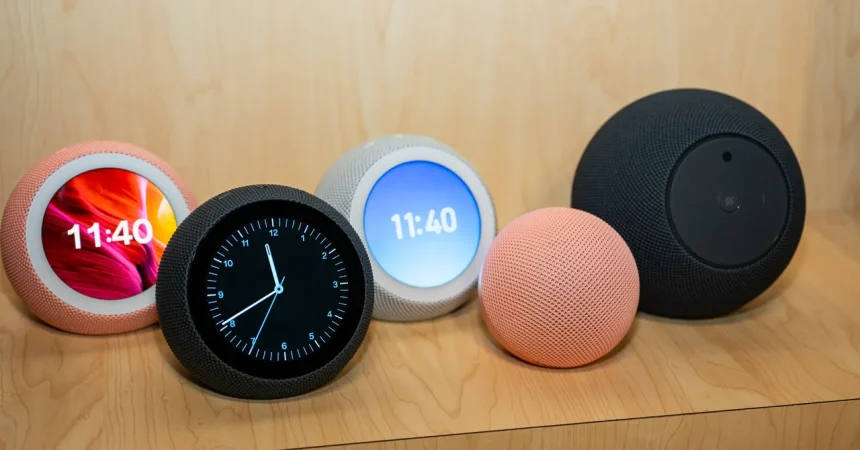
The shift is no accident. Amazon has spent the past year quietly pushing Alexa+ into the spotlight, and the hardware it lives on is getting a serious upgrade to match. Panay’s comment at that media event cut to the heart of it: “I don’t think anyone’s really doing AI at all in the home, and if they are, they aren’t doing it well.” That’s a bold statement, especially in a world where every tech company is crowing about AI, but Panay clearly believes that Amazon’s edge lies not just in the software smarts, but in the physical devices that bring it to life. So, on Wednesday, Amazon announced a new fleet of Echo products, all available for purchase immediately—the Echo Dot ($100), the Echo Studio With Home Camera ($250), the Echo Show 16 ($500), a brand-new Echo Time ($200), and the first Alexa Photo Frame ($200). The lineup feels like a deliberate move toward what Panay calls “premium shape.” After all, if people are going to have deeper, more meaningful conversations with their assistants, the devices need to feel like worthy companions, not plastic gadgets. This premium push aligns with Amazon’s recent strategy of elevating its hardware across the board—think the upscale Kindles and Alexa Tablets that landed in early October. It’s a positioning that says: we’re not just the budget-friendly choice anymore; we’re building daily companions that you’ll actually want to show off.
Of course, premium shape comes with a premium price tag, and that’s where things get interesting. The Echo Dot, once the affordable, entry-level $50 smart speaker that millions of people bought as their first introduction to voice assistants, now starts at $100. That’s double the original price, and it’s a noticeable bump even compared to the inflated prices Amazon slapped on its existing devices this past summer—price hikes the company attributed to memory shortages. But Panay seems unbothered. At the event, he emphasized that Amazon has sold more than 100 million Echo Dots, and in 2026 alone, people spent more than a trillion minutes listening to music on that small orb. When you have that kind of user base, you can afford to reposition the product. The new Dot isn’t just a speaker; it’s a compact centerpiece, available in four colors, designed to do more and sound better. The question is whether consumers will follow the price upward. But Panay’s logic is simple: if Alexa+ is going to feel truly magical, the hardware has to be able to keep up—and that means better components, more sensors, and a design that doesn’t scream “budget.”
So what does that extra $50 get you on the new Echo Dot? For starters, a serious audio upgrade. Amazon says the full-range driver delivers 50 percent stronger bass performance and crisper vocals, which matters when you’re using the speaker as your kitchen radio or your bedtime podcast companion. There are also four beamforming microphones now, up from three on the previous model, and the device runs on Amazon’s AZ3 chip. That combination means Alexa can isolate your voice even in a noisy room—say, when the blender is running or the kids are screaming—and track your commands with much more accuracy. The Dot also inherits a feature from last year’s Echo Dot Max: Omnisense. This clever technology lets the speaker sense the environment around it. It can detect when you walk into the room, and if you’ve set it up to do so, it can turn on the lights or start playing your favorite playlist without you uttering a single word. That’s the kind of thing that feels like science fiction, but it’s happening now. And for the smart-home tinkerer, the Dot now supports the Matter standard and works as a Thread border router, which is essentially a magic key that unlocks seamless control over a wide range of smart-home devices. If you have an Eero router, the Dot can even double as a Wi-Fi extender. All of these features layer together to make the $100 price seem less like a luxury and more like an investment for a home that actually works with you.
But the Echo Dot isn’t the only new player. The Echo Studio with Home Camera is a fascinating hybrid—a high-fidelity speaker that also includes a camera, presumably for discreet home monitoring or video calls. The Echo Show 16, at $500, is Amazon’s biggest smart display yet, positioning itself as a family communication hub and a home entertainment screen. More intriguing is Echo Time, a $200 device that seems designed to be a modern take on the alarm clock—waking you up gently, syncing with your calendar, and maybe even showing you the weather as you groggily roll out of bed. And then there’s the Alexa Photo Frame, which at $200 tries to make a smart display feel like a decorative object rather than a tablet glued to a stand. It’s a clever idea: a frame that cycles through your favorite photos, but also serves as a portal for video calls and, of course, a surface for Alexa’s face. The whole lineup shows Amazon thinking beyond purely utilitarian devices. They’re trying to make tech that blends into your living space, not dominate it. The fact that they’re launching all these products at once signals confidence—Panay’s team believes they’ve cracked the code on AI in the home, and they want to give you every possible way to experience it.
Look beyond the hardware and what you see is a vision for Alexa+ that’s about companionship, not just command execution. Panay’s comments hint at that: as people have deeper conversations with Alexa+, the devices need to be in premium shape to facilitate those interactions. That means not just better speakers and microphones, but a whole ecosystem that feels responsive and alive. The statistics—cooking five times more, listening to music three times more—point to a shift in how we interact with our technology. We’re moving from asking for things to asking questions, from issuing commands to engaging in dialogue. And if Alexa+ can truly hold its end of the conversation, then the home becomes a more collaborative place. The Echo Dot with its Omnisense, the Echo Studio with its camera, the Echo Time that wakes you with a gentle glow—these are all attempts to make the invisible assistant feel tangible. There’s still a long way to go. AI in the home is still in its awkward adolescence; sometimes it mishears you, and sometimes it answers clumsily. But Amazon is betting that by combining smarter software with premium, thoughtfully designed hardware, they can make that peek of potential feel like a daily reality. For the couple hundred million people already chatting with Alexa+, that future seems tantalizingly close. And for the rest of us, the new Echo lineup might just be the nudge we need to invite a truer, more conversational AI into our kitchens, living rooms, and bedrooms. For now, the price may be higher, but so is the promise. And as Panay would likely argue, you can’t put a price on having a helper who knows exactly what you want—without you even having to say it.