The Golden Age of Internet Animals Is Over: Navigating the Synthetic Wilderness
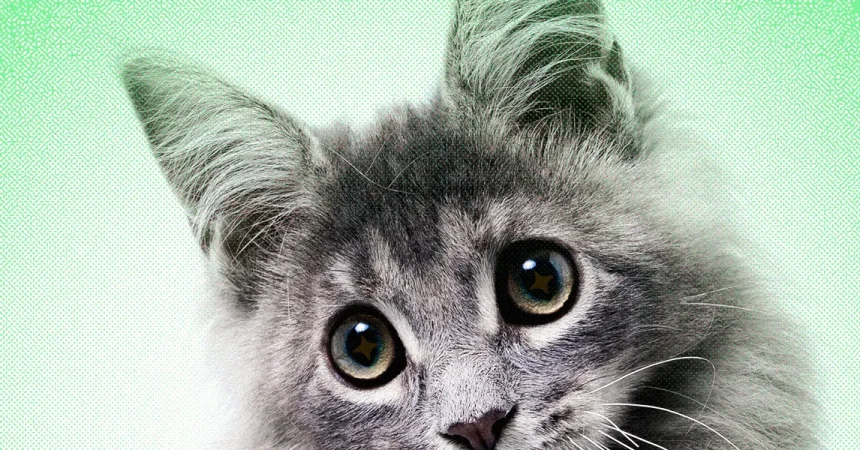
For nearly two decades, the internet offered a quiet sanctuary of uncomplicated joy, a digital meadow where weary humans could graze on the unadulterated happiness of a kitten chasing its tail or a dog weeping with joy at a soldier’s return. This cascading warmth, this collective “aww,” was one of the few universally shared experiences that transcended borders and politics. Yet, in the past few years, this verdant oasis has been invaded by a creeping digital smog. The explosion of generative artificial intelligence has flooded our feeds with hyper-realistic phantoms—polar bears miraculously rescued by sailors, piglets frolicking in impossible rainbows, and lost pets reunited in heart-stopping moments. Now, instead of basking in the feel-good glow of these moments, we find ourselves playing a grim game of digital forensics. Our thumbs hover over the “like” button, our hearts still trembling with sudden empathy, but our eyes are scanning for the telltale signs of algorithmic fabrication: the melting whiskers, the impossibly symmetrical eye reflections, the garbled text on a background object that our brains automatically flag as impossible. The simple act of watching an animal video has become a skeptical audit, a desperate hunt for the glitch that will tell us whether we are witnessing a miracle or a machine’s cruel hallucination. This shift isn’t just an annoyance; it represents a profound erosion of our ability to connect with the real world, a loss of a precious reservoir of compassion that used to flow freely, without the embittering filter of paranoia.
Consider the deeply human tragedy that unfolded for Mibbby Butler, a woman whose grief and hope were mercilessly exploited by this new technological frontier. In April, Butler received a text that her beloved cat, Brooklyn, had been found. The relief was visceral; days earlier, her roommate’s boyfriend had allegedly taken the cat and abandoned him thirty minutes away in the sprawling Los Angeles suburbs. The message included a photo, sent by a purported kind stranger, showing a pristine kitchen where a girl was embracing the cat. To Butler, in that moment, it was a miracle—her baby was alive, safe, and being cared for. She shouted with joy to her roommate, the tension of days of desperate searching dissolving into effusive gratitude. But the stranger’s subsequent demand for money to cover “temporary care” induced a cold, creeping dread. The impossible clarity of the photo began to unravel. Looking closer, Butler realized the cat’s pose mirrored the exact photograph she had used on her lost pet poster. On the counter behind them sat a Torani syrup bottle, a mundane object that had been in her original photo, but now its label was entirely unintelligible—a string of gibberish letters. This was the digital fingerprint of AI, a hallucination of a brand name. The emotional whiplash was devastating. Her deep-seated love for Brooklyn had been weaponized, used as bait by a callous scammer. The tragedy deepened when Butler realized she had no legal recourse; she didn’t even report the incident to police, uncertain if a crime had even been committed in a legal system unprepared for these new forms of predation. Months later, Brooklyn is still missing. The real tragedy here is not just the loss of the cat, but the loss of the emotional certainty that made the human heart function. Butler isn’t just searching for a pet anymore; she’s haunted by the memory of a perfect lie that briefly gave her a life raft, only to pull it away, leaving her drowning in the knowledge that her hope was plotted against her.
If the consumer of animal content feels the sting of this betrayal, the burden is infinitely heavier for those who spend their lives documenting the real, often brutal, truth of the animal world. Organizations like We Animals are now caught in an impossible existential bind. For years, their team of one hundred and seventy-five photojournalists has risked their safety to document alleged animal abuse in factory farms, circuses, and scientific laboratories. Their work is jarring, uncomfortable, and designed to shock the public into awareness and action. But the stark, eerie perfection of their drone footage—capturing rows upon rows of white hutches housing calves separated from their mothers on an Arizona dairy farm—has begun to look suspiciously like the sterile, highly aestheticized visuals generated by AI. In the past, skeptics accused them of staging scenes or photoshopping images. Now, the accusation has escalated. Viewers are leaving comments on their Instagram pages, asking what they perceive to be the ultimate question: “How to prove it’s not AI?” This is a devastating blow to the very foundation of their mission. The power of their work lies entirely in its verifiable reality. If people believe the suffering is synthetic, the emotional impact evaporates, replaced by a weary shrug that dismisses the grotesque imagery as just another piece of digital slop. The creators are now forced to act as forensic defenders, endlessly fighting a battle they never signed up for. The visual evidence of systemic cruelty, painstakingly gathered over years, is now being weighed against the instant fabrication capabilities of a computer prompt, and the real constantly loses because the fake looks too good.
In response to this crisis of authenticity, We Animals and other organizations are being forced to fundamentally alter how they operate, a defensive posture that feels like a profound betrayal of their artistic and activist roots. Eva von Jagow, the group’s marketing manager, acknowledges the grueling reality: they are preparing to launch a campaign of radical transparency, sharing behind-the-scenes clips of their photographers at work, logging detailed metadata, and embedding the provenance and editing history directly into the digital files that leave their servers. They are adopting cryptographic verification methods to create an unbreakable chain of custody for every pixel. This is a massive operational burden for a non-profit already stretched thin, turning their window into the world of animal suffering into a bureaucratic ledger of authenticity. Victoria de Martigny, the group’s director of visual content, expresses the paralyzing fear that this new skepticism opens the door to all-out denial—”we don’t ever want to be in that position.” The irony is staggering. The very technology that is supposed to herald a new era of creative potential has instead forced documentarians of real suffering into a corner where they must constantly prove that a pig is actually bruised, that a cage is actually rusted, that a tear is actually wet. They are clinging to their credibility with the only tools available—technical paranoia and exhaustive documentation. Rather than spending their energy on raising awareness and driving change, they are spending it on validating their own existence, defending the truth against a tsunami of algorithmic lies.
The implications of this shift extend far beyond the individual viewer or the distressed non-profit; they strike at the heart of the economy of compassion. Real, evocative imagery has historically been the lifeblood of conservation and animal welfare efforts, the visceral proof that pulls at heartstrings and loosens wallets. Yet, the economics of AI have created a perverse incentive. For owners of “slop accounts”—those monetized pages that churn out endless synthetic content—generating a gushing video of a “rescue” costs nothing but a few tokens of prompt input. The algorithm rewards engagement, not truth. A carefully crafted, emotionally manipulative deepfake can draw millions of views and generate substantial ad revenue, drowning out the authentic, expensive, and labor-intensive work of real photojournalists. This flooding of search results and social feeds means that when people look for animal stories, they are increasingly met with a false, sanitized digital double of the world—a world where pain is beautiful and suffering is structured. Oscar Horta, a philosopher and leading animal activist who recently directed a film on AI’s impact on wildlife, points to the insidious normalization of this unreality. When we are constantly exposed to synthetic poultry slop, we become emotionally numb to the real, gritty footage of a factory farm. We begin to assume that all moving imagery is a fabrication, and in doing so, we lose the ability to be moved. The real threat isn’t just that we are losing trust in the images; it’s that we are losing trust in the reality of animal suffering itself, which allows us to passively accept the status quo of harm, because we can always dismiss the evidence as a machine’s invention.
How, then, do we move forward without slipping into a cynical nihilism where we dismiss everything as fake? It requires a dual consciousness—a simultaneous embrace of skepticism and a stubborn persistence of empathy. We cannot return to the blissful ignorance of the past, but we also cannot afford to build emotional walls that block us from the genuine beauty and tragedy that still exists in the real world. The future demands a new literacy of digital consumption. We must learn to verify before we amplify, checking for provenance and cross-referencing sources. We must support organizations like We Animals that are taking the steps to embed authenticity into their work, recognizing that their new bureaucratic burdens are actually gifts of transparency in a murky world. But beneath all the technical forensics, we must fiercely hold onto the core impulse that brought us to the internet in the first place: the desire for connection with living, breathing creatures. Even as the algorithms push slop into our feeds, we must consciously seek out the fringe spaces—the raw, unpolished videos from shelters, the grainy footage from trail cameras, the authentic, imperfect moments from backyard birders. These are the places untouched by the AI factory. We must look for the flaws, not as evidence of a fake, but as proof of life. The slightly blurry paw, the awkward lighting, the background noise of the real world—these are the fingerprints of reality. We must learn to look past the impossible perfection of the synthetic and crave the beautiful, chaotic imperfection of the natural. The animals are out there, real and vulnerable, waiting for us. They are not just pixels; they are unspeakably complex beings. We have to look past the glitch and find the genuine pulse, knowing that even in a digital world polluted by lies, the truth remains a sacred and vital refuge, waiting patiently for us to wipe the static from our eyes and look at it with the same tender wonder we used to possess.