For nearly two decades, Clarissa Mansbridge operated in the shadows of the entertainment industry. While she worked with high-profile names like Jason DeRulo and managed the logistics for figures like Kim Kardashian’s former bodyguard, she remained deliberately invisible. She thrived on the adrenaline of crisis management and brand building, finding satisfaction in orchestrating success for others without ever stepping into the limelight herself. It was a fast-paced, high-stakes career that defined her identity until the universe brought her world to a sudden, heartbreaking halt.
Three years ago, everything shifted when her son was born at 33 weeks without a heartbeat. The resuscitation was successful, but it was merely the beginning of an agonizing journey through intensive care, filled with near-misses and the crushing fear that he might not survive. When they finally brought him home to Brisbane, Australia, the reality of his long-term recovery needs made her old, demanding career impossible to sustain. She needed a way to provide for her family that allowed for the flexibility of constant care, leading her to pivot toward the burgeoning world of artificial intelligence.
Drawing on a lifelong love for creative world-building—reminiscent of the hours she spent playing The Sims—Mansbridge began experimenting with AI image-generation tools. The result was “Mia Metaverse,” a wholesome, aspirational influencer whose glamorous life was entirely a digital construct. What started as a creative outlet quickly became a viable business model. Today, at 34, Mansbridge earns roughly $6,000 a month by collaborating with brands and building bespoke AI influencers for companies, working under strict NDAs that keep the true extent of her influence hidden from public view.
However, the industry that saved her professional life is now entering a period of significant turbulence. The virtual influencer market, currently valued at $14.5 billion, is predicted to skyrocket to over $110 billion within the next decade, with nearly 80% of marketers actively increasing their investment in synthetic creators. But this rapid expansion has caught the attention of regulators. As platforms like TikTok begin to refine their algorithms to prioritize human creators over machine-generated content, pioneers like Mansbridge are finding themselves staring down a future where the rules of the game are being rewritten in real-time.
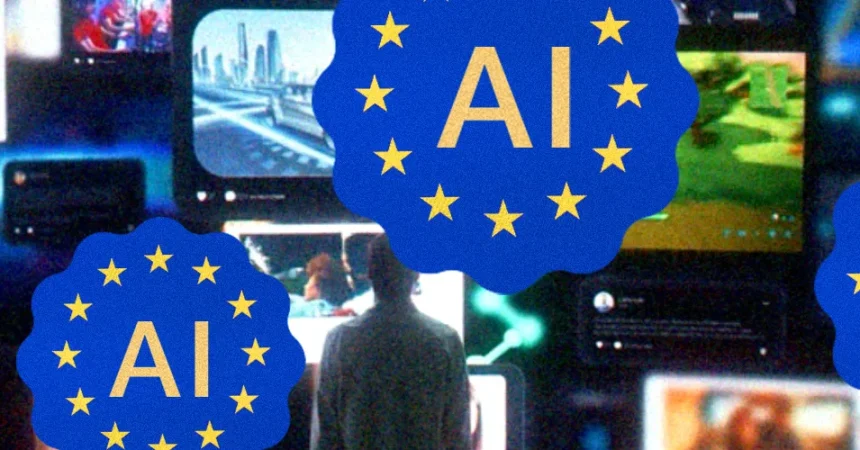
The primary catalyst for this shift is the European Union’s Artificial Intelligence Act, the world’s first comprehensive legal framework regarding machine learning. Under the new rules, which took effect in August, any promotional content created or manipulated by AI must be clearly labeled. While the law provides some flexibility for “artistic” or “fictional” works, the language is ambiguous, leaving many creators in a state of professional limbo. Policy experts admit that the legislation was drafted with haste during the early “gold rush” of ChatGPT, leaving a gap between the noble goal of promoting AI literacy and the practical reality of running a digital business.
Looking ahead, the road for AI creators appears to be a complex, bureaucratic maze. Experts anticipate further revisions that will move beyond simple labeling, potentially requiring creators to disclose the provenance of their data, their financial backing, and their underlying intent. For people like Mansbridge, who built an entire livelihood on the art of illusion, this move toward radical transparency poses an existential challenge. As the digital landscape matures and regulations tighten, the era of the “faceless” creator is likely coming to an end, forcing innovators to adapt to a world that is no longer content to simply be enchanted by the image—it wants to know exactly how the machine works.