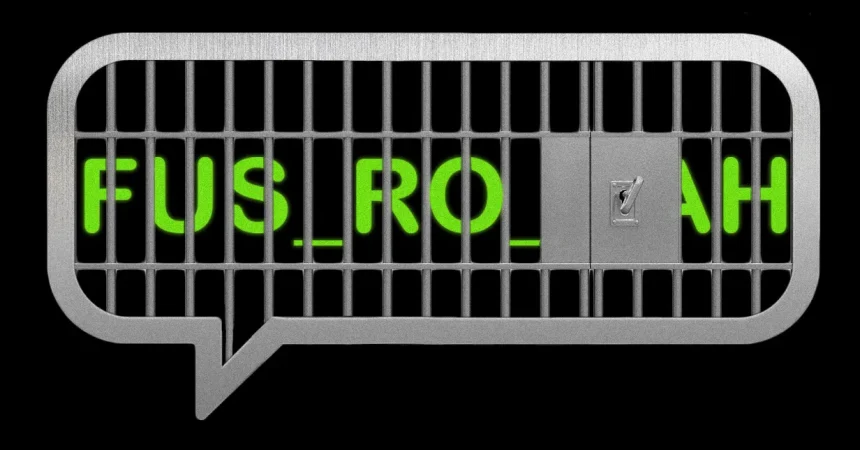
The story of Brandon Klayme is a chilling reminder of how quickly the gears of justice can grind an innocent life into dust, powered by nothing more than a single keystroke. In 2018, a child-luring investigation began in Madison, Wisconsin, centered around a suspect using the Elder Scrolls-inspired Kik username “fus__ro_dah”—a handle featuring two distinct underscores. What should have been a straightforward digital trail for law enforcement to follow instead became a tragedy of errors. Through a simple, human typo in a police subpoena, the investigation pivoted from the actual perpetrator to a completely unrelated man living thousands of miles away in Nova Scotia, Canada.
The escalation of this mistake is nothing short of baffling. When police issued a subpoena to the messaging service Kik, they accidentally requested records for “fus_ro_dah,” missing one of the two underscores. Kik, true to its automated processes, provided the information linked to that slightly different name: Brandon Klayme’s email address. From there, the investigation moved with terrifying momentum. Cross-border cooperation between Wisconsin authorities and the Halifax Regional Police led to the tracing of an IP address to Klayme’s home. Despite an exhaustive search of his laptops and phones, investigators found absolutely no evidence—no inappropriate photos, no chat logs, and no links to the victim. Yet, in the face of a total lack of physical proof, the machinery of the legal system did not stall; it continued to push forward.
For Klayme, the nightmare was just beginning. Despite the digital vacuum where evidence should have been, he was charged with serious offenses, including child luring and possession of illicit material. In a trial that failed to identify the discrepancy between the usernames, Klayme was found guilty. He was sentenced to 18 months in prison, a period he served in its entirety. It is difficult to fathom the psychological toll of being incarcerated for a crime you didn’t commit, knowing that the “evidence” against you was not just thin—it was nonexistent. Throughout his trial and sentencing, the one-character error remained invisible to him, his defense team, and the court, acting as a silent, invisible wall between Klayme and the truth.
It is only through Klayme’s relentless pursuit of an appeal that the light was finally shone on this procedural catastrophe. As he and his legal team meticulously combed through their own case files while preparing for the appeal, they finally noticed the double underscore in the original police documents. The realization must have been a sickening mix of relief and profound rage. The man who had already lost 18 months of his life stood vindicated not by the competence of the detectives, but by his own persistence in uncovering a mistake that should have been caught during the preliminary stages of the investigation by the very people tasked with protecting the public.
In a landmark ruling, the Nova Scotia Court of Appeal did more than just overturn the conviction; they issued a statement that stripped away the veneer of legal process surrounding the case. The court explicitly noted that Klayme is “factually innocent” and that he should never have been charged, let alone convicted. This language is a rare and stinging rebuke of the investigative failures that led to his imprisonment. It serves as a necessary, if late, acknowledgement that Klayme was a victim of bureaucratic negligence. While the court has restored his name, the ruling cannot replace the year and a half of his life spent behind bars or the trauma of the stigma that comes with such charges.
Ultimately, the Brandon Klayme case serves as a harrowing case study in the intersection of digital technology and human error. It highlights a system that relies heavily on digital identifiers, yet fails to apply the necessary human scrutiny to ensure those identifiers are accurate. We are left to wonder about the original perpetrator—the person who actually used the handle “fus__ro_dah”—who remained free while an innocent man suffered the consequences of a typo. As Klayme works to rebuild his life, his story leaves us with a haunting question: How many other lives have been derailed by the simple, invisible keystrokes that go unnoticed by the people we trust to hold the scales of justice?