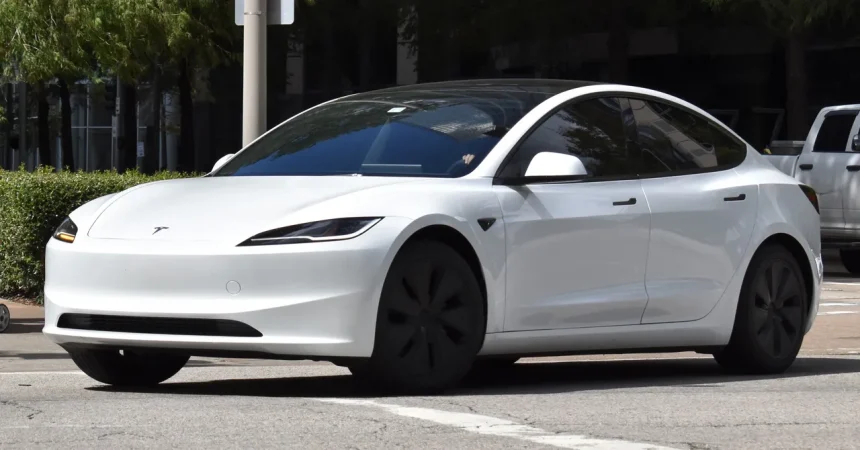
The tragic death of 76-year-old Martha Avila, who lost her life while simply standing in her own living room in Texas last week, serves as a haunting reminder of the unpredictable intersection between human life and emerging technology. A Tesla Model 3, barreling toward her home at over 70 miles per hour, ended a life and shattered a family in an instant. The driver, 44-year-old Michael Butler, was found to be sober, yet he claims the vehicle’s driver assistance features—marketed by Tesla as tools to make the roads safer and less taxing—were engaged during the collision. This catastrophe has sparked a legal firestorm, as Avila’s grieving family, including her son-in-law who sustained injuries in the incident, has filed a lawsuit against both the driver and the automaker, thrusting the reliability of Tesla’s “Full Self-Driving” (FSD) system into the national spotlight.
At the heart of the legal battle is a fundamental disagreement over where the responsibility of the driver ends and the responsibility of the software begins. Tesla’s FSD system is designed to navigate city streets, stop at signals, and maneuver through traffic, yet it remains marketed as a “supervised” experience that requires a human to be perpetually vigilant. The Avila family’s lawyers argue that the system is inherently defective and unreasonably dangerous, creating a false sense of security that blinds drivers to real-time hazards. Conversely, Tesla maintains a firm defensive stance; Vice President of AI Software Ashok Elluswamy countered reports by citing internal data alleged to show that the driver manually floored the accelerator to 100 percent, even continuing to press it after the impact. Elon Musk echoed this sentiment, dismissing the notion that his company’s technology was to fault as nonsensical.
This tragic case brings to the surface a complex, modern legal dilemma: when technology is powerful enough to handle 90 percent of the driving tasks, how can we reasonably expect a human to be perfect during the rare, high-stakes moment when the system fails? Legal experts like Matthew Wansley suggest that Tesla’s liability may hinge not on whether the car caused the crash, but on whether the design of the system encourages a dangerous lapse in “situational awareness.” If a driver is lulled into a state of semi-passive engagement because the technology works so well most of the time, the transition of control during a crisis becomes a psychological trap. In this view, Tesla might be held at least partially responsible for creating an environment where a driver is psychologically ill-equipped to intervene in a split second.
Precedent for such a ruling already exists, signaling that the court system is increasingly unwilling to let automakers hide behind “driver error” as a catch-all excuse. In a notable Florida case involving a fatal collision, a jury found that while the driver was largely responsible for a navigational failure, Tesla shared one-third of the blame. Despite Tesla’s claims regarding data limitations—which were later circumvented by forensic experts—they were hit with substantial penalties, including millions in compensatory and punitive damages. This verdict suggests a shifting standard of justice, one where the “effectiveness” of autonomous features is viewed as a double-edged sword: the better the software performs, the greater the argument that it induces human complacency.
The central tension of this tragedy is the “automation paradox”—the idea that the more advanced these systems become, the less prepared the human driver is to act as a fail-safe. If the car drives flawlessly for hours, the brain naturally wanders; when a catastrophe unfolds, the shift from passenger to pilot is often too slow to save anyone. We saw this in the 2018 crash of a Model X, where the driver failed to steer away from a highway barrier, leading to a fatal outcome that was eventually settled by Tesla on the eve of trial. These aren’t just isolated technological glitches; they represent a recurring pattern of human tragedy that raises difficult questions about whether the current level of “assisted” driving is truly ready for the complexities of suburban streets.
Ultimately, Martha Avila’s death is a profound human loss that demands we look beyond technical datasheets and marketing slogans. While the court will continue to debate accelerator inputs and software logs, the lasting legacy of the Texas crash is the vulnerability of people in their own homes, caught in the path of a machine that promised safety but delivered destruction. Whether the ultimate blame rests with the man behind the wheel or the code powering the vehicle, the reality remains that our current regulatory and cultural approach to autonomous tech is still lagging behind the pace of the cars on the road. Until the industry can bridge the immense gap between automated confidence and human reaction, families like the Avilas will continue to pay the ultimate price for our ambition to automate the road.