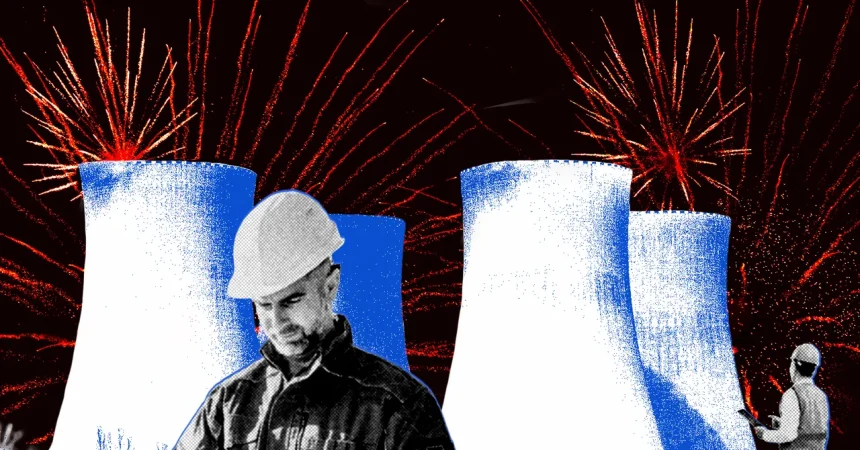
The landscape of American energy is undergoing a dramatic shift, fueled by a high-stakes, clock-driven race to reinvent nuclear power. Just in time for the nation’s 250th anniversary, three ambitious startups have lit the fuse on a new era by successfully bringing experimental nuclear reactors to “criticality”—the vital moment when a reactor achieves a self-sustaining chain reaction. This milestone serves as the centerpiece of a government-backed pilot program that Energy Secretary Chris Wright is championing as the dawn of an American nuclear renaissance. By setting a deadline tied to the Fourth of July, the current administration has infused the usually glacial pace of energy development with a sense of urgency, signaling that the era of waiting decades for innovation is finally being challenged.
However, behind the celebratory rhetoric lies a nuanced reality that industry experts like Adam Stein of the Breakthrough Institute are quick to point out. While reaching criticality is a massive engineering win for these startups, these reactors remain prototypes rather than commercial products. They act as proof-of-concept vessels, demonstrating that advanced designs can actually function outside of a computer simulation. As Stein notes, these reactors mean “everything and nothing” simultaneously; they are monumental for the companies involved, yet they are still a significant distance away from powering homes or factories on a national grid. The industry is effectively moving from a phase of theoretical daydreaming to the messy, difficult work of real-world demonstration.
For decades, the story of U.S. nuclear energy has been stagnant, anchored by the massive, expensive, and slow-to-build “light-water” reactors that defined the 20th century. This outdated model left the country stuck in a narrative where a new, efficient reactor was always perpetually “ten years away.” By artificially accelerating the development timeline, this new pilot program is designed to shatter that perception. It represents a pivot toward smaller, more nimble reactor designs that could theoretically be mass-produced. For the investment community—particularly those in Silicon Valley hungry for reliable, 24/7 carbon-free energy to power the burgeoning world of artificial intelligence and expansive data centers—this change in narrative is as valuable as the electricity itself.
The speed of this progress hasn’t happened in a vacuum; it is the result of a deliberate and aggressive policy shift. Under President Trump’s executive order from last May, federal agencies were directed to clear the path for these startups, leading to a controversial but highly impactful pruning of environmental and safety regulations within the Department of Energy. By streamlining bureaucratic hurdles—such as truncating the years-long environmental impact statement process—the government has slashed the friction that typically stifles innovation. While this has raised alarms among some safety advocates, the administration views these regulatory cuts as necessary surgery to save an industry that was suffocating under its own red tape.
The startups involved, including Valar Atomics, Antares Nuclear, and Deployable Energy, are also benefiting from more than just policy changes; they are essentially riding the coattails of the U.S. government’s scientific infrastructure. By operating at national laboratories like Los Alamos, these companies were able to tap into existing federal expertise, advanced fuel sources, and specialized components that would be otherwise inaccessible to a private entity. In essence, the government transformed its national labs into an incubator, bridging the gap between an unproven startup’s design and a functioning reactor core. This public-private collaboration is perhaps the most significant engine driving the current surge in nuclear development.
Ultimately, we are witnessing an experiment in how fast America can force innovation when the political and financial stakes are high enough. Matt Loszak of Aalo Atomics, another key player waiting in the wings, believes this newfound prioritization is the definitive factor in the current speed of progress. Whether this momentum can be sustained as these companies attempt to scale from laboratory test-beds to commercial, market-ready power plants remains an open question. For now, the successful “fireworks” of this July 4th serve as a loud, clear message: the nuclear industry is no longer content to wait for the future. Instead, it is betting that if you clear the path and set an aggressive deadline, the future can be built in the present.