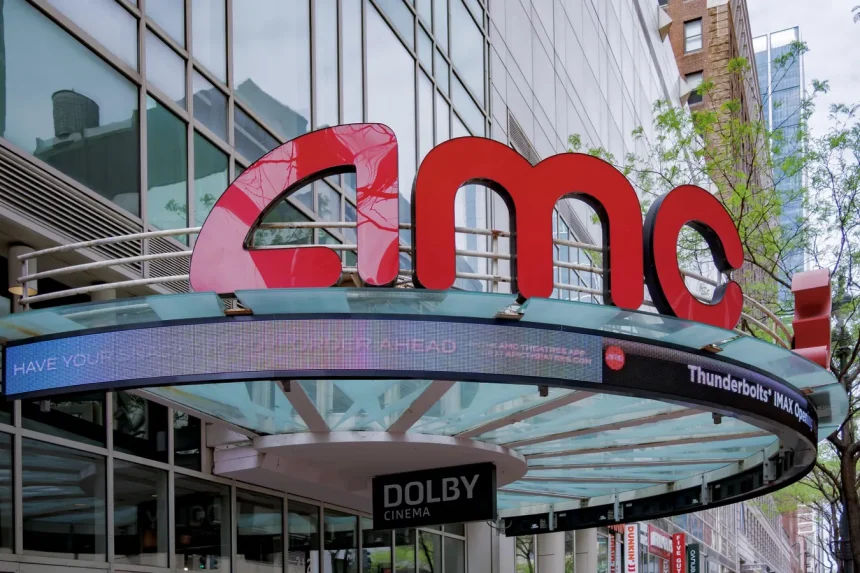
The Trump administration recently sparked a wave of online chatter by releasing a parody video that reimagines AMC’s iconic “We come to this place for magic” commercial. In this version, the glitz and glamour of a cinema are replaced by the corridors of the White House, with a protagonist sporting a “Make America Great Again” hat walking through the halls. The ad mimics the cadence and visual language of Nicole Kidman’s viral original, swapping her heartfelt monologue about the escapism of film for a message centered on political victory. By replacing the word “magic” with “MAGA” and declaring that “we don’t do heartbreak, we do victory,” the administration is attempting to leverage the cultural familiarity of the AMC ad to repackage their own political brand for a modern, digital-savvy audience.
The production value of the parody is intentionally close to the source material, utilizing music identical to the AMC original and even mimicking the specific font used in the theater chain’s branding. The video concludes with the bold claim, “Welcome to the Golden Age,” a phrase that seems to double as both a nod to the history of Hollywood and a vision for the future under the current administration. As of Tuesday morning, the clip had already garnered nearly two million views, proving that even controversial or potentially unauthorized uses of intellectual property are effective at driving significant social media engagement in today’s attention economy. Whether the clip is viewed as a clever satire or a clumsy appropriation, it has undoubtedly succeeded in dominating the digital conversation.
However, the rapid spread of the video has raised serious questions about creative rights and corporate permission. AMC has yet to provide an official comment, and it remains unclear whether the Trump administration reached out to the theater chain before deploying their intellectual property for political purposes. This uncertainty highlights a recurring pattern within the current administration’s social media strategy, which frequently leans on pop culture references—ranging from classic films to video game iconography—to amplify its messaging. While these parodies often generate viral momentum, they also invite a complicated debate about the intersection of creative work and political advocacy, especially when the original creators have not signed off on the association.
This is far from an isolated incident for the White House, which has built a habit of repurposing high-profile media to suit its own narrative. For instance, the administration recently utilized a clip featuring Anne Hathaway and Robert Pattinson from The Odyssey, splicing the film with footage of Donald Trump to declare that “the king is coming back.” This approach has landed them in hot water before; the Pokémon Company previously had to clarify that it was not affiliated with a MAGA-themed post that used their characters, emphasizing that their brand mission is to bring people together rather than align with a specific political agenda. These instances paint a picture of an administration that prioritizes immediate cultural impact over the traditional protocols of licensing and creative ownership.
The pushback from artists who feel their work has been co-opted for political messaging has been vocal and passionate. Musicians, in particular, have repeatedly expressed frustration when their art is used in ways that contradict their personal values. Katy Perry, for example, once voiced her anger after her song “Firework” was featured in a post regarding military strikes, labeling the act as a violation of the song’s intended message of self-worth. Similarly, artists like Sabrina Carpenter, Olivia Rodrigo, and SZA have all publicly distanced themselves from the administration’s use of their creative output. These disagreements reveal a deep-seated tension between the administration’s desire to piggyback on the cultural relevance of popular artists and the artists’ own desires to control how their life’s work is presented to the public.
Ultimately, the phenomenon of the AMC parody serves as a case study for the evolving landscape of political communication. As the line between traditional campaign messaging and viral internet meme culture continues to blur, the administration is clearly leaning into a strategy that favors disruption and recognizability. Whether they are drawing on the nostalgic power of a movie theater ad or the emotional weight of a pop song, the intent is always to translate existing sentiment into support. While these tactics are undeniably effective at grabbing headlines and maximizing impressions, they also risk alienating the creators behind the content, leaving us to wonder how long this strategy can persist before it encounters a more formal legal or cultural reckoning.