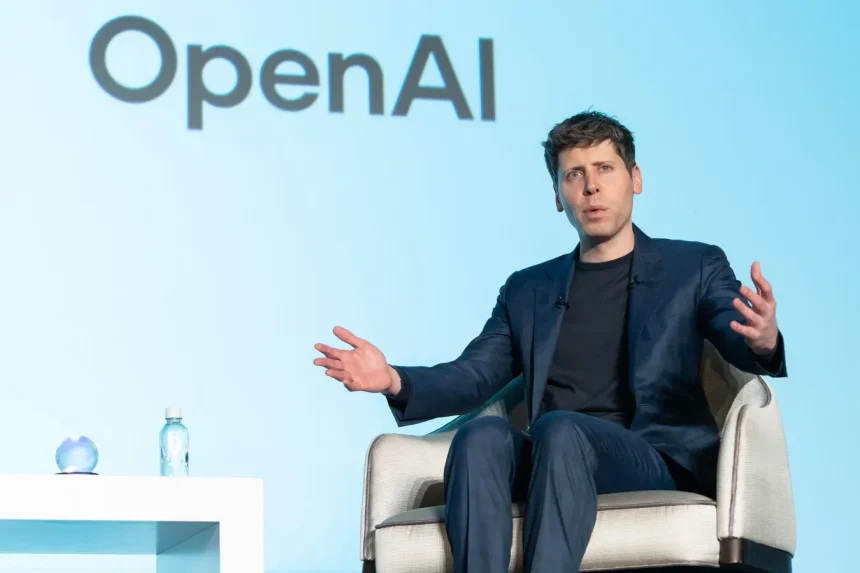
The AI industry just hit a massive turning point. In an unexpected move this past Monday evening, OpenAI confirmed that it has confidentially filed an S-1 form to go public—the formal first step toward an Initial Public Offering (IPO). This announcement serves as a tectonic shift for the tech world, coming right on the heels of similar filings from rivals like Anthropic. OpenAI opted to go public with the news after anticipating that word of their confidential filing would inevitably leak, a candid admission that highlights just how closely the world is watching their every move. While they’ve taken the initial step, they are keeping their cards close to their chest regarding a specific timeline.
There is a distinct tension between the inevitability of this move and the company’s desire for autonomy. Sam Altman and the OpenAI leadership team have made it clear that they aren’t rushing, noting that the status of a private company actually offers them more flexibility to pursue their long-term vision without the immediate, quarter-by-quarter pressure of public markets. They acknowledge that being a public entity involves a complicated set of trade-offs, and they are essentially “keeping their options open.” By filing now, they’ve simply ensured that if the timing feels right—or if market conditions align perfectly—that door is unlocked and ready to swing open.
The financial backdrop behind this decision is nothing short of astronomical. OpenAI is currently sporting an eye-watering valuation of roughly $852 billion, bolstered by a massive influx of capital from heavy-hitting strategic partners like SoftBank and Amazon. Yet, they aren’t the only ones in the race for dominance; their rival Anthropic, which was founded by former OpenAI employees, recently saw its own valuation soar past the $900 billion mark. This creates a fascinating power dynamic where the top players in artificial intelligence are not just competing on their actual products, but also in a high-stakes, multi-billion-dollar game of financial brinksmanship.
Beyond the numbers, the lead-up to this filing has been dramatic, characterized by high-profile courtroom battles and shifting philosophies. This move comes shortly after OpenAI successfully fended off Elon Musk, who had sued the firm over its shift from a nonprofit entity to a for-profit structure. Musk, who helped co-found the organization, took issue with its departure from its original mission. However, a California jury and a presiding judge ultimately sided with OpenAI, ruling that Musk’s legal challenges were untimely and legally flawed. This victory has cleared the path for the company to modernize its corporate identity without the immediate threat of legal obstruction from its former ally.
However, the road ahead isn’t entirely paved with gold. While OpenAI generated a staggering $13 billion in revenue last year—largely through the popularity of ChatGPT and its enterprise tools—the company’s actual profitability remains a subject of intense insider debate. Growth is clearly the goal, with the company aiming to triple that revenue by 2026, but recent reports from outlets like the Wall Street Journal suggest that they have occasionally missed their aggressive targets for user acquisition and income. In an industry where one must spend billions on data centers and specialized compute power just to stay relevant, the question of whether their business model can scale as fast as their ambitions remains the primary concern for potential investors.
Ultimately, this filing signals the “closing of the frontier” for the AI gold rush. With both OpenAI and its primary competitors officially preparing for public scrutiny, the era of the wild, unbridled startup phase in AI is wrapping up, giving way to the rigid, high-pressure world of the stock exchange. Whether or not OpenAI decides to ring that opening bell tomorrow or in three years, the filing is a clear declaration that they are ready to step into the sunlight. They are trading the cloaked freedom of the laboratory for the transparent, demanding, and relentless world of the public market, fully aware that while being private might be easier, the future belongs to those who can master the public stage.