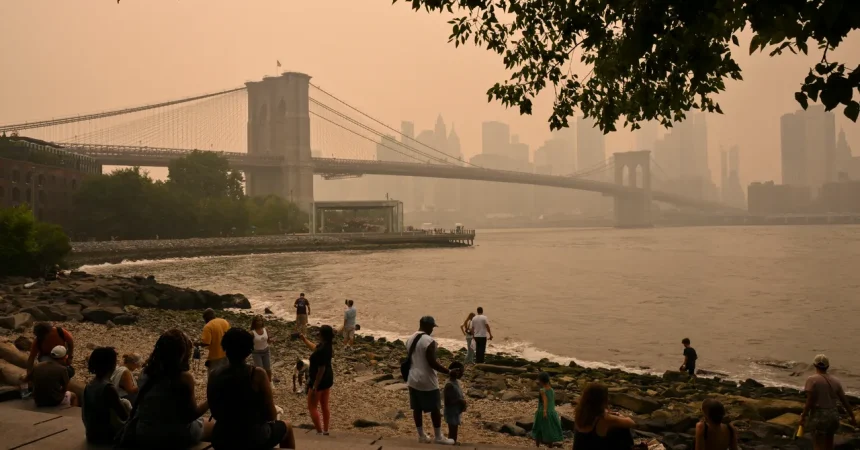
Summer has long been defined by simple, nostalgic pleasures: the sizzle of hot dogs on a grill, the feeling of sand between your toes at the beach, and the quiet comfort of sipping iced tea on a porch as the sun sets. These are the rhythmic traditions that ground us in the beauty of the season. However, in our rapidly changing climate, a new, unsettling rite of summer has taken hold—one where we are forced to trade clear skies for thick, suffocating layers of wildfire smoke, even when the fires themselves are burning hundreds, or sometimes thousands, of miles away from our front doors.
This phenomenon recently cast a surreal, sickly orange glow over vast stretches of the Midwest, the Northeast, and parts of Canada, triggering urgent air quality alerts that forced millions to retreat from the outdoors. Many of these plumes originated from intense, out-of-control blazes burning across Western Ontario and parts of Minnesota. As these fires rage, they release massive amounts of carbon and particulate matter high into the atmosphere, where the jet stream acts as a conveyor belt, whisking the hazardous smog eastward and settling it over densely populated metropolitan areas.
The scale of this crisis is difficult to wrap our heads around. On a single Friday, major cities like Chicago and Detroit found themselves under the shadow of the worst air quality levels in the entire world, with New York City and Washington, D.C., following closely behind. Local governments were forced to issue stern health warnings, urging vulnerable residents to seal their homes and abandon their outdoor plans. While the winds may clear the horizon temporarily, the underlying reality remains grim: the fires are not stopping, and the atmospheric conditions fueling them suggest that this smoky reality may become a recurring feature of our summer months moving forward.
It is impossible to ignore the scientific connection between our reliance on fossil fuels and the frequency of these catastrophic events. The burning of coal, oil, and gas has accelerated global warming, creating “tinderbox” conditions that turn once-manageable forest fires into uncontrollable infernos. We aren’t just seeing this in one corner of the globe; we are witnessing an international pattern. From the record-breaking, smoke-filled skies that paralyzed the East Coast last year to the devastating fires consuming landscapes in Spain, Australia, and California, the message from the planet is becoming increasingly impossible to ignore.
The human cost of this new reality is staggering. Scientific research, including a sobering study published in Nature, highlights that if we do not pivot away from carbon-intensive energy, we are looking at a future where mortality rates associated with smoke inhalation will climb sharply. Estimates suggest that wildfire smoke could lead to over 70,000 excess deaths annually in the United States by mid-century. Researchers project that a cumulative total of nearly 2 million lives may be prematurely cut short by smoke-related respiratory and cardiovascular health issues over the next few decades if these environmental trends persist unchecked.
Ultimately, these orange, hazy skies are a warning sign of a destabilized climate. While it is easy to view these events as a temporary discomfort that will blow over with the next wind shift, the long-term data confirms that we are merely witnessing the beginning of a larger pattern. Without substantial, global action to address the root causes of rising temperatures, we are effectively resigning ourselves to higher temperatures and even more aggressive fire seasons. The summer rites of the past—clear blue skies and fresh air—are being replaced by a dangerous atmospheric haze, and unless we change course, each summer promises to be more suffocating than the last.