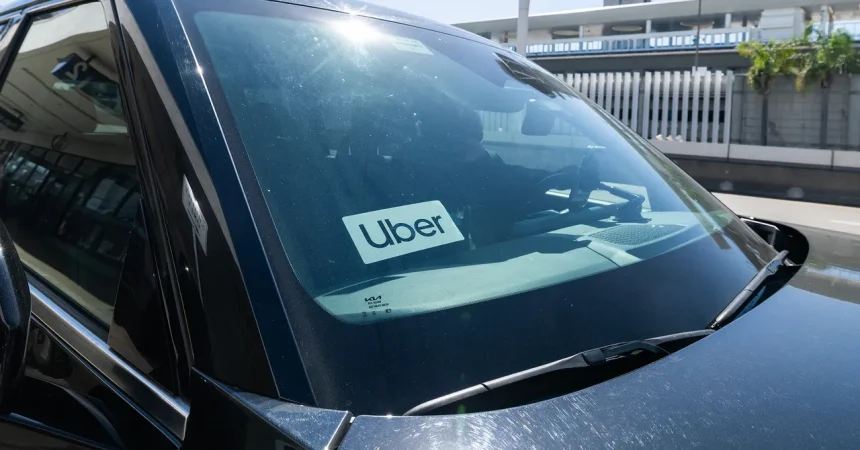
A decade ago, Uber was at a crossroads defined by an existential anxiety: either lead the charge into the world of autonomous vehicles (AV) or risk being rendered completely obsolete. Former CEO Travis Kalanick famously viewed self-driving technology as a race that the company couldn’t afford to lose. Fast forward to today, and the strategy has evolved from a defensive scramble into a calculated bid for infrastructure dominance. Under current CEO Dara Khosrowshahi, the focus has shifted from Uber manufacturing its own robotaxis to becoming the “universal gateway” for them. By partnering with over 25 major players—including heavy hitters like Waymo and Volkswagen’s MOIA—Uber is positioning its app as the essential marketplace where anyone can hail a ride, regardless of whether a human or an algorithm is behind the wheel.
This transition marks a fascinating shift in the gig economy’s power dynamics. Instead of fighting the robot uprising, Uber is attempting to act as the traffic controller for it. If they succeed, the Uber app will become a digital town square where human drivers and autonomous fleets coexist in what the company calls “hybrid networks.” From a business perspective, it is a masterclass in risk mitigation. By welcoming autonomous fleets onto their platform rather than building their own, Uber avoids the astronomical R&D costs and hardware headaches of car manufacturing while still capturing the transaction fees that keep the company profitable. They aren’t just selling rides; they are selling the ecosystem.
However, beneath the surface of this “coexistence” narrative lies a more aggressive political strategy. According to recent reports, Uber’s lobbying efforts are working hard to hardwire this hybrid model into state and municipal law. While they publicly frame these efforts as a way to support a “smooth transition” for displaced human workers, the fine print of their proposed legislation tells a different story. In New Jersey, for instance, lobbyists floated a proposal that would mandate that 85% of all ride-hail services be performed by human drivers for a three-year period. On its surface, this looks like a job-protection measure, but the practical effect would be to effectively bar standalone robotaxi companies from launching their own competitor apps, forcing them instead to operate exclusively through Uber’s platform.
This isn’t merely about preserving the status quo; it is about controlling the gate. By forcing potential competitors—like Tesla, Waymo, or Zoox—to rely on the Uber app to reach customers, Uber effectively neutralizes them as direct rivals. If a robotaxi company can’t operate its own app because of legislative requirements, it loses its brand autonomy and its ability to gather proprietary data. The strategy essentially turns autonomous car developers into service providers for Uber, rather than challengers to its throne. It creates a regulatory moat, ensuring that even if the car driving the passenger is a high-tech robot, the ticket for the ride is still being punched by Uber.
The legislative battles currently unfolding in Washington, D.C., and New Jersey illustrate just how far this lobbying reach extends. In D.C., Uber has actively engaged with city officials to ensure that any new autonomous transit laws explicitly accommodate “hybrid networks.” Meanwhile, the legislative language proposed in New Jersey hints at a deeper, more technical battle. By pushing for regulations that mandate specific sensor arrays or require traditional hardware like brake pedals and steering wheels, Uber’s lobbying efforts could inadvertently—or intentionally—shut out companies like Tesla, whose camera-only technology and steering-wheel-free designs are fundamentally incompatible with such rules. It is a sophisticated use of “safety” and “job protection” to mold the legal landscape in a way that favors Uber’s specific business model.
Ultimately, this is a story about the transition from human labor to automation and the corporate architecture being built to oversee that change. Uber is gambling that by the time autonomous vehicles are ready for mass adoption, the legal infrastructure will be so heavily stacked in favor of “hybrid platforms” that independent robotaxi companies will have no choice but to partner with them. Whether this is viewed as a responsible way to manage a chaotic technological shift or a shrewd attempt to monopolize the future of transportation remains to be seen. As the legislation winds its way through city halls and state capitals, the core question remains: will the public get the benefits of a competitive marketplace, or will the future of travel be dictated by a single, all-encompassing digital gatekeeper?