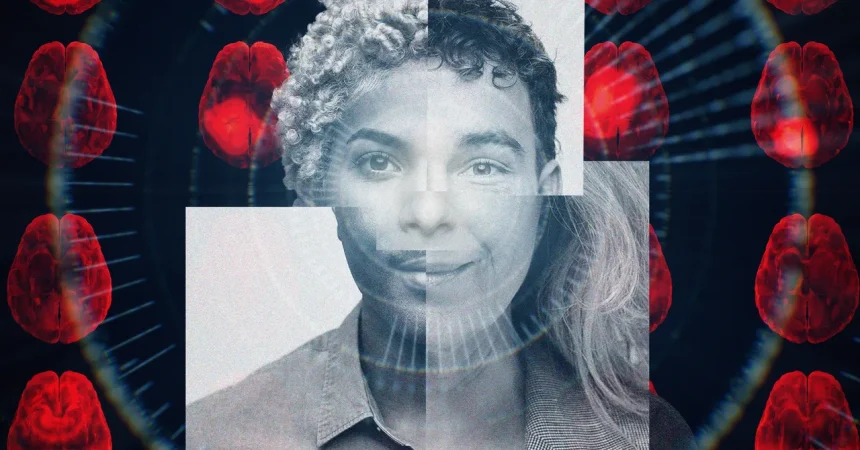
Gidi Littwin, the brilliant mind behind Apple’s transformative FaceID and Vision Pro technology, spent years pioneering how machines perceive human physical traits. However, in 2020, he chose to pivot away from consumer hardware to tackle a far more complex challenge: the inner workings of the human mind. His journey took an unexpected turn when Hagai Lalazar, a visionary who had auditioned dozens of potential partners, reached out via LinkedIn with a bold proposition. Lalazar had begun building an AI capable of decoding the brain’s electrical activity without the need for invasive surgery, and he needed someone with the technical pedigree and commercial experience to bring the idea to life. Together, they founded Hemispheric, setting out to turn the murky, subjective diagnosis of cognitive health into a precise, data-driven science.
The core challenge of mental healthcare has historically been its reliance on observation. Disorders like depression, Alzheimer’s, and Parkinson’s are usually diagnosed through behavioral cues and lengthy questionnaires—methods that are inherently subjective and often leave patients in the dark for years. Littwin and Lalazar realized that the key to unlocking these mysteries lay in data. Drawing on his experience at Apple, where he managed massive, complex data pipelines to train facial recognition, Littwin applied the same rigor to the brain. Over the past six years, Hemispheric has quietly amassed a “prized possession” of a quarter-million hours of brain data gathered from 100,000 volunteers across Asia, Israel, and the United States, effectively creating a massive training set for their AI.
The technology behind Hemispheric functions much like a Large Language Model (LLM), but instead of predicting the next word in a sentence, it predicts the meaning behind electrical impulses in the brain. They accomplished this by having volunteers engage in interactive, game-like tasks that activate different neural pathways. By analyzing these electrical signatures, their frontier model can infer brain function with striking accuracy. In early tests, the model successfully identified patterns associated with PTSD, schizophrenia, and depression. Currently, the team is working on longitudinal studies to determine if they can not only diagnose these conditions but also predict the onset of neurodegenerative diseases like Alzheimer’s before symptoms become debilitating.
The patient experience is designed to be as simple and accessible as possible. Instead of entering an expensive, intimidating medical facility, a patient puts on a lightweight EEG headset for about 15 minutes while playing a simple game on a tablet. This brief session provides the raw data needed for the AI to analyze, allowing clinicians to decode signals that were previously unintelligible. The goal, according to Lalazar, is to make these mental health screenings as routine and accessible as a standard blood test. By democratizing this technology, they hope to bring diagnostic power to small clinics, psychologists’ offices, and rural hospitals worldwide, ensuring that mental health is prioritized just as much as physical health.
The company is now moving toward serious regulatory milestones. With $52 million in new funding from prominent venture capitalists and tech veterans, including Howard Morgan, Hemispheric is preparing to submit its first diagnostic product for PTSD to the FDA early next year. If the process goes as planned, they hope to launch to the general public by 2027. This influx of capital will also allow them to forge partnerships with government health agencies and pharmaceutical companies, while simultaneously expanding their data collection efforts. Their ambition is grand: they are even developing custom, purpose-built brain scanners, arguing that traditional medical equipment was never designed with the needs of high-level machine learning in mind.
It is a fascinating time to be in the intersection of artificial intelligence and healthcare. While giants like OpenAI and Anthropic are dipping their toes into the medical field, and AI-driven diagnostic tools for conditions like lung cancer are already saving lives in Europe, Hemispheric occupies a unique, high-stakes position. They are not merely observing the body; they are attempting to map the very essence of human cognition. By bridging the gap between cutting-edge engineering and clinical neurology, Littwin and Lalazar are betting that the future of mental healthcare will be found in the statistics of our neural firings, ultimately shifting the paradigm from reactive treatment to proactive, data-informed intervention.