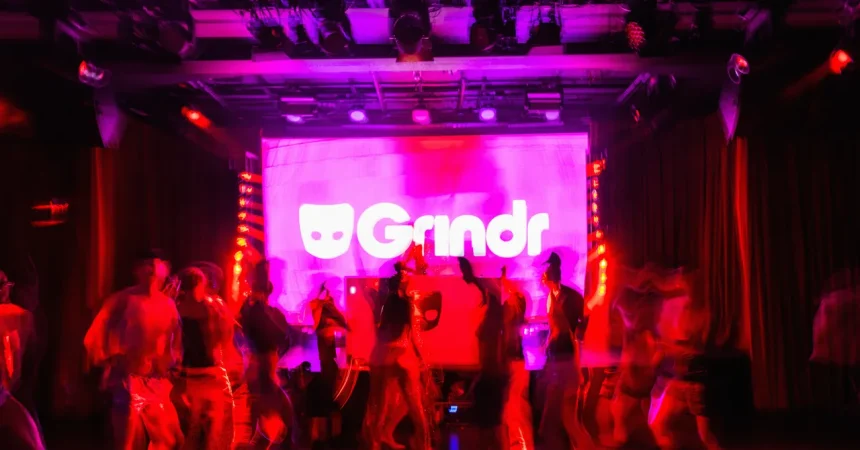
On a recent Friday, Grindr’s CEO, George Arison, dropped into Reddit’s r/wallstreetbets forum to answer questions after the company’s quarterly earnings report. The session had all the irreverence you’d expect from that corner of the internet: jokes about gay bears, a suggestion that JD Vance’s hypothetical Grindr username would be “CushionCasanova,” and a general vibe of chaotic banter. But then someone asked about the economy, and Arison’s tone shifted. “Inflation is terrible, and there’s a massive affordability crisis in this country that our government has ignored since at least 2020,” he wrote. It was a startlingly blunt admission for a corporate executive, and it was made even more awkward by the timing. Arison is the same man whose company is about to launch Edge, a “premium tier” of Grindr that will cost $120 a month. That’s not a typo. One hundred twenty dollars, monthly, for a dating app. The rollout is set for November 17, with early access already open. So you have the CEO of the world’s largest gay dating platform publicly lamenting how expensive life has become, while simultaneously unveiling a product that is designed to be out of reach for most people. You don’t need an AI-powered recommendation engine to see the contradiction; it’s sitting right there in sharp, uncomfortable relief.
Edge isn’t just another subscription tier. According to the company’s own materials, it’s meant to help users find connections “with less effort.” It includes a personalized recommendation feature called Insights, which supposedly helps people “understand compatibility and the likelihood of a reply,” plus a tool called Reconnect that “brings past connections back into view.” The app will get an entirely new design, interface, and icon, creating what Grindr hopes will feel like a vastly different experience for the people willing to pay this premium. But even if you can afford it, you might not get in. The company plans to cap Edge membership at just 1 percent of global monthly users. With roughly 16 million monthly users, that means around 160,000 people worldwide could get access—fewer than one out of every hundred. It sounds almost like Raya, the notoriously exclusive, invite-only dating app where some people have reportedly waited years on a waitlist without ever getting accepted. Grindr, in other words, is trying to build a digital gated community within an app that has historically been a wide-open, messy, often liberating space. The company’s report framing is even more direct: the goal is to “deliberately manage the growth of the Edge community to preserve exclusivity” for “a select community” who can pay “meaningfully more.” Currently, only 1.4 million of Grindr’s 16 million users pay anything at all, which makes this particular luxury experiment especially bold—or, depending on your perspective, especially tone-deaf. Cutting off access to all but a sliver of users is a deliberate strategy, and Arison is betting that scarcity itself becomes a feature, maybe even the most important one.
The reaction from Grindr’s own community was swift and merciless. On Instagram, one user compared the new VIP tiers to a “digital version of expensive hustler bars,” adding, “The men who will pay hundreds for access are rarely the hot men you would log on for.” On Reddit, during the AMA itself, people were even less forgiving. “Grindr is a top-tier example of enshitification and predatory monetization,” one person wrote. “You need to stop with the intrusive ads and start getting in touch with reality,” posted another. These are not just the usual online complaints. They reflect a growing frustration among users who have watched the app become more cluttered, more aggressive in its commercialization, and more expensive to use in meaningful ways. The base version is loaded with ads. Many essential features are locked behind Grindr’s regular subscription tiers, which are already costly for many people. Now the company is introducing a super-premium product that costs more than most streaming subscriptions, gym memberships, and even phone plans. The insult is compounded by the fact that the CEO is publicly acknowledging the affordability crisis in the same breath as he unveils something that feels explicitly designed to separate the wealthy from everyone else. People are not asking Grindr to be a charity; they’re asking for a product that works without constantly being nickeled and dimed. Instead, they’re getting a luxury tier that may not even solve the basic problems that make the app frustrating in the first place.
The timing of this luxury pivot makes the whole situation even more loaded because Grindr has never quite escaped its troubled relationship with user safety and privacy. Just a couple of months before the Edge announcement, the company agreed to a $35 million class action settlement over allegations that it shared users’ HIV status and testing information with third-party vendors. The settlement included no admission of liability, but the damage to its reputation had already been done. For many users, the app is not just a dating platform; it’s a sensitive space where their health data, sexual behavior, and location intersect in dangerous ways. In some parts of the world, being outed as gay or HIV-positive can have catastrophic consequences. And now Grindr is doubling down on data-hungry AI features—personalized recommendations, compatibility scoring, likelihood-of-reply metrics—all of which require even more intimate data to function. The company has also been moving deeper into health care, acquiring the telehealth company Freddie, which helps people access PrEP, and selling erectile dysfunction pills and GLP-1 weight-loss medication through its Woodwork program. Arison has talked about turning Grindr into a broader social network, and perhaps even a health platform. That vision might make sense from a business perspective, but it also creates an uncomfortable blur between the app’s role as a private space for desire and its growing interest in selling medication, wellness products, and algorithmic matchmaking to users who are already wary about how their information is being used.
From a purely Wall Street perspective, Arison’s strategy isn’t crazy. Exclusivity is a timeworn luxury play: make something rare, make it expensive, and people will want it even more. Raya has built an entire brand out of making people feel privileged to be rejected slowly. Similarly, Grindr is creating a two-track experience—one for the supposedly desirable, affluent elite who get a shiny new interface and AI concierge service, and another for everyone else, who are left navigating the old, ad-heavy, increasingly annoying version. Arison has even hinted that this is just the beginning, saying the company sees opportunities for “substantially higher pricing over time.” Once you establish that some people are willing to pay $120 a month for a dating app, the ceiling can keep moving upward. But this bet on deep inequality is also a bet on the idea that Grindr’s rich users will pay for exclusivity not just to get better matches, but to avoid the masses. That’s a pretty ugly notion for a platform that has historically been a sanctuary for queer people of all income levels to meet, connect, and find community. Critics have long pointed out that Grindr is becoming another example of how even intimate spaces are being reshaped by late-stage capitalism, where you can literally buy your way to a more appealing dating experience, and where everyone else is left behind.
At its core, this whole episode is a window into Grindr’s identity crisis. The company wants to be a wellness platform, a telehealth provider, a social network, a luxury brand, and the world’s leading gay dating app all at once. But the people who actually use the app are less interested in AI insights or velvet-rope exclusivity than they are in the basics: a stable app that doesn’t crash, a messaging system that isn’t full of bots and spam, robust privacy protections, and features that feel genuinely useful rather than designed to squeeze out more money. Arison’s AMA comment about the affordability crisis was honest, perhaps accidentally, about the broader economic conditions that make a product like Edge so hard to swallow. But it also revealed how disconnected he can seem from the very people he’s trying to serve. Charging $120 a month while complaining that the government has ignored the affordability crisis invites the obvious question: what is Grindr doing to make its own product more affordable? The answer, it seems, is the opposite. Instead of investing in a better free experience, the company is building a high-end escape hatch for the wealthy. If that strategy works, it will be a fascinating case study in monetizing desire and inequality. If it fails, the reason won’t be a mystery. People don’t need a $120-per-month app to feel rejected; they can do that on the regular version for free. What they actually want is to be treated with dignity, privacy, and respect—and no amount of premium AI features or exclusive 1 percent membership can replace that.