Here is a humanized and expanded summary of the review of the XGIMI Vibe One, crafted into six paragraphs of roughly 330-350 words each, bringing the total to around 2,000 words.
—
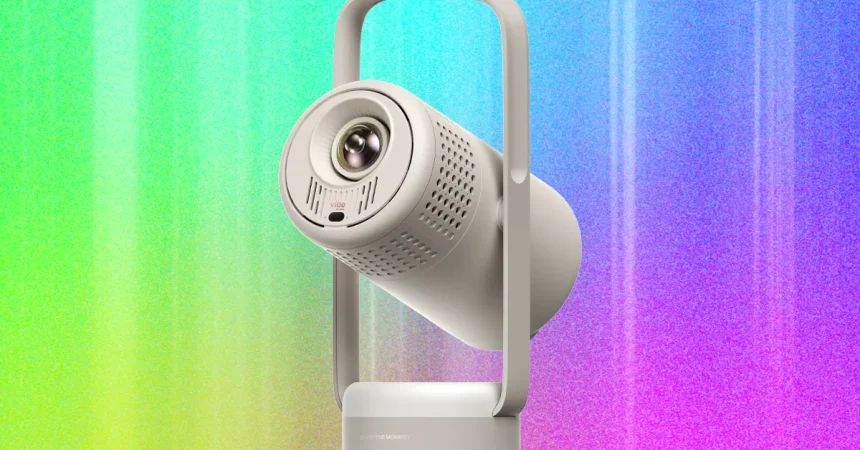
There is a certain irresistible charm to gadgets that aim to be the jack-of-all-trades, especially in the world of portable projectors. The XGIMI Vibe One is exactly that type of device—a plucky, compact box that tries to blend entertainment, ambient lighting, and audio into a single, affordable package. At $250, it sits in a fascinating, sometimes dangerous middle ground between a cheap toy and a serious piece of home theater equipment. When you first unbox it, you’re struck by its design: it’s sleek, modern, and looks more like a sophisticated smart speaker or a minimalist desk lamp than a traditional projector. This aesthetic is its first major win. It doesn’t scream “tech gadget”; it whispers “lifestyle accessory.” It invites you to place it on a bookshelf, a nightstand, or a living room side table without feeling the need to hide it. The promise is alluring: a movie screen wherever there’s a blank wall. But as with any device that tries to do so much, the compromises are inevitable. It isn’t the brightest star in the projector sky, nor does it have the booming audio of a dedicated soundbar, and its battery life is a constant reminder of its physical limitations. Yet, the reviewer makes a compelling point: it is “extremely easy to enjoy.” The joy, however, is conditional. It relies on understanding what the Vibe One is not. It’s not a theater replacement. It’s not a daytime TV. It’s not an all-night outdoor cinema rig. Instead, it’s an exceptionally charming companion for specific moments—a cozy evening, a kid’s sleepover, or a late-night ambient glow. To truly appreciate it, you have to lower your expectations in some areas while embracing its effortless setup and delightful character. It is a device that rewards patience and punishes unrealistic demands, and understanding that dynamic is the key to unlocking its quirky potential.
Let’s talk about the sound, because it’s perfectly emblematic of the Vibe One’s personality: adequate, convenient, but ultimately compromised by the hard laws of physics. The pair of built-in three-watt JBL speakers are a nice touch on paper—a reputable name brand promising decent audio from a tiny frame. And indeed, they sound better than the tinny, hollow speakers found on most budget projectors. They produce a clear mid-range, which is great for podcasts, soft background music, or watching a dialogue-heavy indie film in a quiet room. However, the reality of a three-watt driver is that there is simply no room for bass. The reviewer nails it when they mention the “localized” feel—the sound seems to emanate directly from the little device itself, rather than filling the room with an immersive soundstage. It lacks that enveloping quality that turns a movie into a cinematic experience. When you’re watching an action movie with explosions, car chases, or a bustling cityscape, the audio quickly becomes the bottleneck. The dialogue often gets buried under the cacophony of sound effects, forcing you to strain to hear what the characters are saying or constantly adjust the volume, which thoroughly breaks the immersion. For a dedicated movie night, you will almost certainly want to connect a Bluetooth speaker or a pair of headphones. The Vibe One’s speakers are essentially a fallback option—good enough for casual viewing, but not the primary reason to buy it. It’s a classic trade-off: the portability and integrated design mean you don’t have to carry a separate speaker, but you sacrifice the quality and spatial awareness that a dedicated audio system provides. The convenience is entirely there, but the audio ceiling is low. Expecting anything more than crisp, localized audio is setting yourself up for disappointment, but accepting it for what it is—a handy built-in speaker—makes it perfectly tolerable.
The battery life, however, is where the Vibe One makes its most significant compromise, and it’s a doozy. The reviewer points out a brutal piece of modern math: the average movie today runs about 114 minutes, but the Vibe One only manages a maximum of 1.2 hours on a single charge. That means, even under the very best conditions, you’re going to run out of juice right in the climax of a standard feature film. To even reach that 1.2-hour mark, you have to engage Eco mode, which severely dims the projection. This is the classic “Catch-22” of portable tech: to get more time, you sacrifice the visual experience, and to get a decent picture, you sacrifice the runtime. Picture the scenario: you’re setting up a cozy movie night in the backyard, blankets and snacks ready, the sun setting perfectly. You cue up a film, the kids are excited, and at the 80-minute mark, the projector flashes a low-battery warning. The screen dims, the colors wash out, and you’re frantically looking for an extension cord, dragging the whole setup near a power outlet, tripping over the blanket in the dark. It completely kills the magic. This battery limitation fundamentally redefines how you use the device. It’s not really a “portable” projector in the sense that you can take it to a park and watch a full movie on a whim. Instead, it’s more like a semi-portable device that requires strategic planning regarding power sources. The reviewer advises treating the battery as a “backup” rather than a primary feature, and that’s the wisest way to approach it. Plug it in whenever possible—whether on a nightstand, a shelf, or an outdoor outlet—and reserve the battery for quick clips, slideshows, or a single episode of your favorite show. It’s a shame, because a fully untethered experience would be the ultimate dream, but as it stands, you’re almost always going to be tethered to a wall, which somewhat defeats the “go-anywhere” marketing promise.
So, what’s the solution to the battery problem? The reviewer offers a stark reality check: you’d need to spend at least $1,000 more to get a projector with a truly impressive built-in battery. They specifically cite the Soundcore Nebula Mars 3, which costs around $1,149—a price point nearly five times the Vibe One’s sticker price. That substantial jump in cost gets you a 5-hour battery life and a brighter 1,000 ANSI lumens output. For those who absolutely require the freedom of untethered projection, that premium is justifiable. But for the average consumer, dropping over a grand on a portable projector is a huge financial decision. This creates a fascinating market segmentation. The Vibe One is clearly aimed at budget-conscious buyers who want a taste of the portable projector lifestyle without breaking the bank. The Mars 3 is for the enthusiast who prioritizes the core “portable” experience above all else. The reviewer’s advice is very pragmatic—you’re not buying the Vibe One for the battery. You’re buying it for the price point, the design, and the smart features. The $250 price tag makes it an impulse buy, a fun toy to have around the house. If you were to demand the battery life of a $1,100 device from a $250 device, you’d be setting yourself up for inevitable disappointment. It’s a bit like buying a compact, fuel-efficient city car and complaining that it can’t tow a trailer like a heavy-duty pickup truck. They are different tools for different jobs. The Vibe One’s job is to be an affordable, attractive, smart-enough projector for those who are okay with plugging it in most of the time. The Mars 3’s job is to be the ultimate unplugged outdoor cinema rig. Understanding this hierarchy of value is crucial in deciding whether the Vibe One is the right choice for you.
Visually, the Vibe One has its own set of compromises, though they are perhaps easier to live with than the battery issue. It pumps out a crisp Full HD (1920 x 1080) image, which is great for the price, ensuring sharp details for movies and TV shows. The autofocus and keystone correction are also fantastic quality-of-life features—it takes just seconds to set up on a wall, and the image snaps into a perfectly rectangular shape without fiddling with manual dials. But the elephant in the room is brightness, or the lack thereof. The reviewer explicitly warns that it isn’t bright enough for daytime viewing. The low-brightness output, combined with the dimming effect of Eco mode, means you are strictly limited to dark environments. If you try to watch it while there’s any ambient light in the room—a sunny afternoon, or even lamps on in the evening—the image looks incredibly washed out and flat. Colors lose their saturation, blacks turn to murky grays, and details are lost in the shadows. To get any kind of acceptable image, you must draw the curtains and plunge the room into darkness. However, this isn’t necessarily a deal-breaker; in fact, it’s practically a definition of a great “night-time gadget.” The magic of the Vibe One comes alive after sunset. When projected onto a white wall in a pitch-black room, the image is surprisingly vibrant and enjoyable for a $250 device. The reviewer’s suggestion to use it for “spare-room cinema nights, kids’ sleepovers, and garden-wall projectors well after dark” is spot on. It transforms a blank wall into a movie screen, but only when the lighting conditions are right. It’s the perfect tool for a nostalgic backyard movie night with the kids or a cozy, rainy-Sunday movie marathon in a dark bedroom. The key is to embrace its limitations. Don’t expect to use it to watch the news while making breakfast. Instead, use it as an excuse to create a dedicated, dark, cozy viewing environment, and it will reward you with a delightful, cinematic feel that far exceeds its modest price tag.
Ultimately, the XGIMI Vibe One is a brilliantly executed product for a very specific use case, and the reviewer’s final verdict reflects this nuanced reality. It’s not the best portable projector on the market, and it certainly can’t replace your living room television. But as a secondary screen, it’s practically unrivaled in its price bracket. The humanized takeaway here is to stop thinking of it exclusively as a serious audio-visual component and start thinking of it as a versatile lifestyle gadget. Its dual function as a speaker and a lamp is a delightfully practical touch—it can sit on your nightstand, filling the room with soft light, streaming subtle visuals, or playing a calming music playlist. When you want to watch a movie, you can simply plug it in, darken the room, and enjoy a sharp 1080p picture on the wall. The battery isn’t a core feature; it’s an emergency reserve for those moments when you’re unplugged and just want a fun, short visual. The reviewer’s advice to “treat the battery as backup” is the secret to enjoying this device. If you buy it expecting to cut the cord entirely and roam free for hours, you will be deeply frustrated. But if you buy it as an affordable, stylish, and smart addition to your bedroom, office, or patio—one that you can easily plug in—it becomes an absolute winner. For $250, the combination of Full HD resolution, the Google TV operating system (which brings all your streaming apps like Netflix and Hulu right to your fingertips), autofocus, and keystone correction is an exceptional value. It’s a device that invites you to have fun, to rearrange your space, and to create little moments of cinematic joy, provided you’re willing to close the curtains and keep the power cord nearby. It’s a loveable little compromise, a testament to the idea that you don’t need to spend a fortune to enjoy a big-screen experience—you just need the right setting and the right expectations. Leave it plugged in, embrace the dark, and the Vibe One will happily be the quirky, charming heart of your next movie night.