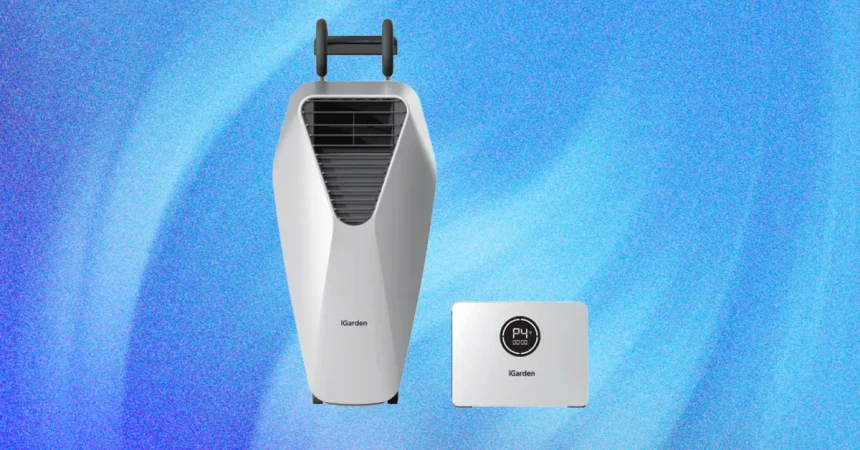
The iGarden Swim Jet system is centered around an impressively robust power unit that acts as the heart of the device. Available in three different configurations, the version I tested—the X Pro 10—is a heavy-duty, 26-pound battery pack that provides a significant 60 amp-hours of capacity. While the manufacturer claims the device can run for up to 10 hours, that figure is only achievable on the lowest, least demanding power setting. Because the lower-tier models (30 Ah and 15 Ah) also trade away a bit of their mechanical output and throughput power, choosing the right battery size is a meaningful decision based on how intensely you plan to train.
Setting up the equipment is relatively straightforward, though there are a few physical quirks to navigate. The jet and the battery pack link together with a thick, heavy-duty cable, which can be wrapped around the handle for tidier storage. The kit also includes a metal tethering cable intended to anchor the unit to a pool ladder or deck fixture for safety. In practice, finding a suitable anchor point proved difficult, though I found that the unit felt stable enough that I was never genuinely concerned about it slipping into the water. Charging times can stretch up to seven hours, so you’ll want to plan your swim sessions in advance.
The physical placement of the jet within your pool is the most critical part of the setup, though the adjustment mechanism itself is a bit cumbersome. By using a series of knobs and brackets on the back of the frame, you can fine-tune the height of the jet relative to the water line. If you position it two to four inches below the surface, you get a smooth, consistent current ideal for serious lap training. Alternatively, raising it toward the surface creates a splashy, playful fountain effect. Despite the slightly primitive design of the adjustment system, it performs its job reliably once you have everything locked into place.
Once the unit is submerged, operational control is refreshingly simple. You can manage your workout directly via buttons on the battery pack or through the more intuitive iGarden mobile app. The system offers four distinct power levels, a short-burst “Turbo” mode, and a clever “PF” setting that varies the intensity to mimic the natural flow of ocean currents. You can also set a timer to shut the unit off automatically, which is a nice touch for a structured session. During my testing, I found the app interface made it much easier to select these modes than the physical buttons, allowing for seamless transitions during a workout.
Putting the device to the test with an experienced swimmer provided some interesting insights into its performance. We discovered that level 3 is the “sweet spot” for most exercise; at this intensity, there is a clear, stable zone—roughly five to ten feet from the unit—where you can swim against the current and remain stationary. The physics of the flow are interesting: it’s overpowering right at the wall and virtually non-existent thirty feet away. My wife, a seasoned lap swimmer, found that by alternating between drifting with the current and fighting back to the “stasis zone,” she could mimic the rhythm of a traditional long-form swim session.
Ultimately, the Swim Jet offers a highly effective, legitimate workout, though it does differ from traditional lap swimming. While it provides about 80% of the intensity of a standard lane swim, the lack of forward translation—the sensation of moving your body through space—makes it feel slightly different from navigating a full-length pool. The battery life also drops significantly under higher exertion; while the lowest settings might last for hours, a serious training session on level 3 will deplete your power in closer to two hours. For those looking to maximize their pool time without needing a massive, professional-grade lap pool, the iGarden system is an impressive and well-engineered alternative that brings the resistance of a gym straight to your home.