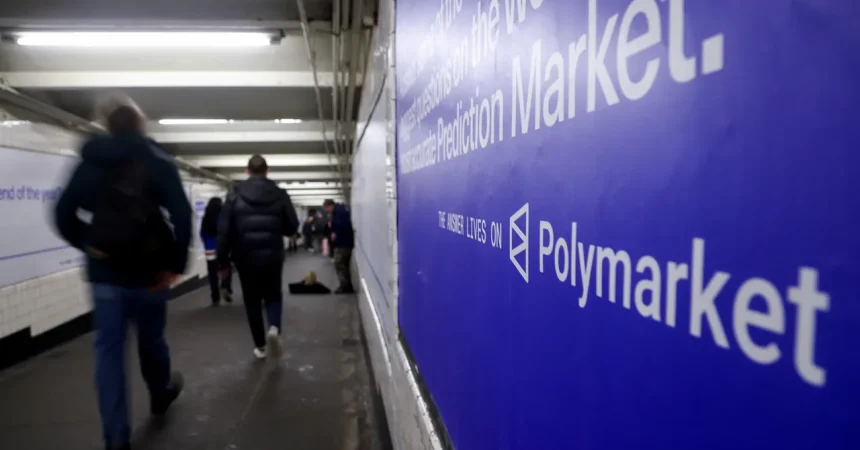
Imagine waking up one morning, grabbing your phone, and checking your trading account only to find that your money isn’t where you left it. That’s the nightmarish scenario that some Polymarket users experienced recently, as trading on the platform’s international site was temporarily halted after a hack drained funds from traders’ wallets. The breach didn’t come from Polymarket’s own website being cracked open; instead, the company said a third-party vendor based in the United Kingdom was compromised. It’s a subtle but important distinction—your house didn’t get broken into, but the locksmith you hired turned out to be a weak link. Polymarket promptly notified law enforcement authorities in the UK and paused trading for several hours while investigators worked to understand what had happened. Then, as suddenly as the pause began, trading resumed. But for those who lost money, the stomach-dropping feeling didn’t disappear with the reopening of the market. The whole episode is a reminder that prediction platforms, no matter how sleek or successful, are still fragile systems built on layers of trust, code, and human partners—and when any one of those layers fails, real people in the real world are left to deal with the emotional and financial fallout.
The damage, as far as outsiders can tell, was significant. According to Bubblemaps, a blockchain analytics firm that has become something of a detective in these crypto-native incidents, roughly 700 users appear to have been affected, and around $2.7 million was stolen. That’s a lot of money, but the human cost is harder to quantify. On X, prominent traders took to the timeline to complain loudly about their losses, sharing screenshots and expressing a mix of anger, frustration, and disbelief. Some may have lost savings; others may have lost winnings they planned to withdraw; still others may have lost entire bankrolls they’d built up over months. Polymarket itself declined to comment when WIRED asked exactly how many people were impacted and how much money was actually drained. But the company did say it will refund affected traders. That promise is crucial, because in the high-stakes world of prediction markets, trust is the real currency. If users start to believe their money is not safe, they’ll leave for a competitor or simply stop trading altogether. Refunds help, but they don’t erase the anxiety, the uncertainty, or the feeling of being violated. It’s one thing for a company to say “we’ll make you whole”; it’s another to know that for a few hours—or longer—your financial security was hanging by a thread. And in a market where users are often making bets on politics, world events, and economic outcomes, the last thing anyone wants to worry about is whether the platform itself is a gamble.
One important detail that may have been lost in the panic is that not all Polymarket users were affected. The hack did not impact Polymarket US, the company’s newer and more regulated platform designed specifically for people within the United States. This is because Polymarket doesn’t run a single giant operation; it runs two separate prediction markets. Polymarket US is a federally regulated financial exchange that operates within the strict boundaries of American law, while the flagship Polymarket is a cryptocurrency-based platform that is actually banned in the United States and several other countries. That split might seem confusing at first, but it makes sense when you look at the regulatory landscape. In the U.S., online political betting has traditionally been a supervised, legal activity that must comply with federal and state laws. International Polymarket, by contrast, is more of a crypto-native, freewheeling arena where users from around the world can wager on nearly anything, often with less oversight. The fact that the attack hit the international platform and not the U.S. one doesn’t mean one is inherently more secure than the other. But it does highlight how complicated it is to run a global financial service in a patchwork of jurisdictions, each with its own rules, threats, and expectations. For ordinary users, the key takeaway is simple: not everyone is in the same boat, but everyone on the international platform has a reason to pay close attention to security announcements.
Unfortunately, this is not the first time Polymarket traders have found themselves in choppy waters. In June 2026, the platform experienced another breach that resulted in more than $2 million in losses for its users. So this latest incident isn’t just an isolated event; it’s part of a pattern that has started to raise uncomfortable questions. How can a market that deals in real money, real predictions, and real geopolitical events keep having security problems? Why did it take an outside analytics firm like Bubblemaps to give users a rough sense of the damage? Will the promised refunds actually arrive quickly, or will they come with endless delays and fine print? These are the kinds of questions that keep users awake at night, especially those who saw their balances drop to zero in a matter of moments. At the same time, it’s worth noting that the company is not sitting still. It has acknowledged the problem, notified law enforcement, and pledged to make things right. But for a platform that has grown into one of the most visible players in the prediction market industry, that may not be enough. Trust is hard to build and easy to break, and two multimillion-dollar breaches in the same era are enough to shake even the most loyal supporters. People don’t just want their money back—they want to know why their money is being held somewhere that could be breached in the first place. They want to know that the next security audit won’t find another back door. They want to hear more than a statement; they want to see deeper changes, stronger safeguards, and a clear commitment to protecting users rather than merely reimbursing them after the fact.
Beyond the security issues, Polymarket has been a lightning rod for controversy ever since it launched in 2020. It’s hard to mention the platform without acknowledging the high-stakes, often fraught world it operates in. Over the past few years, the company has found itself at the center of several high-profile alleged insider trading incidents that ultimately led to arrests. One case involved a special forces soldier accused of wagering on the capture of Venezuela’s former leader, a story that sounds almost like a spy thriller—except it’s real. Another involved a Google employee who allegedly used confidential information to make millions on the platform before getting caught. In both cases, the suspects have pleaded not guilty, and under the law they are presumed innocent until proven otherwise. Still, these cases have painted a picture of a platform where information is power and where the line between legitimate trading and illegal insider dealing can become dangerously thin. Prediction markets are supposed to be a way to aggregate public knowledge and produce uncannily accurate forecasts. When participants with secret inside information start betting, they distort the signals that make these markets valuable. More importantly, they undermine the fairness of the game for everyone else. If you’re an ordinary user trying to make a smart bet on election night or a geopolitical event, you don’t want to be competing against someone who already knows the outcome. The company has insisted it is cooperating with authorities and working to prevent such abuse, but the recurring scandals have made it difficult for some critics to take those assurances at face value. Each new headline adds another layer of skepticism, and for a business built on collective intelligence, that skepticism is dangerous.
And yet, despite all of these controversies, the money is still pouring in. In August 2026, Polymarket raised a staggering $1 billion in a fundraising round led by 1789 Capital, the venture capital firm where Donald Trump Jr. is a partner. The company is now valued at $21 billion. That’s an enormous number, and it tells you just how much confidence investors have in the future of prediction markets—or at least how much they’re willing to bet on it. The idea that you can tap into a global trading platform for real-time odds on everything from elections to conflicts to consumer trends is incredibly appealing. It feels like the future, a democratized world where information isn’t hoarded by elites but traded openly by everyone. But it also feels, on days like the one when this hack was announced, like a digital casino built on quicksand. The contradiction of Polymarket is that it keeps growing even as it keeps stumbling. It raises billions while users lose millions. It promises transparency while sometimes failing to disclose enough about what went wrong. It offers a thrilling, irreverent alternative to mainstream finance even as law enforcement circles around it. For the people who use the platform every day, what matters most is not the valuation or the fundraising round—it’s whether they can trust the system with their money. The best prediction markets are powerful tools because they reveal the wisdom of crowds. But the crowd’s wisdom is meaningless if the crowd’s funds aren’t safe. As Polymarket moves forward, it faces a simple but compelling challenge: can it hold onto the growth, the innovation, and the excitement that made it so valuable, while finally getting serious about protecting the people who make it all possible? Only time, and perhaps the next news cycle, will tell.