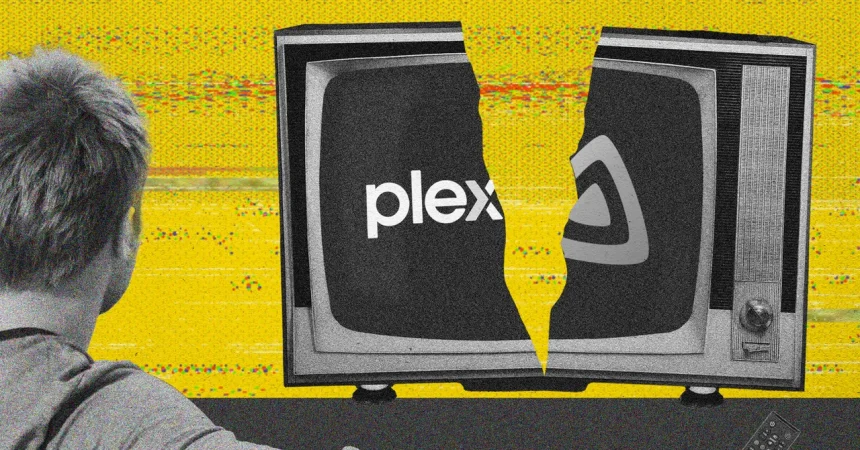
For years, Plex has been the gold standard for “cutting the cord,” allowing us to curate our own private Netflix-like experience from home movies, ripped DVDs, and recorded broadcasts. It’s a brilliant piece of software that transforms a cluttered hard drive into an elegant, navigable library. However, a growing sense of friction has emerged between the long-time users and the company itself. Plex seems increasingly obsessed with becoming a “everything app,” stuffing its interface with ad-supported streaming catalogs, social media features, and user review modules—none of which many of us actually asked for. When the core mission drifts from helping you watch your content to pushing their sponsored content, usage begins to feel less like a personalized service and more like a cluttered billboard.
The frustration is not just ideological; it’s financial and practical. Users who invest in a Plex Pass to support the “local media” dream often find their subscription dollars subsidizing features they actively seek to disable. To make matters worse, the recent decision to hike the Lifetime Pass price from $250 to a staggering $750 is a hard pill to swallow. Paying for a decade of service upfront, contingent on a company’s future stability and design trajectory, feels like an increasingly risky bet. When the software feels like it is working against your specific needs—like recording live TV or accessing local files—rather than for them, it’s only natural for the loyalty to wane.
Enter Jellyfin, the open-source hero for anyone looking to reclaim their media server freedom. If your primary goal is simple, reliable local streaming within the walls of your own home, Jellyfin is genuinely impressive. It is lightweight, free, and surprisingly intuitive to set up. You point the server at your media folders, a quick scan organizes your posters and metadata, and you’re ready to watch on your TV or tablet. The transition process is remarkably smooth; if you can handle the minor hiccups of file naming conventions—a common hurdle in any media server—you will find that Jellyfin delivers the core experience of locally hosted content without the bloat of an ad-ridden interface.
Of course, the “free” price tag comes with a catch, primarily centered on accessibility outside your home. Plex makes remote access look like magic: you log in, the server connects, and your movies follow you to a hotel room or a friend’s house without you ever touching a router setting. This is made possible because Plex acts as a middleman, providing the infrastructure to bridge that gap. Jellyfin, being purely open-source and privacy-focused, doesn’t support this kind of centralized hand-holding. There is no “Plex cloud” to route your connection; you are the captain of your own ship, and you carry the responsibility of networking.
For many users, this is where the road forks. Configuring remote access for Jellyfin is not a plug-and-play experience. It requires a degree of technical elbow grease that assumes a familiarity with port forwarding, VPNs, or setting up a reverse proxy with a custom domain. While this might be a fun weekend project for the true home-lab enthusiast, it creates a significant barrier if you want to share your library with family members who aren’t tech-savvy. You aren’t just managing software anymore; you are managing a private network. If you aren’t prepared to troubleshoot your own firewall or jump into the world of network security, the “free” nature of the service requires a payment in time and patience.
Ultimately, the choice between Plex and Jellyfin comes down to what you value most: convenience or control. If you want a polished, hands-off experience that “just works” for everyone in your household, and you can stomach the cluttered interface and corporate feature-creep, Plex is still the titan in the room. But if you are tired of the marketing noise, the aggressive pricing, and the sense that your media server is being slowly taken over by corporate interests, Jellyfin offers a refreshing, independent alternative. It’s a tool built for the user rather than the shareholder, provided you’re willing to take full ownership of the digital plumbing that puts your movies on the screen.