Televisions are undergoing their most significant shift in years with the emergence of “mini RGB” technology. Unlike traditional LED or QLED screens that rely on white or blue backlights to paint their images, these new displays use dedicated red, green, and blue light sources directly behind the panel. Manufacturers like Hisense, Samsung, LG, TCL, and Sony are branding this as a way to generate “pure color at the source.” While the marketing labels vary—with companies splitting hairs between “mini” and “micro” RGB—the core goal remains the same: to create an LED-based television that finally offers the vivid color, deep contrast, and searing brightness needed to stand toe-to-toe with high-end OLED panels.
After spending weeks testing five different models across various lighting conditions and content genres, I found that mini RGB is, without a doubt, a vibrant leap forward in display quality. The most striking improvement is the screen’s behavior in bright rooms; where OLEDs can sometimes struggle with glare or peak brightness limits, these mini RGB sets remain sharp, clear, and punchy. They also excel at maintaining color integrity from wide viewing angles, making them a fantastic choice for living rooms where the whole family is spread out across the couch. However, do not sell your current OLED just yet. While this new tech represents a masterful evolution of LCD panels, it is not a complete revolution in the way “self-emissive” pixels are.
One of the most important things to understand about mini RGB is that it behaves more like a high-performance sports car than an “out-of-the-box” appliance. Unlike traditional TVs that look decent on their default settings, these new models are deeply customizable. The brightness, contrast, and clarity settings have a tangible impact on the picture, much like adjusting a car’s suspension or transmission for a track day. If you are willing to dive into the settings and calibrate the display to your specific environment and movie preferences, the results are breathtaking. If you prefer a “set it and forget it” experience, you may find the stock picture modes a bit underwhelming or occasionally too dark.
The current barrier to entry is, as expected with new technology, the price tag. While Hisense has managed to push a 65-inch model close to the $2,000 mark, most of the premium competition sits closer to $4,000. That is a significant premium—roughly $1,300 more than flagship OLEDs—which makes it a tough sell for the casual viewer. For those who do take the plunge, installation is generally standard, though it is worth noting that these panels can be quite heavy. Larger models, such as the TCL RM9L, push past the 100-pound mark, requiring extra caution and reinforced mounting hardware to ensure they stay safely on your wall.
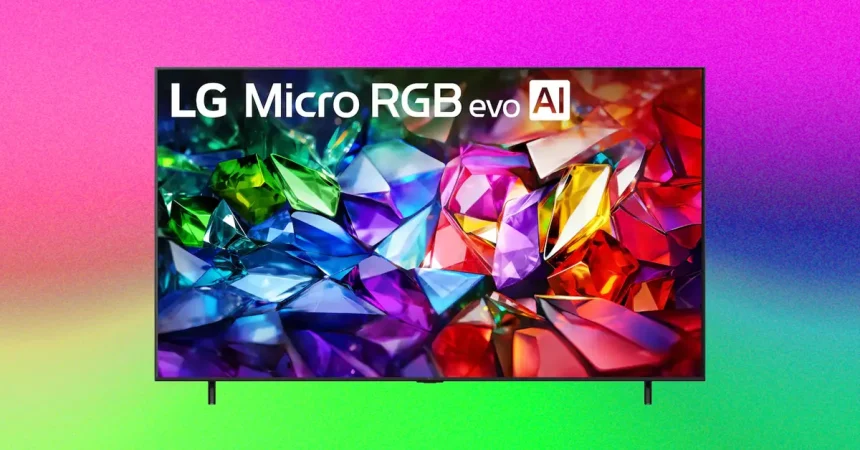
My pick for the best overall experience is the LG Micro RGB Evo. Priced at $4,500 for the 75-inch model, it combines build quality with a stunningly vivid picture. While WebOS remains a bit cluttered with ads and unnecessary bloat, the hardware itself is top-tier, featuring four HDMI 2.1 ports for seamless connectivity with modern consoles. Once I manually adjusted the picture modes to skip the overly dim “Filmmaker” defaults, colors like the deep, moody reds in Tron: Ares looked electric. It manages that rare trick of being bright enough for a sunny afternoon but granular enough to handle the deep, dark shadows required for cinematic immersion.
Ultimately, mini RGB is a smart, powerful upgrade that keeps the LCD format alive and competitive in a high-def world. It is not currently the “ultimate” display technology, as it still lacks the perfect per-pixel control of OLED, but it is a formidable alternative for sunlight-drenched rooms and serious gamers who value high refresh rates. If you are an early adopter who loves to tweak your settings for the perfect image and you have the budget, this is a phenomenal piece of gear. Otherwise, keep an eye on these models; as prices inevitably drop over the next year or two, they are poised to become the new standard for the living room.