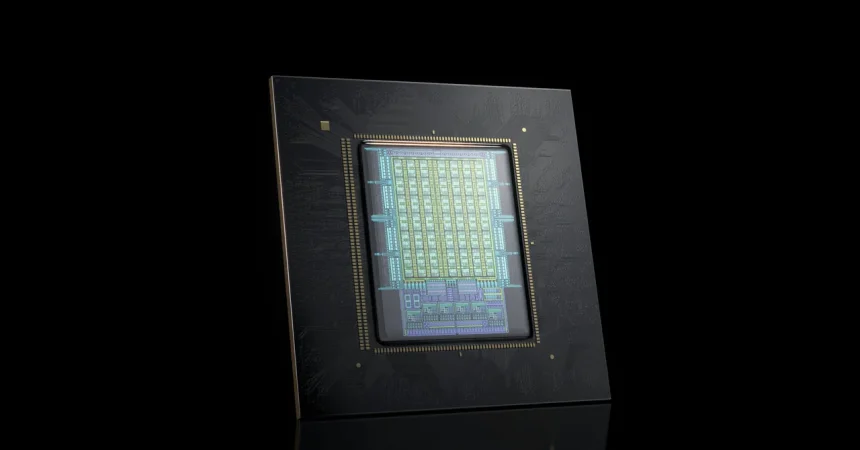
Nvidia is currently making a major tactical push to dominate the future of artificial intelligence, pulling back the curtain on its new “Vera Rubin” chip system just days before its primary rival, AMD, is set to host its annual product showcase. Hosted at its Santa Clara headquarters, the company’s recent technical workshop served as a bold declaration of intent. While Nvidia has spent decades defining itself as the world’s premier GPU powerhouse, the company is now making it clear that it wants to be recognized for something much broader: being the all-encompassing engine room for the next generation of AI agents. By pivoting the conversation toward its new CPU-GPU hybrid architectures, Nvidia is shifting from a hardware component manufacturer to a provider of complete, integrated AI ecosystems.
The strategic importance of this transition cannot be overstated. As the tech industry evolves from simple, static large language models toward complex, “agentic” systems—AI that can autonomously handle tasks, make decisions, and orchestrate software workflows—the foundational needs of data centers are changing. While GPUs remain the undisputed muscle behind training these models, CPUs are the essential brains required to manage the massive data traffic and the intricate networking tasks that keep these systems running smoothly. By packing its racks with a higher ratio of custom CPUs alongside its world-class GPUs, Nvidia is ensuring it remains the indispensable backbone for companies attempting to build truly autonomous AI infrastructure.
The Vera Rubin system is the next evolutionary step following the Grace Blackwell architecture, and it is arguably the most vital piece of hardware in Nvidia’s current pipeline. The engineering specs are ambitious, centering on a ratio of one CPU for every two GPUs. In the massive Vera Rubin NVL72 “super chip” system, this creates a formidable stack consisting of 36 Vera CPUs and 72 Rubin GPUs, all housed within a single, liquid-cooled platform. Beyond the raw power, the company is particularly proud of the system’s design philosophy: these racks are intended to be “plug-and-play,” removing the logistical hurdles and integration headaches that have plagued earlier iterations of high-performance computing hardware.
This “all-in-one” approach is already gaining traction at the highest levels of the industry. During a tour of their Silicon Valley data center lab, Nvidia executives revealed that OpenAI, the creator of ChatGPT, has already incorporated a Vera Rubin rack into its operational environment. The fact that the industry’s leading AI developer is among the first to stress-test this new hardware serves as both a validation of Nvidia’s engineering and a signal to the rest of the market that the Vera Rubin standard is the one to beat. Furthermore, the company’s willingness to offer the Vera CPU as a standalone product—with reports suggesting availability for Chinese customers as early as August—demonstrates an aggressive, global strategy to saturate the market with their proprietary silicon.
While CEO Jensen Huang was notably absent from the Santa Clara sessions, his presence was still felt, both in the company’s direction and in the small, humanizing details left behind in the office. While he was busy in Japan forging partnerships to bring AI into the world of robotics, his team held meetings in his personal executive briefing center. In a lighthearted contrast to the high-stakes world of semiconductor warfare, the briefing rooms were filled with bags of Taiwanese snacks Huang had recently brought back from Computex. It was a subtle reminder that even as Nvidia engages in a “do or die” race to dominate global computing, the company operates as a tightly-knit, ambitious organization that values its roots and the rapid, relentless pace of the industry.
Ultimately, the message delivered by Ian Buck, Nvidia’s Vice President of Accelerated Computing, summarized the company’s entire ethos: “We’re on a roadmap to crank out new architectures, not just GPUs but CPUs.” This is a company that understands the existential nature of the current tech gold rush. In Silicon Valley, stagnation is a death sentence, and Nvidia’s aggressive release cycle is a calculated move to prevent any competitor—be it AMD or others—from carving out a foothold in the rapidly coalescing AI infrastructure space. By evolving its product line to be a holistic provider of both “brain” and “muscle,” Nvidia is not just trying to win the next fiscal quarter; they are working to ensure that every AI agent of the future runs on their technology.