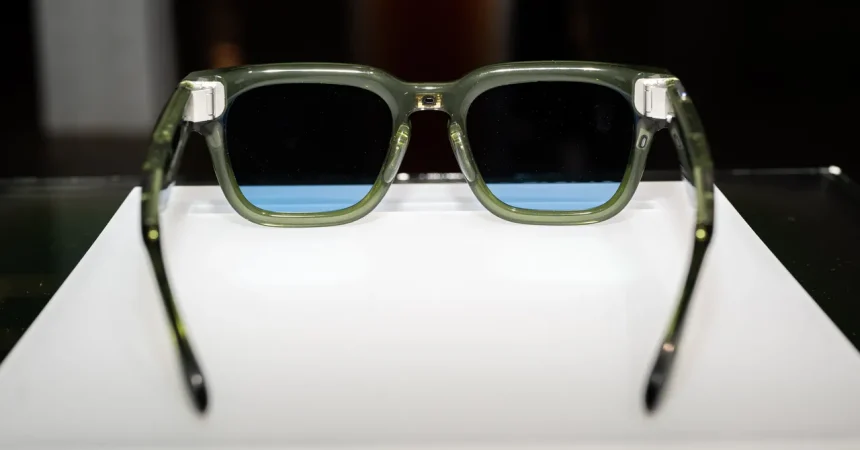
The quest to make smart glasses a household staple is a delicate balancing act for Meta, as leadership navigates both physical design challenges and the complex ethical implications of wearable technology. Andrew Bosworth, Meta’s chief technology officer, recently acknowledged that the company is listening closely to the users who find the current camera-equipped glasses intrusive. Many consumers have expressed a clear preference for a streamlined, audio-only version of the hardware, a segment of the market that Meta is actively monitoring. While Bosworth concedes that there is an undeniable demand for such a product, his mantra remains “one thing at a time,” signaling a deliberate, prioritized approach to product iteration rather than an attempt to saturate the market with every possible variation at once.
Controversy emerged earlier this month when reports surfaced—driven by code discovered in the public-facing Meta AI app—suggesting that the company was exploring facial recognition capabilities for its eyewear. The potential that this technology might have roots in surveillance software utilized by military and police agencies sparked immediate backlash. Meta acted quickly to remove the code, and company representatives, including Ankit Brahmbhatt, have firmly stated that there are currently no plans to implement facial recognition. For Meta, the narrative right now is one of focused utility; they maintain that such controversial features simply do not align with their current roadmap for building helpful, everyday AI experiences.
Beyond the technical controversy, the primary hurdle for Meta remains the “everyday wearer” problem. It is not enough for the glasses to be smart; they must be physically unobtrusive and stylistically acceptable. Meta designer Li-fan Bristol emphasizes that the goal is to create a product that acts as a “daily driver”—a pair of glasses so comfortable and aesthetically pleasing that they become part of a user’s personal brand. In this vision, the glasses stop being a piece of high-tech gear and instead become an extension of the self. If Meta can successfully bridge the gap between heavy hardware and lightweight style, they believe adoption rates will spike, inevitably drawing more people into the Meta AI ecosystem.
The core promise of these glasses, according to Bosworth and Bristol, is the removal of the cognitive load currently required to use AI. Most of our existing AI interactions are cumbersome; we must manually snap photos, upload documents, or craft precise search queries just to get a machine to understand our intent. Smart glasses fundamentally change that dynamic because the AI is essentially “seeing what you see.” By eliminating the need for the user to provide context, the technology moves from being a tool one “uses” to a companion that is “present.” Bosworth argues that the issue with AI today isn’t necessarily a lack of intelligence, but rather the sheer amount of work the user must perform to bring the AI up to speed with their surroundings.
Despite these efficiency gains, Meta cannot ignore the pervasive anxiety surrounding privacy and the social implications of walking around with a discreet recording device. Bosworth maintains a measured optimism, drawing parallels between the birth of smart glasses and the introduction of the first smartphones. He recalls that when mobile phones first put high-quality cameras in every pocket, there was a period of initial hesitation and discomfort. He believes we are currently in a period of “social norming,” where the public is learning to navigate the boundaries of what is acceptable and what is intrusive. He insists that just because the glasses are gaining popularity, it does not mean Meta is indifferent to the privacy concerns or potential “corner cases” that these devices introduce.
Finally, the development of these glasses is unfolding against a backdrop of significant internal turbulence at Meta. Morale among employees has dipped, leading to a recent, candid memo from Bosworth promising improved communication and a more stable, supportive workplace environment. This context is crucial; the success of their hardware relies on a culture that can ethically and creatively iterate on these complex technologies. As Meta attempts to sell the world on a future of “always-on” AI, the company is also working to prove to its own workforce that they are building a strategy that values sustainability, stability, and responsible innovation over rapid, reckless growth.