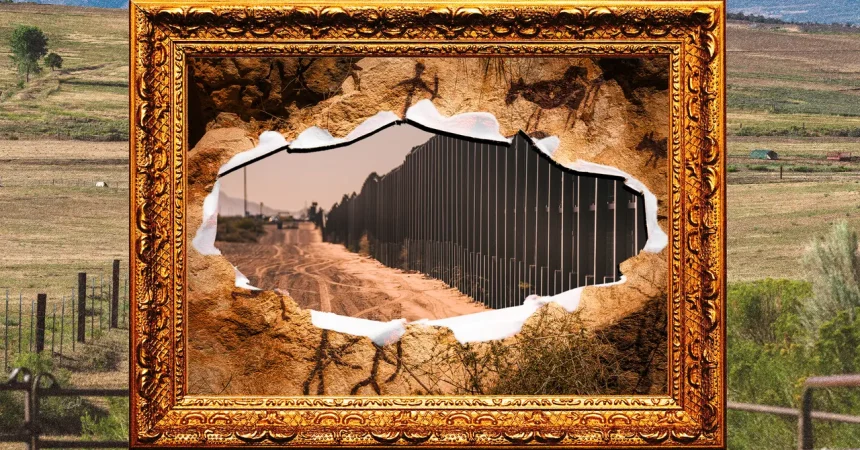
The roar of public outrage over the proposed border wall was deafening when it threatened the fragile, dramatic landscapes of Big Bend National Park. Lawsuits followed, and the imagery of towering steel slicing through national parkland ignited a firestorm of political backlash. However, while that discord echoed through the halls of Congress, a far quieter, more insidious battle was already unfolding on the wind-scoured, mesquite-choked plains of private Texas ranchland. The Department of Homeland Security and Customs and Border Protection had already awarded billions of dollars in contracts to tackle a vast 500-plus-mile stretch of the West Texas river frontier. Initially envisioned as a monumental 30-foot bollard wall of interlocking steel, the fierce bipartisan pressure forced a tactical retreat. The design was swapped for a less visually offensive—but equally destructive—network of low vehicle barriers and a lattice of freshly graded dirt roads snaking along the Rio Grande. Yet, these humble-looking alterations are not benign. They are carving open a living museum of human history, slicing through archaeological treasures that have remained undisturbed for a thousand years, far away from the camera flashes and the carefully crafted press releases of politicians.
At the epicenter of this quiet crisis is Dr. Bryon Schroeder, a man who speaks in measured tones but wields his archaeological trowel with the fierce precision of a surgeon. Schroeder directs the Center for Big Bend Studies at Sul Ross University, but his true office is a remote, sun-blasted dig site located on the sprawling property of rancher Jeff Fort. There, Schroeder and his team practice an almost monastic form of patience, carefully scraping away a mere four inches of sediment at a time—a meticulous, inch-by-inch excavation that feels agonizingly slow when weighed against the approach of hundreds of tons of construction machinery. The rewards for this painstaking labor are breathtaking. Scattered among the roots of desert grasses, they uncover pot shards bearing intricate geometric patterns, chunks of melted adobe from ancient structures, glowing beads of turquoise, and the delicate pink of marine shells. These are not just scattered trinkets; they are hard evidence of a thriving community connected by vast trade networks to the magnificent city of Paquimé, a UNESCO World Heritage site located hundreds of miles south in Mexico. The site, known as Canta Recio, is not simply a campsite; it is a chronicle of human resilience and ambition.
To understand the tragedy of what is about to be lost, one must understand the deep, cyclical history of the land itself. Schroeder often draws an eloquent analogy between the Rio Grande and the Nile River. Just as ancient Egyptians tied their fortunes to the annual flooding of the Nile, the Indigenous peoples of the Chihuahuan Desert built their lives around the unpredictable temperament of the Rio Grande. They established settlements on the rich, fertile floodplains, cultivating crops and absorbing the river’s life-giving nutrients. But the river was a fickle deity. Catastrophic floods would inevitably roar down the canyon, sweeping away their homes, their fields, and sometimes their lives. The survivors would retreat to higher ground, wait for the waters to recede, and watch as the silt settled, creating a new layer of fertile soil, a blank canvas for their next attempt. This cycle of settlement, flood, exodus, and renewal repeated itself with relentless regularity from roughly 800 to 1400 AD. The ground beneath Fort’s ranch is therefore not just dirt; it is a layered cake, a palimpsest of human endeavor where each stratum represents a generation of children playing, families praying, and elders telling stories. A single pass of a bulldozer blade will not just destroy a site; it will obliterate the delicate vertical stratigraphy that allows archaeologists like Schroeder to read centuries of change in the span of a few meters.
The threat is not confined to Canta Recio. Further downriver, in the tiny community of Redford, Texas, the proposed bollard wall is slated to run directly through the Polvo site—a location of profound national importance. Polvo is home to a prehistoric village and burial ground dating back to the 1300s, and remarkably, it also contains the remains of a 17th-century Spanish mission. To lay the foundations for a massive steel wall, crews must dig down five to six feet, meaning they will not just scrape the surface; they will physically churn up the bones of ancestors and the sacred foundations of a colonial-era church. Just a little further away lies Eagle Nest Canyon in Langtry, one of the most significant and intensively studied archaeological zones in all of Texas. This canyon contains a natural trap that Indigenous hunters used for centuries as a bison jump—the southernmost such site in the United States. Here, entire herds were funneled over a sheer cliff, providing food, hides, and bones for the community for generations. The landscapes of the Rio Grande are littered with such sacred spaces, including priceless petroglyphs etched into canyon walls. The construction of service roads, the blasting of rock, and the operation of massive crushing machinery threaten to shatter these irreplaceable etchings, reducing ancient expressions of spirituality to a pile of gravel.
A Customs and Border Protection spokesperson might issue a reassuring statement, declaring that the agency is “conducting thorough environmental and cultural reviews to minimize impacts and balance operational needs with responsible land stewardship.” But to the archaeologists on the ground, these bureaucratic proclamations ring hollow—a thin veneer of legality painted over a bulldozer track. The paradox is maddening. Many of these sites have never been officially surveyed or mapped because they lie on private property, placed deliberately outside the jurisdiction of federal archaeology programs and academic institutions. You cannot protect what you do not know exists, and you cannot study what you cannot access. Schroeder, throwing his hands up in exasperation, speaks of “bigger, cooler sites” further up the river that are “just insane”—places so dense with artifacts that they rival any museum exhibit. They contain Mesoamerican copper bells, exotic obsidian, and turquoise mined from unknown sources deep in the desert, proving a vast and complex trade network that connected the Texas borderlands to the great empires of Mexico. Yet these mysterious locations remain unmapped, unstudied, and utterly vulnerable. The government is, in essence, constructing a massive wall through a vast, unread library of human history, destroying the very pages as they try to mark the boundary of the book.
Ultimately, this quiet battle on the private lands of Texas is a race against time—and a stark illustration of a fundamental conflict between national security and cultural preservation. While statisticians can calculate the number of vehicle crossings deterred or the linear feet of steel installed, there is no metric to quantify the devastating loss of a buried ancestor’s bones, the scattered shards of a pot crafted a thousand years ago, or the pictograph that depicted a hunt when woolly mammoths still roamed. Once the concrete pours and the steel stakes bite into the desert soil, that history is gone forever—silenced not by any enemy combatant, but by a heedless policy. The residents of this land, both the modern ranchers like Jeff Fort who are losing their property through eminent domain, and the ancient ghosts whose stories are buried beneath their feet, are caught in the crossfire of geopolitics. While the outrage over Big Bend National Park has faded from the headlines, Dr. Schroeder and his colleagues continue their desperate work, scraping away the dust with their four-inch trowel strokes. In the fading light over the Rio Grande, as the distant hum of earth-moving equipment drifts across the valley, they hope against hope that they can rescue enough of the past to tell the world what was here before the wall rose, before the history was bulldozed into the dirt it came from.