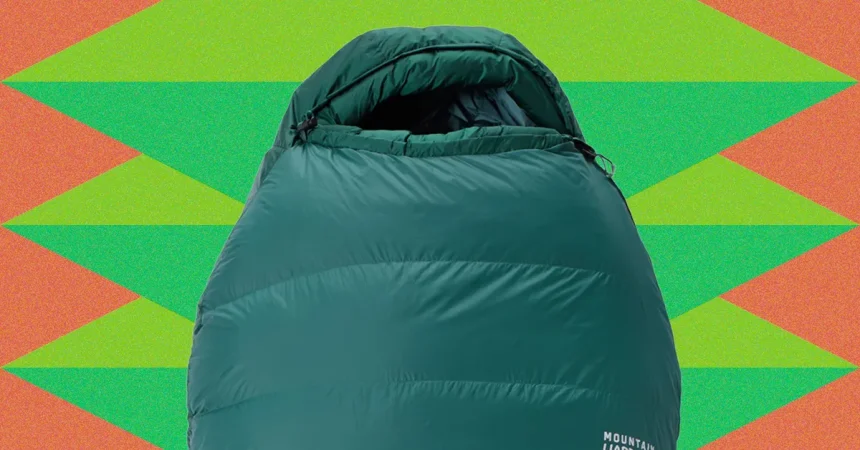
When you are miles away from civilization, tucked into a tent while the rain lashes down, the performance of your sleeping bag becomes less about specs and more about basic survival. The Nemo sleeping bag stands out here, not just for its materials but for its thoughtful design. Built with a 30-denier recycled polyester ripstop shell and a 20-denier taffeta liner, it handles moisture remarkably well—something I confirmed during a particularly damp night of testing. Its real secret weapon, however, is the “Zerofiber” insulation. Crafted from 100 percent post-consumer recycled content, this synthetic fill manages a feat rarely seen in typical gear: it packs down to a startlingly small size while maintaining its structural integrity. Even when things get soggy inside the tent, the bag continues to trap your body heat, offering a level of reliability that feels like a safety net when the weather turns unpredictable.
What truly sets this bag apart from the sea of standard, restrictive mummy bags is the fit. Nemo has clearly leaned into the reality that human beings move while they sleep. By widening the cut through the torso down to the knees, they have created a hybrid design that marries the thermal efficiency of a mummy bag with the spacious comfort of a classic, rectangular bag from decades past. While a more generous interior means you have a bit more “dead space” to warm up with your own body temperature, the trade-off is well worth it. For those who find themselves tossing and turning or feeling trapped by the cinched-in design of traditional gear, the extra room provides an immediate boost to your sleep quality. It is a rare piece of outdoor kit that prioritizes how you actually exist in a tent rather than just how you squeeze into a sleeping bag.
Choosing the right sleeping bag is often the most significant investment you will make in your gear closet, which is exactly why the decision shouldn’t be rushed. The “perfect” bag is essentially a myth, as no single piece of equipment excels in every climate or scenario. Instead of chasing a one-size-fits-all solution, you should think about your own unique profile. Are you a summer weekend warrior heading to a drive-up campsite, or are you preparing for technical, high-altitude expeditions? If you find yourself frequently alternating between extremes, it is often more practical to own two specialized bags—a high-quality down bag for the freezing lows of shoulder-season treks and a budget-friendly, lightweight synthetic bag for the heat of the summer months.
When you start comparing options, remember to align your purchase with your specific lifestyle, not just the marketing hype. If you are mainly car camping, you don’t need to drop a small fortune on ultralight, space-age materials that are designed to be carried on your back for weeks at a time. Pay for what you actually use. Similarly, if your adventures are primarily section-hikes during the fair-weather months, a zero-degree sleeping bag is not only overkill—it’s an unnecessary weight to lug around. Understand the terrain and the duration of your trips, and you will find that a more modest, purpose-built bag will serve you better than a high-end bag that is simply built for conditions you will never actually encounter.
One of the most important lessons in camping is learning to interpret temperature ratings with a healthy dose of suspicion. Manufacturers provide a baseline, but these numbers do not account for your personal metabolism. Some people emanate heat like a furnace, while others feel a chill the moment the sun dips below the horizon. As a warm sleeper, I can comfortably push a bag to its limit, whereas a colleague might be reaching for a heavy-duty winter bag in conditions that feel quite mild to me. Don’t feel pressured to match a colleague’s gear choice; instead, pay attention to your own history of sleeping in the outdoors. If you know you run cold, look for bags with higher fill weights or better thermal seals, regardless of what the tag says.
Finally, navigating the down versus synthetic debate usually comes down to one fundamental difference: moisture management. Both types of insulation function by trapping pockets of air around your body, but they do so in different ways. Down is, for the most part, the gold standard—it is lighter, packs smaller, and offers superior warmth-to-weight ratios. However, its Achilles’ heel is water. Once down feathers get soaked, they lose their loft and, subsequently, their ability to keep you warm. Synthetic fibers are heavier and bulkier, but they are incredibly resilient against moisture. In a wet, humid environment, synthetic is not just an alternative to down; it becomes a vital, life-preserving feature. By understanding how your chosen insulation handles the elements, you can pick a bag that ensures a night of restful, warm sleep, even when the wind and rain are doing their best to ruin your trip.