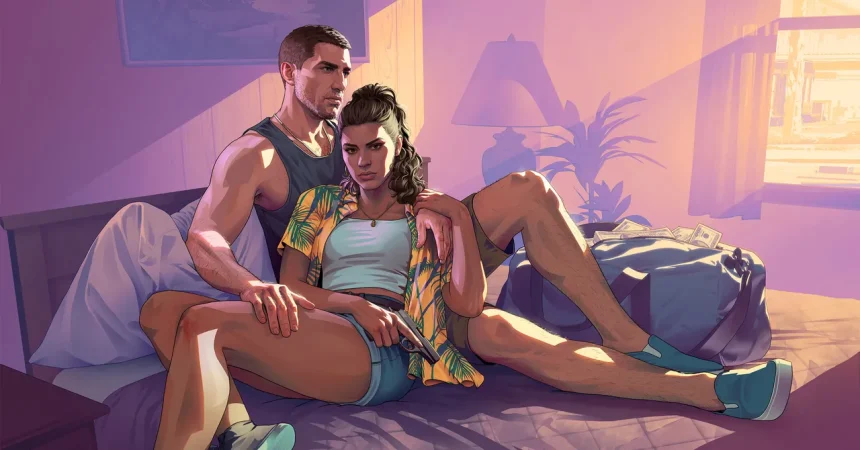
The sheer spectacle of the next installment in the legendary franchise has finally been unveiled, and the early impressions are a dizzying mix of jaw-dropping ambition and deeply human, grounded details. Among the most striking revelations is the game’s sartorial depth. Rockstar has apparently coordinated with real-world fashion designers to curate an extensive wardrobe for our protagonists, Lucia and Jason. This isn’t just a handful of interchangeable t-shirts and jeans; it’s a curated high-fashion catalog that promises to let players express their outlaw personas with genuine stylistic flair. However, this lofty customization comes with a familiar, souring note—a bitter taste of commercial reality. Some of the most coveted, stylish threads may be locked behind the grotesquely expensive $100 Ultimate Edition of the game. This has ignited a predictable furor within the community, a collective eye-roll at the monetization practices that feel increasingly like a toll booth on the highway of digital recreation. While the customization itself sounds like a dream for fashion-forward gamers, the gating of it behind a premium price tag feels less like an exciting bonus and more like a cynical way to nickel-and-dime a dedicated fanbase, turning what should be pure creative joy into a resentful question of budget allocation versus in-game vanity. You can almost hear the collective sigh of gamers pondering whether the virtual leather jackets are worth the real-world financial pinch.
But clothing is merely the surface of a world that is attempting to breathe with unprecedented vitality. The NPCs, the background players of this chaotic symphony, have undergone a radical transformation. According to reports, Rockstar has dedicated an entire studio in Los Angeles specifically to the behavioral animation and artificial intelligence of these pedestrian characters. This staggering level of investment signals a profound shift away from the repetitive, cut-and-paste crowds of past iterations, who seemed to exist as little more than glorified obstacles. The Extended Look footage hints at a population brimming with personalities: yoga enthusiasts stretching on the beach, individuals zipping by on scooters, and people engaged in complex, multi-layered interactions that suggest each individual has a life outside of the player’s periphery. Fascinatingly, the gameplay segments with high-octane car chases pointedly avoided the gratuitous streamrolling of pedestrians that was once a hallmark of GTA chaos. This suggests a conscious design choice—a philosophical shift toward treating these digital denizens as living, feeling entities rather than stunts. It creates a moral weight to your actions. Running over a yoga instructor isn’t just a physics glitch; it’s a disruption of a carefully simulated life, a conscious violation of a world that feels real enough to make you hesitate. This level of behavioral fidelity promises to make the streets of Vice City feel alive, bustling with stories independent of your own, and making every interaction, whether peaceful or violent, feel dramatically more consequential.
The driving and combat mechanics, the adrenaline core of the game, have also seen a massive overhaul that promises a more cinematic and tactical experience. The minimap has evolved into what looks like an authentic GPS interface, providing realistic turn-by-turn navigation that grounds the frenetic action in a semblance of actual urban planning. A tense police chase showcased the reworked dynamic between the two playable characters, Lucia and Jason. The seamless ability to switch between them mid-crisis—dedicating one to the wheel while the other leans out the window to unleash suppressing fire—adds a new layer of cooperative strategy to what was once a solitary pursuit. This fluid dual-protagonist mechanic transforms every escape into a choreographed ballet of danger and feedback. Furthermore, the physics engine appears to be radically more responsive. Shooting out a tire isn’t a simple visual cue; it triggers a cascading chain reaction that sends a vehicle careening wildly, flipping over guardrails and smashing into sidewalks with a satisfying, destructive weight. The environment itself seems poised to shatter. One scene depicts a character body-slamming a cop clean through a wall, an act that hints at fully destructible interiors. However, long-time fans will temper their excitement with memories of past disappointments. GTA V was notoriously inconsistent, allowing you to plow through a massive steel light pole with ease, only to be inexplicably and comically stopped dead by the flimsy webbing of a volleyball net. So, while the promises of lush, reactively destructive environments are tantalizing, a nagging skepticism remains—we’ll have to wait and see if the new engine brings the same level of physical consistency to a sheet of drywall that it does to a traffic barrier.
Beyond the skyscrapers and highways, the sheer geography of Vice City and its surrounding areas promises an entirely novel brand of open-world freedom that feels distinctively Floridian. The map appears absolutely massive, a sprawling sandbox that extends far beyond urban gridlock to encompass the Everglades, rivers, and the Gulf of Mexico. This expansion brings with it a diverse arsenal of traversal mechanics. Players can expect to pilot an airboat through murky swamp waters, navigating gator-infested narrows; paddle a kayak down slow-moving, tree-canopied rivers; or strap on scuba gear to explore vibrant coral reefs before jet-skiing across the open ocean. This emphasis on environmental exploration transforms the game into a true outdoor adventure, not just a violent crime simulator. The narrative elements have also absorbed the modern zeitgeist with sharp, satirical teeth. One particularly hilarious and memorable trailer scene depicts Lucia inadvertently kidnapping a livestreaming influencer, who then becomes a terrified, passive passenger during a gunfight with the police. This instantly highlights the game’s social commentary on the grotesque absurdity of modern attention-seeking and influencer culture. The pervasive use of smartphones and text messaging among characters further points to a deeper, more relevant satire of our hyper-connected, constantly broadcasting lives. While the commentary feels razor-sharp and perfectly in tune with the current cultural moment, one wonders how this time-stamped humor will age in a world where social media trends shift at the speed of light, potentially dating the game’s jokes in an era that is constantly redefining its own absurdity.
Amidst all this chaos, violence, and high-fashion mayhem, perhaps the most profound revelation is the simplest: you can pet the dog. In at least one scene of the game, a canine companion appears, and the player has the capability to interact with it in the most wholesome way possible. This may sound like a trivial, throwaway feature suited to a Pokémon title, but in the context of a massive, gritty, and often violent Grand Theft Auto game, it is a monumental gesture of humanity. It serves as a psychological anchor, a moment of quiet interface that grounds the otherwise sociopathic protagonists in a semblance of emotional normalcy. It acknowledges that these are people who, beyond the car chases and gunfights, might share a moment of affection with a four-legged friend. In the grand tradition of open-world games, this small interaction adds an immense layer of authenticity and player agency. It’s a signal from Rockstar that they understand the power of quiet, gentle moments tucked between the explosive set-pieces. It allows players to momentarily step out of the role of the ruthless criminal and inhabit the role of the weary human seeking comfort from a loyal pet. This single feature humanizes the otherwise cartoonish violence and gives the world a sense of softness and texture that makes the brutalism of the core gameplay mutually contrasting and, paradoxically, far more immersive.
Looking beyond the core single-player experience, Rockstar’s long-term strategy for user-generated content appears to be a fortress built for the future. In a significant move, the company acquired the modding marketplace Cfx (which powered the phenomenally popular FiveM roleplay servers for GTA V) and integrated it into an official, sanctioned hub for player-created modifications. This signals a massive turning point—a formal embrace of the modding community that previously operated in a legally gray area. Combined with the inclusion of an expanded GTA Online Rockstar Mission Creator, which allows players to build and share custom levels, modes, and scenarios, it’s clear that the developer views the game not as a finished product, but as a dynamic creative platform. The Extended Look, however, was heavily focused on the single-player narrative, showing no direct advancements to these creation tools. This is likely because the game is launching as a purely single-player experience before the online multiplayer components are patchworked in later. But the infrastructure is undeniably being laid. When the online component arrives, we can expect a tsunami of curated and spontaneous user creativity, from cinematic roleplay servers to insane obstacle courses and PvP maps. This foresight transforms GTA VI from a linear series of missions into an enduring, ever-evolving meta-game, built not only by Rockstar but by the passion and ingenuity of millions of players worldwide, ensuring the game’s cultural relevance and playability will extend well into the next decade and beyond.