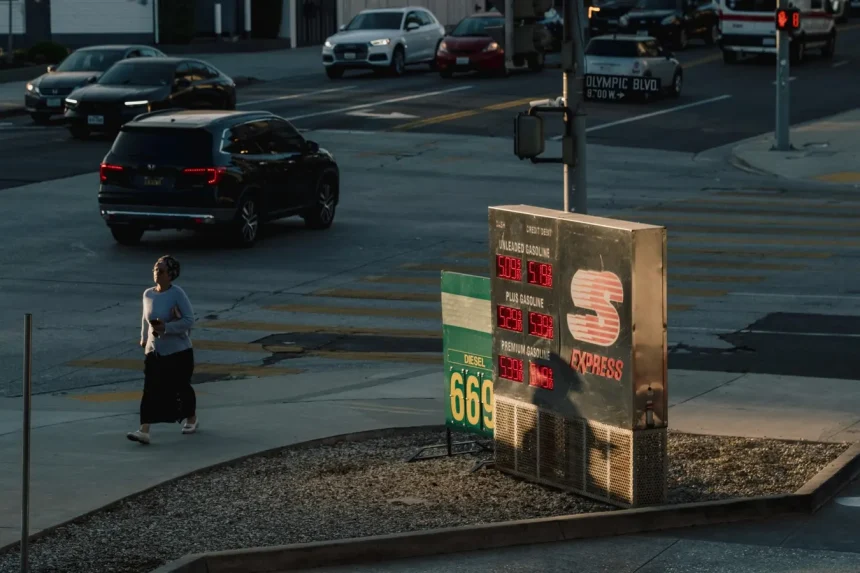
The persistent issue of high gasoline prices in California isn’t just a seasonal headache or a mysterious byproduct of global market fluctuations; it has become a defining feature of the state’s economic landscape. While leaders often attempt to shift the narrative by pointing fingers at international conflicts, presidential policies, or the profit motives of major oil corporations, these explanations fail to address why California drivers consistently pay more than residents in every other U.S. state. Even Hawaii, an island chain that must import its petroleum across thousands of miles of ocean, frequently sees lower pump prices than the Golden State. This discrepancy suggests that the root cause isn’t just global supply chains, but rather domestic policy choices that have turned fuel affordability into a secondary concern.
A comprehensive recent study from the Institute for Energy Research (IER), titled “The Pacific Premium,” sheds light on this disparity by highlighting a clear political divide. The data suggests that gasoline prices tend to be higher in states governed by Democratic leadership, with the trend being most severe along the West Coast. According to IER President Tom Pyle, these price premiums aren’t accidental; they are the cumulative result of deliberate legislative decisions. From carbon taxes to specific state-level fuel levies, the policies adopted by policymakers in “blue” states are directly passed down to the consumer at the pump. This report confirms that energy policy is a local issue, and the financial burden on the average commuter is often the direct consequence of state-level ballot boxes and legislative agendas.
When looking at the West Coast specifically—California, Oregon, and Washington—it is clear that decades of single-party governance have fostered a unique regulatory environment. The study’s author, Daniel Simmons, argues that while these states maintain high environmental standards, the pursuit of those goals has effectively prioritized climate objectives over the immediate economic need for affordable fuel. In these jurisdictions, the legislative focus has shifted away from traditional energy costs and toward broad climate-change mitigation strategies. Because affordability for fossil fuels is not a stated priority for these administrations, the resulting price hikes are effectively a feature, not a bug, of their current governing philosophy.
Geography and infrastructure also play significant roles in these price discrepancies, though they are often exacerbated by political choices. Most states that enjoy lower gasoline prices are those that either produce their own oil or possess the robust, functional pipeline and refinery networks necessary to distribute it efficiently. Oregon, as a prime example, lacks refinery capacity entirely, necessitating heavy reliance on imports. Washington fares better with four refineries, but still struggles to meet its full demand. California’s situation is the most dramatic; despite once being an energy powerhouse, the state has systematically discouraged its own refining sector. With most of its remaining refineries slated for closure due to regulatory pressures, the state has become dangerously dependent on expensive foreign imports.
The state’s specific environmental policies further complicate this picture. California requires a specialized, reformulated grade of gasoline to manage its long-standing air quality challenges in densely populated areas like Los Angeles. While these environmental efforts are aimed at legitimate public health concerns, they come with a high price tag. When you factor in the high state gas taxes, stringent carbon fuel standards, and a regulatory environment that has effectively discouraged the maintenance or expansion of domestic production infrastructure, the costs begin to compound. It is a layering effect: each individual policy—while perhaps well-intentioned on its own—contributes to a systemic inability to provide competitive pricing for the average resident.
Ultimately, the goal of this study is to move the conversation away from partisan finger-pointing toward a recognition of cause and effect. While one might support the environmental goals of California’s leadership, the evidence suggests that the state’s high gas prices are an inevitable byproduct of those specific policy paths. It is no longer a matter of opinion or economic mystery; the divide between “blue” and “red” state prices reflects the intentional choices made by state legislators. By prioritizing aggressive climate regulations and curbing local infrastructure, policymakers have made a trade-off that the everyday driver now feels every time they fill up their tank. The higher costs are not just an external force of nature, but the real-world consequence of a state being governed by specific, localized priorities.