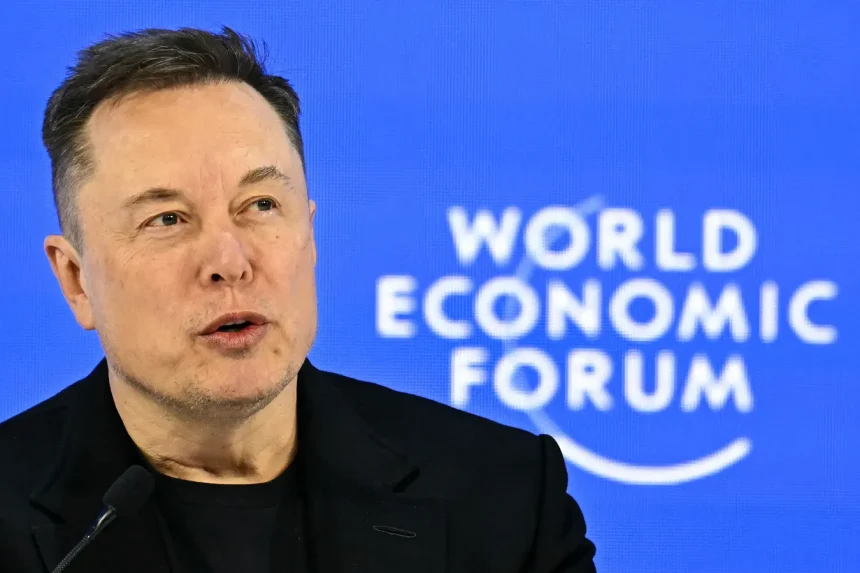
The political landscape in France has become increasingly tangled with the influence of global tech giants, a phenomenon underscored this week when Elon Musk, the world’s wealthiest individual, unexpectedly threw his support behind Marine Le Pen. Describing the National Rally leader as “France’s last hope” in a post on his platform, X, Musk ignited a firestorm within the French political establishment. While such an endorsement might typically be welcomed by a campaign, in the sensitive climate of French national politics, it has landed more like a liability. The reaction from across the spectrum was swift and severe, with officials labeling the billionaire’s unsolicited support as a dangerous instance of foreign interference, further complicating an already high-stakes race for the presidency.
Interestingly, the National Rally itself has been quick to push back against Musk’s overture, signaling a desire to keep their movement strictly domestic. Spokesperson Laurent Jacobelli took to public radio to clarify that the party does not seek, nor does it rely upon, international endorsements. By emphasizing that the only opinion that holds weight is that of the French electorate, the party is attempting to avoid the political taint that Musk carries in Europe. His open alignment with U.S. President-elect Donald Trump has made him a polarizing, if not outright unpopular, figure among French voters, even within nationalist circles. For Le Pen’s team, the optics of being “backed by a billionaire” from abroad offer their domestic rivals’ ammunition, risking the narrative that their campaign is being steered from outside French borders.
The pushback from French leadership has been profound, transcending typical partisan divides. High-ranking officials, including Foreign Minister Jean-Noël Barrot, have publicly urged Musk to step back from the domestic affairs of the nation. The concern is not merely about a personal opinion expressed on a social media feed, but rather the structural threat posed by an individual who owns one of the world’s primary town squares, X. Parliamentarians from the far-left, like Antoine Léaument, have called for immediate regulatory intervention, fearing that the platform’s algorithm could be manipulated to unfairly boost Le Pen’s visibility, thereby compromising the integrity of the upcoming election and the democratic process itself.
Former European Commissioner Thierry Breton, a key voice in the dialogue regarding tech regulation, echoed these concerns, characterizing Musk’s endorsement as “meddling.” The apprehension here is rooted in deep structural skepticism regarding X’s neutrality. Critics argue that when the owner of a massive social media company explicitly favors a candidate, there is a tangible risk that the platform’s underlying systems will prioritize that candidate’s content over others. This apprehension is not occurring in a vacuum; it follows a string of confrontational interactions between the French government and Musk regarding regulatory compliance, content moderation, and the transparency of algorithms. While Musk has frequently dismissed these investigations as politically motivated, for the French state, they represent a vital effort to protect their national sovereignty.
Musk’s French entanglement is merely the latest chapter in his expanding record of involving himself in foreign political movements. From throwing his support behind the Alternative for Germany (AfD) party to engaging with various right-wing factions in the UK, Musk has consistently demonstrated a willingness to leverage his platform to shift the needle in international elections. These actions have drawn sharp rebukes from European leaders like former German Chancellor Olaf Scholz, who labeled his interference “completely unacceptable.” Whether he is amplifying controversial voices or backing political newcomers, Musk’s strategy suggests an intention to position himself as a global kingmaker, a role that sits uncomfortably with the traditional expectations of democratic autonomy in Europe.
As the situation develops, the broader conversation highlights a growing global struggle: how should sovereign nations manage the influence of tech moguls who possess the wealth and the digital infrastructure to bypass traditional democratic guardrails? With a net worth now estimated at roughly $856 billion, Musk’s economic power is undeniable, but his recent foray into French politics suggests that financial wealth does not always translate into political capital. In France, where the idea of the “national interest” is guarded with immense fervor, the backlash against Musk serves as a reminder that voters often react defensively to foreign interference. For now, the National Rally’s strategic distance from Musk proves that even those on the far-right understand that, in French politics, legitimacy is a currency that can only be earned at home.