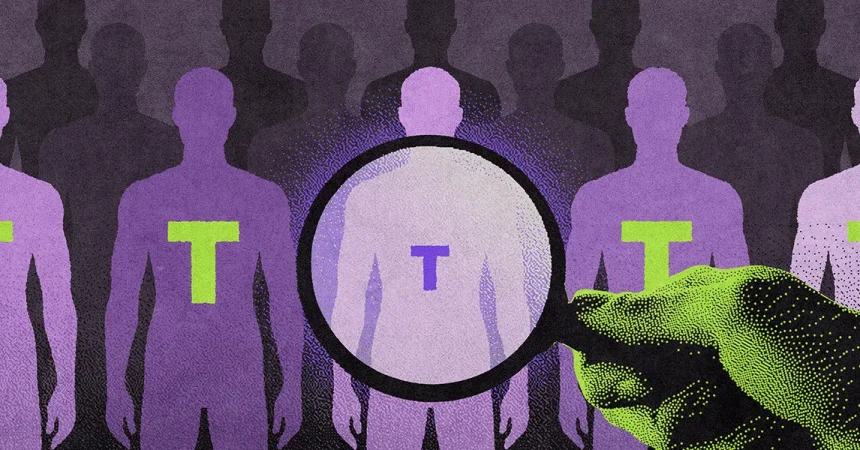
You can hardly scroll through a podcast feed or glance at the news these days without running into the phrase “low T.” It has become one of those cultural buzzwords that seems to sit somewhere between health panic and masculinity anxiety, repeated by podcasters, politicians, and fitness influencers as if it were the key to understanding modern manhood. The conversation used to be confined to locker rooms and endocrinology clinics, but now it’s everywhere—on your phone, in your social media ads, and increasingly in the halls of power. The demand for testosterone treatment has grown right alongside this obsession, and the market has noticed. In a move that feels inevitable in retrospect, the telehealth giant Hims has just launched a new testosterone replacement therapy service specifically for cisgender men. It’s a signal that what was once a niche medical issue has become a mainstream consumer product. The company, which started its life as a discreet online outlet for erectile dysfunction medications, has grown far beyond that, and this new offering feels both like a natural next step and a very deliberate bet on the cultural moment. What was once whispered about has been rebranded as a lifestyle concern, a medical fix, and a political talking point all wrapped into one.
Hims has not been shy about its ambitions. The direct-to-consumer platform will offer two different forms of injectable testosterone, as well as an oral pill, all of which can be prescribed after an at-home capillary blood test. The idea is to make treatment accessible and easy, and the company’s senior vice president of men’s health, Peter Stahl, a urologist, frames it in the language of expanded access. “Cast as wide a net, and get as many people tested, as possible,” he says, and that philosophy is evident in the service design. Hims knows its audience is already used to doing everything online, from banking to dating to therapy, so why not test hormones from the comfort of home? The company’s trajectory has been nothing short of meteoric. Since launching in 2017, it has moved from a startup selling ED medication to a publicly traded company serving 2.9 million customers, expanding into women’s health along the way. Adding testosterone replacement therapy is not simply about adding a product line; it’s a statement that the platform has matured into a serious player in men’s health. Stahl himself admits that the timing was not coincidental. “When we first started, we didn’t have the capabilities to take care of a complex condition like testosterone deficiency,” he says. “We’ve finally grown up.” That sense of coming of age reflects both the company’s evolution and the shifting cultural landscape around male hormones. What was once dismissed as vanity or bodybuilding territory is now being treated as a legitimate medical concern, as normal as getting your cholesterol checked or your blood pressure measured.
For Stahl and others in this field, testosterone deficiency has always been more hidden than it should be. He calls it “really underdiagnosed” and “really misunderstood,” two words that capture the confusion and silence that have long surrounded the condition. Some of that confusion stems from medical history. Testosterone was classified as a controlled substance under the 1990 Anabolic Steroids Control Act, and in the popular imagination it remains tied to muscle-obsessed gym rats and doping scandals. That association created what Stahl describes as a lot of stigma, a stigma that is slow to fade even as scientific understanding evolves. For years, men who felt tired, weak, or depressed were told they were just getting older, or that their symptoms were all in their head, or that seeking testosterone was somehow cheating at life. The medical establishment wasn’t always helpful either. Older research suggested that testosterone therapy came with cardiovascular risks, and those warnings became so deeply embedded in clinical practice that many doctors became reluctant to prescribe it at all. The more recent studies have complicated that picture, suggesting those risks were overstated and that many men with genuine deficiencies could benefit from treatment. Yet the shadow of that older research remains, and so does the cultural discomfort around taking a hormone so closely associated with virility. The result is that a significant number of men are walking around with low testosterone, suffering through symptoms they don’t fully understand, and never asking for help because they don’t want to be seen as trying to reclaim their youth or, even worse, as weak.
The politics of testosterone have become impossible to ignore. In recent months, the issue has been pulled into the culture wars, where it now functions as a kind of shorthand for strength, resolve, and national defense. This fall, Pentagon chief Pete Hegseth announced mandatory testosterone deficiency screening for most male troops in the American armed services, a decision that turned a public health concern into a patriotic duty. In Texas, Republicans have been using “low T” as a rhetorical weapon in a bitter Senate midterm race, with Ken Paxton and James Talarico hurling the phrase at each other as a way to question each other’s masculinity. It is a strange fate for a medical biomarker, which in a rational world would be treated like any other lab value. Instead, it has become a test of manhood. A survey of 2,000 American men commissioned by Hims this summer found that while men are increasingly open to talking about testosterone treatment with each other, the stigma around actually taking medication for low levels persists. Men will compare workout routines and career failures before they admit they’re on hormone therapy. The medical condition is being destigmatized at the level of conversation, but the act of treatment still carries a whiff of moral failure or aesthetic insecurity. That tension is real, and it’s likely affecting who seeks help, who stays silent, and who shows up at a doctor’s appointment with their lab results hidden inside a folded piece of paper.
Part of what makes this new venture so interesting is the regulatory reality behind it. Testosterone is not like other medications that have found huge success in the digital health world. GLP-1s for weight loss and estrogen-based hormone replacement therapy for menopause can, in many cases, be prescribed after a patient fills out a quick online questionnaire. There is no such shortcut for testosterone. Because it is a controlled substance, the rules are stricter. Hims and Stahl emphasize that TRT requires what they call “synchronous” care, meaning that any would-be user has to have a video chat with a clinician before getting a prescription, and they need ongoing monitoring after that prescription is written. This is not just a legal box to check. It is a recognition that testosterone therapy is genuinely complex, that dosing matters, that side effects can be serious, and that patients need follow-up to make sure they are responding well and not putting themselves at risk. The synchronous requirement turns a transactional online order into an ongoing relationship, which is a very different model from what we’ve seen with other direct-to-consumer health products. It also means that Hims and its competitors are walking a careful line between convenience and responsibility. They want to make it easier for men to get tested and treated, but they don’t want to operate in the gray zone of prescribing without actually seeing a patient. This approach could be the bridge that brings testosterone therapy out of the fringes and into the mainstream without sacrificing safety. It may also be the template for how other controlled substances are handled in the future, especially as telehealth continues to expand and more men decide that their hormones are something they want to optimize rather than ignore.
What all of this points to is a broader shift in how we think about male health. For decades, men were taught to tough it out, to ignore symptoms, to see the doctor only when something was broken. The conversation around testosterone is chipping away at that stoic facade. It’s giving men permission to say, “Something feels off, and I want to do something about it.” That is a positive development, even if the marketing and politics around it are sometimes messy. The challenge is to maintain that openness while avoiding the temptation to see testosterone as a magic potion that will solve all problems. A man who is tired, depressed, or low on energy may have low testosterone, but he might also have sleep apnea, stress, or a thyroid condition. The beauty of the new Hims service is that it forces a real conversation through the video requirement, and it treats testosterone deficiency as something that deserves medical attention rather than a self-diagnosis. The cultural fixation on “low T” may be overblown in some corners, but the underlying message is human: men want to feel vital, capable, and like themselves. They want support without shame. They want to understand their bodies in a world that often tells them not to. If this new service can help some of them get there, maybe the long, strange journey from gym-rat stereotype to mainstream telehealth wasn’t so ridiculous after all. What remains to be seen is whether the hype can be channeled into responsible care, and whether the men who need help most will actually log on, roll up their sleeves, and ask for it.