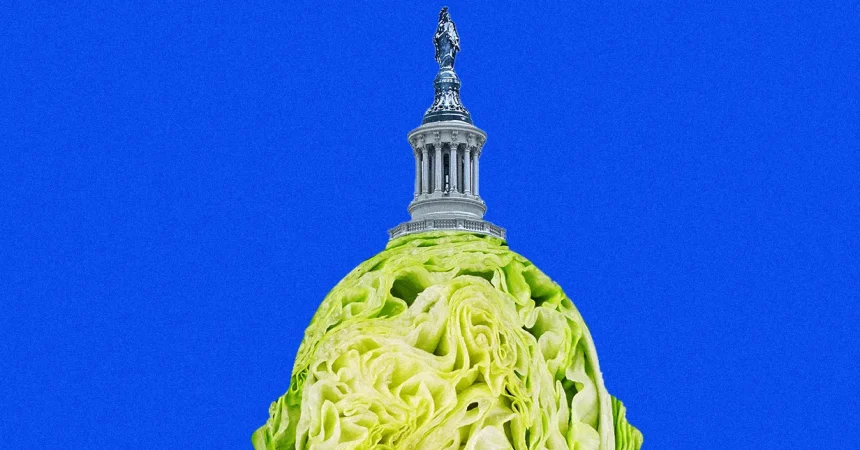
The recent health crisis linked to Taylor Farms, a massive player in the produce industry, has ignited a firestorm of public concern that goes far beyond the dinner table. As thousands of people across the country grappled with a severe cyclospora outbreak—colloquially and uncomfortably dubbed “turbo diarrhea”—questions regarding the company’s influence over federal food safety policy began to emerge. Public filings reveal that Taylor Farms has poured millions of dollars into political action committees, notably backing Donald Trump and MAGA-aligned Republican candidates. For many, the timing of these massive campaign donations amid a major public health failure feels like a cynical maneuver to insulate a multibillion-dollar corporation from the harsh glare of government accountability.
Looking closer at the financial paper trail, the scope of the company’s political footprint is substantial. Just in 2025, Taylor Farms directed over $2 million toward conservative political groups, including a significant $1 million contribution to the Trump-affiliated super PAC, MAGA Inc. This isn’t a new strategy, however; since 2020, the company and its leadership, particularly CEO Bruce Taylor, have funneled millions into groups that staunchly oppose federal regulation, including those tied to the Koch network. While corporations frequently engage in lobbying, critics argue that when those companies are simultaneously facing investigations for food safety violations, these financial contributions create a glaring conflict of interest that threatens the integrity of public safety protocols.
The intersection of corporate money and regulatory oversight raises profound questions about how our food is monitored. Marion Nestle, a renowned professor and food policy expert, points out that the industry is often caught in a tug-of-war between profit margins and public health. Safety regulations, while essential, are expensive and logistically demanding, leading many producers to lobby against the very oversight that exists to protect the consumer. Following the recent outbreak, Taylor Farms spent over $800,000 on lobbyists tasked with influencing food safety regulations, signaling an aggressive push to potentially soften the oversight of government agencies like the FDA during a time when, arguably, they should have been under the strictest scrutiny.
Public tension reached a boiling point when Taylor Farms began openly challenging the agencies investigating them. The company recently claimed the FDA issued an apology to them regarding a testing discrepancy—a claim the FDA flatly denied. Behind the scenes, the company was also leveraging personal connections, hiring a former Trump administration official, Trent Morse, to facilitate meetings with White House and FDA staff. The government, for its part, has defended its autonomy, with the Department of Health and Human Services issuing a sharp rebuke of “collusion” claims, insisting that their processes remain guided solely by science. Yet, the public remains skeptical, sensing that when a powerful corporation can bypass standard procedures to meet with top executive officials, the “science” might be fighting an uphill battle against political pressure.
This crisis is by no means an isolated incident for Taylor Farms, which brings in an estimated $7 billion annually. A pattern of safety failures has shadowed the company for years, ranging from a 2013 cyclospora outbreak to the 2024 E. coli contamination linked to McDonald’s Quarter Pounders. In the latter case, investigators documented alarming lapses in basic hygiene—dirt-caked equipment and employees failing to wash their hands—at a Colorado facility. With dozens of safety violations reported across multiple states and a recent $1.1 million fine from the Department of Labor following a horrific workplace fatality in New Jersey, the evidence suggests a systemic issue with corporate culture and operational standards that no amount of lobbying can truly sweep under the rug.
Ultimately, the situation serves as a stark reminder of the stakes involved when we prioritize the political influence of massive suppliers over rigorous public health enforcement. Americans depend on the government to ensure their lettuce isn’t contaminated and their workers aren’t dying in avoidable industrial accidents. When millions flow from the pockets of corporations into the coffers of political campaigns, it erodes the public’s trust in the regulatory firewall meant to keep them safe. As the FDA and other agencies continue their work, the challenge will be to ensure that science remains the ultimate authority, rather than the donor list of the companies they are tasked with regulating.