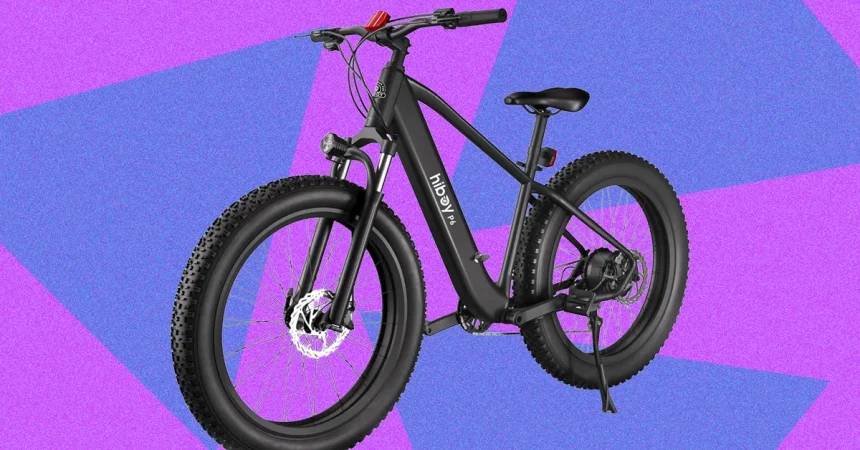
At 5’4″, hopping onto the P6 felt like mounting a beast. Even with the seat dropped to its absolute lowest point, I barely had the balls of my feet touching the pavement, which made coming to a stop—especially on sketchy inclines—a bit of a white-knuckle experience. The manufacturer actually advises against this bike for anyone under 5’3″, and I can see why; it’s a substantial, heavy piece of machinery that commands respect. If you’re on the shorter side, you might find it a bit intimidating, but if you’re taller, used to the heft of fat bikes, or a seasoned e-bike veteran, you’ll likely feel right at home in the saddle.
What this aluminum alloy powerhouse lacks in agility or graceful handling, it absolutely compensates for with pure, unrelenting comfort. Riding through the streets of Denver felt like piloting a rugged, “Mad Max” version of a commuter bike. Between the remarkably wide, plush seat, the hydraulic suspension fork that you can lock out when you don’t need it, and those beefy, deeply lugged 26-by-4-inch tires, bad roads simply cease to exist. I felt invincible—glass, potholes, and debris were all flattened under the weight and confidence of the P6, turning a regular commute into a surprisingly smooth, cushioned experience.
Under the hood, the Class 3 P6 is packing some serious heat. With a 750-watt motor that peaks at 1,000 watts, it’s got plenty of punch. You have three ways to get around: pure electric mode via the handlebar throttle (which caps out at 20 mph), pedal assist (which pushes you up to 28 mph), or pure analog mode if you want to test your own legs. Achieving that perfect, seamless ride takes a little bit of experimentation, though. You have to learn how to sync the Shimano seven-speed gear system with the right power mode; if you aren’t dialed in, the pedal assist can feel a little jerky, but once you find your rhythm, it’s remarkably smooth.
Managing the bike’s features is fairly intuitive, thanks to the control centers mounted on either side of the handlebars. On the right, you’ll find a clean, functional display that keeps you updated on your speed, current mode, total distance, and your remaining battery life. You also have the controls for your lights and the horn right at your fingertips. It sounds simple enough, but a word of warning: the buttons are sensitive. I learned the hard way that you want to be careful how you lean on your handlebars—you don’t want to accidentally deafen a peaceful bighorn sheep on the trail with a surprise horn blast, as I unfortunately did.
On the left side of the handlebar, you’re in charge of the mechanical heavy lifting. This is where you’ll find the shifters to toggle through the Shimano seven-speed system, paired with a small display that monitors your current gear. It’s a classic, reliable setup that provides a sense of tactile control over your ride. While the bike does a lot of the heavy lifting for you, having that tactile feedback on the left side ensures you’re always in the right gear for the terrain, whether you’re climbing a steep hill or cruising down a flat stretch of pavement.
At the end of the day, the P6 is less of a nimble city cruiser and more of an all-terrain workhorse designed for those who value comfort and power over light-footed precision. It’s a bike that encourages you to stop worrying about the road conditions and start focusing on the ride itself. While it might be a bit of a challenge for shorter riders to master, the payoff is a smooth, powerful, and arguably fun experience that makes you feel like you can tackle just about anything the city throws your way—just keep an eye on where you’re resting your hands so you don’t startle the local wildlife.