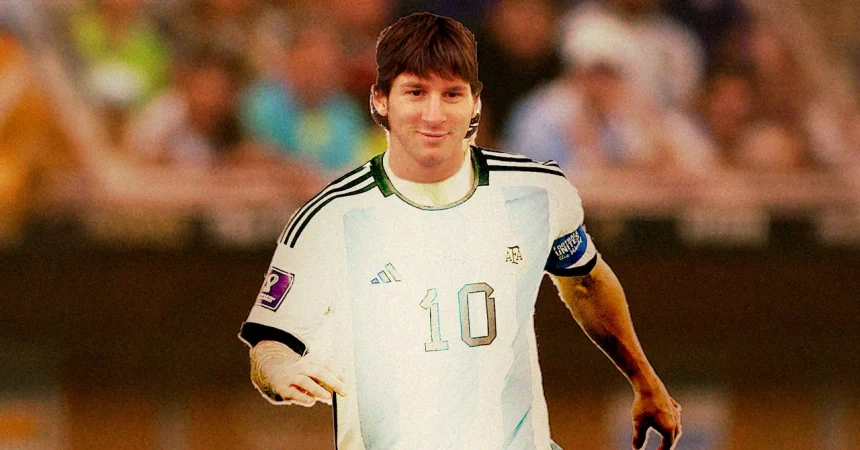
The narrative surrounding modern football has shifted dramatically. In 2018, when Argentina bowed out of the World Cup in Russia, the consensus was that we had watched Lionel Messi’s final swan song on the global stage. He was 31, considered “old” by the standards of the era, and observers were ready to write the eulogy for his international career. Yet, that prediction proved glaringly shortsighted. Far from disappearing, Messi returned to capture the ultimate prize in Qatar and continued to compete well into his late thirties. His journey has become the blueprint for a new generation of legends who are rewriting the timeline of what it means to be a professional athlete.
Witnessing this current World Cup feels like watching a sustained, global farewell tour, yet it is a testament to longevity rather than decline. Icons like Cristiano Ronaldo, Manuel Neuer, and the Mexican legend Guillermo Ochoa—who became the first goalkeeper to grace six World Cup squads—have pushed the boundaries of their physical capacity well into their forties. Even Neymar, at 34, leaves the international stage after a career that challenged our assumptions about when a player’s window truly closes. These aren’t just outliers; they represent a seismic shift in the sport where the “veteran” label is no longer a precursor to retirement, but a badge of seasoned excellence that spectators have grown to cherish.
Statistical evidence confirms that this isn’t merely a trick of the light; the elite echelons of football are trending distinctly older. A 2019 study tracking UEFA Champions League players noted a steady climb in the average age of participants, and the 2026 World Cup has shattered records by featuring eight players in their forties—surpassing the sum of all previous tournaments combined. Interestingly, this aging trend hasn’t come at the expense of youth. The rise of teenage phenoms like Lamine Yamal and Endrick creates a fascinating juxtaposition: the sport is simultaneously becoming faster at the bottom and wiser at the top. The youth provide the raw fire, while the veterans provide the strategic architecture.
This phenomenon forces us to rethink the biology of the athlete. While science confirms that explosive speed and high-intensity stamina naturally wane once a player exits their mid-twenties, modern football has developed a way to bypass these limits. Studies focused on various positions show that while wingers and forwards—those who rely on lightning-fast acceleration—must fight the hardest against Father Time, central defenders and midfielders often see their value rise with age. They trade the erratic bursts of youth for the cold, calculated precision of experience. As their physical edge dulls, their ability to read the geometry of the pitch and anticipate movement sharpens significantly.
Lionel Messi serves as the perfect case study for this evolution. FIFA tracking data from this tournament reveals that he spends over 60 percent of his time walking—not because he is lazy, but because he is hyper-efficient. He has stripped his game down to its most impactful elements, conserving his physical reserves for the exact moments where his intuition can dismantle a defense. It is a masterclass in risk mitigation and energy management. He no longer chases the game; he commands it. He demonstrates that in the modern era, a player’s brain can become just as much of a weapon as his legs, provided he is willing to adapt his rhythm to the changing tempo of his own body.
Ultimately, this shift is powered by a revolution in sports science that moves away from one-size-fits-all training. Today’s clubs manage players as individual biological puzzles, tailoring recovery programs, nutrition, and workloads to each person’s unique injury history and physical response. They are no longer managing machines; they are managing human longevity. This progress has turned age from a death sentence into a competitive advantage. In the end, what we are witnessing is the convergence of professional wisdom and advanced medicine, proving that as long as a player can master their own limits, they can keep their seat at the table of greatness long after the world expects them to leave.