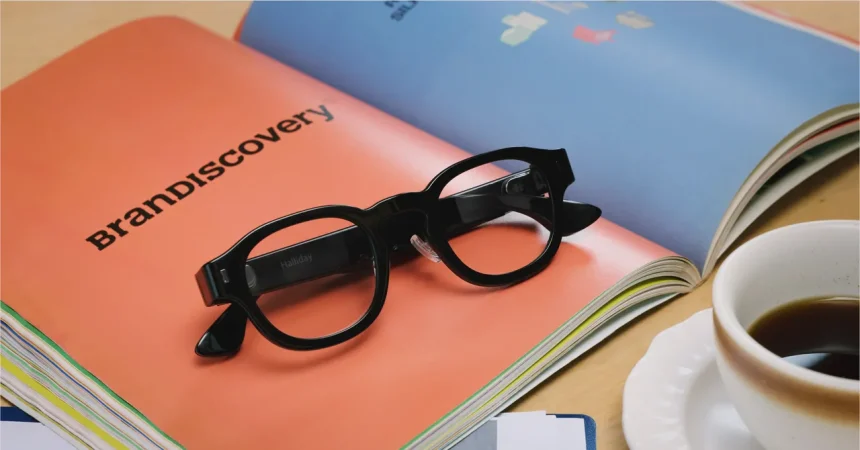
The landscape of wearable technology is undergoing a fascinating shift, moving away from flashy, optics-heavy gadgets toward more subtle, productivity-focused tools. The latest entrant into this space is the Halliday G2, a pair of smart glasses that intentionally ditches the camera in favor of a focus on audio intelligence. Rather than acting as a portable surveillance device or a social-media capturing tool, these glasses are designed to function like an invisible personal assistant at the office. They sit perched on your face, listening to the flow of conversation, identifying key takeaways from meetings, and distilling complex discussions into actionable summaries. It’s a concept that bridges the gap between high-tech convenience and old-fashioned office utility.
Visually, the Halliday G2 is designed to blend seamlessly into a professional wardrobe. By stripping away the lenses’ cameras, the company has created a profile that mimics standard high-end eyewear, allowing the user to navigate a boardroom or a coffee shop without the scrutiny often directed at “smart” gear. This design choice is clearly meant for the corporate climber rather than the content creator, aiming to fit into secure workspaces where cameras are often banned or frowned upon due to privacy policies. Slated for release in September 2026 with a price tag of $599, the device aims to be a premium, subscription-based service, offering users tiered AI assistance that ranges from a modest 120-minute free allowance to more robust, paid monthly plans.
However, the path to market isn’t without its tensions. The name “G2” itself has already become a point of contention and confusion, as another company, Even Realities, launched its own “G2” smart glasses just last year. Both devices share the same fundamental philosophy—a rejection of cameras to prioritize user privacy and professional appropriateness—and they even bear a striking aesthetic resemblance. While both manufacturers clearly intend for “G2” to denote “Generation 2” of their product lines rather than a brand-wide identifier, the overlap highlights a crowded emerging niche where many companies are rushing to capture the “camera-less” demographic simultaneously.
This trend is largely a reactionary movement against the current market leader, Meta’s Ray-Ban smart glasses. While Meta’s devices are technologically impressive, they have been plagued by a reputation problem, with some critics labeling them “pervert glasses” due to the ease with which users can secretly photograph or record unsuspecting people in public. This has created a ripple effect in the tech world; some competitors are trying to patch the issue with physical camera covers, while brands like Halliday and Even Realities are betting that the safest way to avoid the “creepy” factor is to remove the lens entirely. They are gambling that the market prefers a listening companion over an amateur filmmaker.
Despite the omission of cameras, the Halliday G2 creates its own set of ethical quandaries. The device acts as an “always-listening” wearable, and yet it lacks a physical indicator light—a standard safety feature meant to signal to others when recording is active. In a world where transparency is becoming increasingly vital for public trust, the lack of a visible warning light is a notable oversight. While other niche wearables, like the Bee Pioneer, have implemented such lights to alert bystanders, the Halliday G2 relies on the wearer to uphold the etiquette of disclosure.
Ultimately, Halliday acknowledges that the responsibility to inform others relies entirely on the user’s social awareness. By framing the device as a “professional tool,” the company emphasizes that their guidelines mirror the legal and social standards expected of any other recording device, such as a phone or a dictaphone. Whether or not users will consistently disclose their recording status to their colleagues remains to be seen. As these glasses normalize the act of recording our daily social interactions, the tech industry is essentially asking us to rely on a code of conduct rather than a technical safeguard—a fascinating, if slightly tenuous, shift in our collective privacy culture.