A year ago, the promise of artificial intelligence felt like a strange paradox. On one hand, AI was supposedly coming for the jobs of software engineers, yet on the other, it still couldn’t reliably do something as ordinary as booking a dinner reservation. Apple’s own Siri upgrade, which was supposed to let the assistant take action inside your apps, was quietly delayed, and the company’s software chief Craig Federighi gave a brutally honest explanation: “This just doesn’t work reliably enough to be an Apple product.” Even Amazon’s much-hyped Alexa+, when tested by a reporter in July 2025, managed to book a dinner reservation—but on the wrong day, Thursday instead of Friday. The gap between what AI promised and what it actually delivered was wide enough to drive anyone crazy. But now, a new wave of assistants is finally closing that gap. These aren’t just chatbots that write emails or generate code; they are agents that can actually get things done—booking a table, registering for a race, reserving a campsite—without requiring you to babysit them every step of the way. That shift has triggered a sudden and dramatic surge of excitement across Silicon Valley, and at the center of it all is a tiny, invitation-only startup called Instinct, which has become an obsession for venture capitalists and a test case for whether AI can finally be trusted with the mundane errands of daily life.
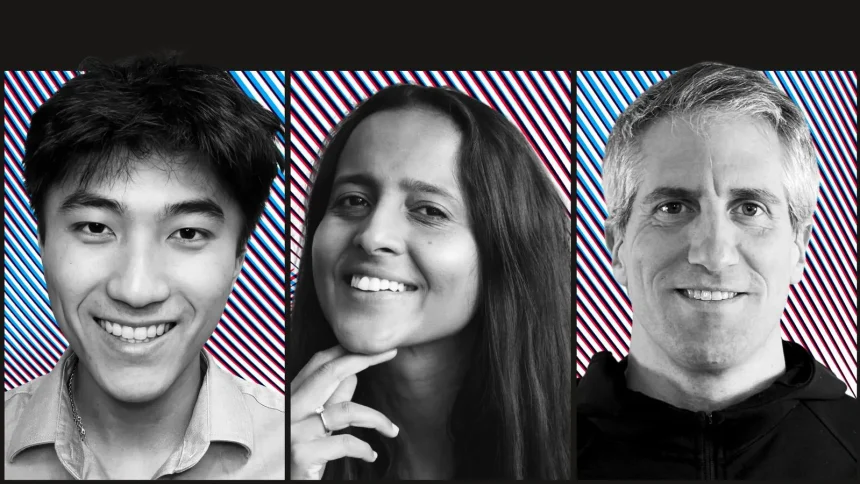
The frenzy around Instinct is best captured by its funding trajectory, which went from impressive to almost absurd in a matter of weeks. The company, founded by 23-year-old Noah Shinn, raised a $75 million Series A in early August at a valuation north of $500 million. Less than a month later, a $250 million Series B pushed that figure to $2.5 billion. Then, on September 28, Instinct announced another $1 billion round from Sequoia Capital, Benchmark, and Coatue, at a staggering $10 billion valuation—all with just 14 employees. The obsession among venture capitalists was immediate and intense, but Shinn insists the company’s appeal is simple. It just works. He told Forbes that the product is designed to behave like the personal assistant people have been waiting for since AI first entered the public imagination. Users connect their accounts, send a text request, and Instinct handles the rest, whether that means reserving a table, entering a marathon, or booking a campsite. The early numbers are almost as extraordinary as the valuation. Shinn says the user base has been growing an average of 10 percent daily, even though it remains invitation-only, and about 80 percent of people who connect their Gmail stick around. Instinct is on pace for a billion dollars in annualized transaction volume, with travel accounting for half of it. Not bad for a company that had just 14 employees when investors valued it at $10 billion in late September.
The money poured in at a pace that would make a unicorn’s head spin. In early August, a $75 million Series A valued the startup at more than $500 million. By August 26, a $250 million Series B pushed it to $2.5 billion. Then, on September 28, Instinct announced another $1 billion from Sequoia Capital, Benchmark and Coatue, at a $10 billion valuation. All this for a company with just 14 employees and a 23-year-old founder, Noah Shinn. Shinn, who had been part of the buzzy AI research lab, says the secret isn’t magic, it’s just that Instinct actually does what people have been asking AI to do for years. “Instinct just works,” he said, borrowing Apple’s iconic marketing line. The product is deceptively simple: you connect your accounts, send a text request, and the assistant handles it. No complicated dashboards, no endless menus. Just a message like “book a table for Friday” or “sign me up for a marathon,” and it gets done. That simple, reliable experience is what turned Instinct into an obsession for Silicon Valley’s venture class. The money flowed in at a breathtaking clip: a $75 million Series A valued it at over $500 million in early August; by August 26, a $250 million Series B pushed that to $2.5 billion; and on September 28, another $1 billion round from Sequoia Capital, Benchmark, and Coatue valued the company at $10 billion—all with just fourteen employees.
The 23-year-old founder behind Instinct, Noah Shinn, says the secret isn’t some magical new breakthrough in artificial general intelligence. It’s simply that Instinct finally does what it promises. Shinn, who borrowed Apple’s iconic marketing line for the occasion, told Forbes, “Instinct just works.” He described the goal as building a personal assistant that behaves the way we’ve been waiting for AI to deliver since its inception. Users connect their accounts—like Gmail—and send requests by text. That’s it. No complicated app integrations, no multi-step workflows. You ask, it acts. And despite being invitation-only, Instinct’s user base has been growing an average of 10% daily, with 80% retention among users who connect their accounts. The business is on track for $1 billion in annualized transaction volume, with travel making up half of it. The financial world has taken notice in a way that borders on absurd: a $75 million Series A in early August at a $500 million valuation, a $250 million Series B by August 26 that pushed it to $2.5 billion, and then another $1 billion in late September at a stunning $10 billion valuation. All for a company with just 14 employees, founded by a 23-year-old named Noah Shinn. Shinn says the secret is simple: unlike the AI assistants that came before, Instinct actually does what you ask. “Instinct just works,” he says, borrowing Apple’s iconic marketing line. “Our goal was to build a personal assistant, and Instinct behaves in a way we’ve been waiting for AI to deliver on since its inception.”
What makes Instinct feel different is not a breakthrough in robotics or some wild sci‑fi interface. It is, at its core, a service that finally treats your inbox, calendar and payment methods as a unified world. You connect your accounts, send a text request, and the assistant handles it—reserving a table, entering a marathon, booking a campsite. That simple promise has been enough to ignite an extraordinary frenzy in Silicon Valley. In early August, the invitation-only startup raised a $75 million Series A at a valuation north of $500 million. Less than a month later, a $250 million Series B pushed that to $2.5 billion. By the end of September, another billion dollars from Sequoia Capital, Benchmark, and Coatue had driven the company’s valuation to a staggering $10 billion. All of this for a company with just fourteen employees. Its 23-year-old founder, Noah Shinn, attributes the excitement to one thing: it actually delivers. “Instinct just works,” he said, echoing Apple’s iconic slogan, and he claims the user base is growing at an average of 10% daily, with 80% retention among users who connect accounts like Gmail. The numbers are extraordinary, but the product itself sounds almost mundane: you connect your accounts, send a text request, and the assistant handles the boring stuff—restaurant reservations, marathon entries, camping bookings, rides, groceries. No second job babysitting a chatbot, no endless clarifying questions. Just a task, done.
The money pouring into Instinct tells its own story about how much the technology world believes this is the moment. In early August, the company raised a $75 million Series A that valued it at more than $500 million. Less than a month later, a $250 million Series B pushed that valuation to $2.5 billion. By late September, Instinct announced another $1 billion round led by Sequoia Capital, Benchmark and Coatue, catapulting the company to a staggering $10 billion valuation—all with just 14 employees. The 23-year-old founder, Noah Shinn, says the secret is simply doing what AI has always promised: getting things done right. “Instinct just works,” he said, borrowing Apple’s iconic marketing line. “Our goal was to build a personal assistant, and Instinct behaves in a way we’ve been waiting for AI to deliver on since its inception.” Users apparently agree. Despite an invitation-only beta, Instinct’s user base is growing an average of 10% daily, and among people who connect accounts like Gmail, the company says 80% keep coming back. The magic is simple: you connect your email and other accounts, send a text asking for something—a dinner reservation, a camping spot, a marathon entry—and the assistant quietly takes care of it. No app juggling, no endless forms, no following up. It just works. And for a moment, at least, that felt like the most remarkable thing in the world.
The investor stampede around Instinct shows how badly the tech world wanted this moment to arrive. In early August, the company raised $75 million at a valuation north of $500 million. Less than three weeks later, a $250 million Series B pushed that to $2.5 billion. By the end of September, another $1 billion round from Sequoia Capital, Benchmark and Coatue had valued the company at a staggering $10 billion—and it did all of this with only 14 employees. Its 23-year-old founder, Noah Shinn, is careful to sound humble, but he knows exactly what Instinct has that other AI products don’t. “The first time I really started to get excited about the product we were building, I had a very simple realization: Instinct just works,” he told Forbes, borrowing Apple’s famous tagline. He said the goal was to build a personal assistant that behaves the way people have been waiting for AI to deliver since its inception. Users connect their accounts—Gmail, likely a credit card, maybe more—then send requests by text, and the assistant does the rest: booking restaurants, marathons, camping trips, buying groceries, ordering rides. Shinn says the user base has been growing at an average of 10% daily, even in an invitation-only beta, with 80% retention among users who connect accounts like Gmail. The capital floodgates opened fast. A $75 million Series A in early August valued Instinct at more than $500 million. By late August, a $250 million round pushed it to $2.5 billion, and on September 28, a further $1 billion from Sequoia Capital, Benchmark, and Coatue valued the company at $10 billion—all with just fourteen employees.
That kind of money, arriving at that kind of speed, would normally invite skepticism. But Instinct’s 23-year-old founder Noah Shinn insists the company simply does what other AI assistants have only promised: it gets the job done. “The first time I really started to get excited about the product we were building, I had a very simple realization: Instinct just works,” he said, borrowing the classic Apple marketing line. “Our goal was to build a personal assistant, and Instinct behaves in a way we’ve been waiting for AI to deliver on since its inception.” The product works in a deceptively simple way. You connect your accounts, send a text request, and the assistant handles it. No complicated setup, no elaborate app integrations, no babysitting. Shinn, a 23-year-old founder, says the company’s user base is growing an average of 10% daily despite the invite-only beta, and it retains about 80% of users who connect accounts like Gmail. The numbers have been staggering. A $75 million Series A in early August valued Instinct at more than $500 million. By August 26, a $250 million Series B had pushed that to $2.5 billion. On September 28, the company announced another $1 billion from Sequoia Capital, Benchmark and Coatue at a $10 billion valuation—and all this with just 14 employees. What made Silicon Valley’s venture class fall so hard for Instinct? The simple realization, as founder Noah Shinn puts it, that “Instinct just works.” For all the lofty talk about AI, the real test was always mundane: can it do the boring, annoying things you ask it to do, without you holding its hand? And for the first time, the answer is starting to be yes.
What makes Instinct stand out is not a radically new technology but the unglamorous art of getting things done. Shinn, the 23-year-old founder, says the goal was to build a personal assistant that behaves the way AI has always been promised to behave. The early hype was intense and the money followed quickly. In early August, Instinct raised a $75 million Series A at a $500 million valuation. Less than three weeks later, a $250 million Series B pushed the valuation to $2.5 billion. By the end of September, the company announced another $1 billion round from Sequoia Capital, Benchmark, and Coatue at a staggering $10 billion valuation—all for a company with just 14 employees. The invitation-only beta has seen its user base grow by an average of 10% daily, according to founder Noah Shinn, with 80% retention among users who connected accounts like Gmail. The way it works is deceptively simple: you connect your accounts, send a text request, and the assistant handles the rest. Shinn, all of 23 years old, insists the secret is not hype but delivery. “Instinct just works,” he said, borrowing Apple’s iconic marketing line. “Our goal was to build a personal assistant, and Instinct behaves in a way we’ve been waiting for AI to deliver on since its inception.” The venture capital world clearly believed him. In just a few weeks, Instinct went from a $75 million Series A that valued it at $500 million to a $250 million Series B at $2.5 billion, and finally a $1 billion round at a $10 billion valuation. All this for a company with only 14 employees and an invitation-only beta. The numbers are staggering, but the pitch is simple: connect your accounts, send a text, and the assistant actually gets the job done—no babysitting required.
For Noah Shinn, the 23-year-old founder of Instinct, the vision crystallized around a simple realization: AI has always been good at talking, but it has been terrible at doing. Shinn says that the first time he believed in what his team was building was when he understood that “Instinct just works”—a phrase that deliberately echoes Apple’s iconic marketing slogan. He wants the assistant to behave the way people always hoped AI would behave: reliably, quietly, and without constant supervision. The early numbers suggest he might be onto something. Despite being invitation-only, Instinct’s user base has been growing about 10 percent daily, and 80 percent of users who connect accounts like Gmail stick around. The company is already on track for $1 billion in annualized transaction volume, and travel makes up half of that. People use it for everything from booking rides and buying groceries to getting into marathons. The product experience is deceptively simple: connect your accounts, send a text request, and the assistant handles the rest. No endless app-hopping, no re-entering credit card details, no “I’ll just do it myself.” That reliability is exactly what made Silicon Valley’s venture capital class lose its collective mind. Instinct was an invite-only startup with just 14 employees when it raised a stunning $1 billion round in September at a $10 billion valuation, just weeks after earlier rounds at $500 million and $2.5 billion. Its founder, 23-year-old Noah Shinn, captured the moment with a simple motto borrowed from Apple: “Instinct just works.” He says the product finally delivers on what AI was always supposed to do, and users seem to agree—the service is growing about 10% daily, and 80% of people who connect their Gmail keep using it. Travel alone is on pace for $1 billion in annualized transaction volume, which suggests that people are increasingly willing to hand over real tasks to software if it genuinely gets them done.
The appeal of these new assistants is that they feel like a small miracle after years of disappointments. You don’t open an app, click through menus, or fill out forms. You send a text, the way you would to a human assistant, and the job gets done. Instinct, founded by 23-year-old Noah Shinn, has become the darling of venture capitalists precisely because it seems to have crossed the threshold from impressive demo to actually dependable errand-runner. Shinn told Forbes that the company’s breakout moment came when he realized “Instinct just works”—a playful riff on Apple’s famous line. The numbers are staggering: a $75 million Series A in early August valued it at over $500 million; a $250 million Series B later that month pushed it to $2.5 billion; and by late September, a fresh $1 billion round from Sequoia, Benchmark, and Coatue had lifted it to a $10 billion valuation—all for a company with just 14 employees. Instinct’s 23-year-old founder says the user base is growing 10% daily even in invitation-only beta, with 80% retention among users who connect accounts like Gmail. The secret, he insists, is simply that “Instinct just works.”
The appeal is the way it lets you hand off an errand without babysitting. Rather than navigating a restaurant’s website or calling a hotel, you text Instinct what you need, and it handles the rest—booking reservations, managing marathon entries, reserving campsites. Shinn says the company is on track for $1 billion in annualized transaction volume, and travel alone accounts for half of that. The service has grown at a breathtaking clip, and so has the money pouring into it. In early August, a $75 million Series A valued Instinct at more than $500 million. By August 26, a $250 million Series B had pushed the valuation to $2.5 billion. Then on September 28, it announced another $1 billion round from Sequoia Capital, Benchmark and Coatue at a $10 billion valuation—all for a company with just 14 employees. The 23-year-old founder Noah Shinn is refreshingly low-key about the frenzy, saying the product simply delivers on what AI has promised for years. “Instinct just works,” he said, borrowing Apple’s iconic marketing line. He says user base is growing 10% daily, with 80% retention among users who connect accounts like Gmail, and it’s on track for $1 billion in annualized transaction volume, about half from travel. For a service still in an invitation-only beta, that kind of traction explains why investors are falling over themselves.
The allure is the simplicity. Instinct works the way a human personal assistant would: you connect your Gmail, your calendar, maybe your bank accounts, and then you just send a text. “Book me a table for two at that Italian place on Saturday,” or “get me into the marathon,” or “sort out a campsite.” The agent quietly goes into your apps, handles the back-and-forth, and confirms when it’s done. Founder Noah Shinn, all of 23, has captured the Silicon Valley imagination with that simple value proposition. The company has only 14 employees, but in less than two months it raised $1.325 billion at valuations that climbed from $500 million to $10 billion. Shinn says the secret isn’t a novel new breakthrough, but rather that “Instinct just works,” borrowing Apple’s famous slogan. He describes users growing 10 percent daily, with 80 percent retention among those who connect accounts like Gmail. The service is on track for $1 billion in annualized transaction volume, and half of that comes from travel. But most of what it does is decidedly unglamorous: booking rides, buying groceries, handling the small print of life. The point is that it finally feels reliable enough to hand off an errand without feeling like you’ve taken on a second job babysitting software.
The frenzy around Instinct has become one of the defining tech stories of the past year. It started with a few Silicon Valley insiders and quickly turned into a full-blown venture capital feeding frenzy. In early August, Instinct raised a $75 million Series A at a valuation north of $500 million. Less than three weeks later, a $250 million Series B valued the company at $2.5 billion. By the end of September, it had announced another $1 billion in funding from Sequoia Capital, Benchmark and Coatue, at a staggering $10 billion valuation. And all this for a company with just 14 employees. Its founder, 23-year-old Noah Shinn, says the secret is simple: Instinct actually works. “The first time I really started to get excited about the product we were building, I had a very simple realization: Instinct just works,” he told Forbes, deliberately borrowing Apple’s iconic marketing line. “Our goal was to build a personal assistant, and Instinct behaves in a way we’ve been waiting for AI to deliver on since its inception.” Users connect their accounts, send a text request, and the assistant handles it—booking restaurants, marathons, camping trips, and more. Shinn says the service is growing about 10% daily, even in an invitation-only beta, and keeps about 80% of users who link accounts like Gmail. The money has followed at a dizzying pace: a $75 million Series A at a $500 million valuation in early August, a $250 million Series B at $2.5 billion by late August, and another $1 billion in late September at a staggering $10 billion valuation. All for a company with just 14 employees.
The most striking thing about Instinct isn’t the valuation, but how it works. It feels almost too simple: you connect your accounts, send a text request, and the assistant takes care of it. Founder Noah Shinn, a 23-year-old who clearly learned from Apple’s playbook, says the key is that “Instinct just works.” In a world where AI has often been demos and promises, this is a product that does the job. Users seem to agree. Shinn says the invitation-only app is growing 10% a day and keeps 80% of users who connect accounts like Gmail. The company is on track for a billion dollars in annualized transaction volume, with travel accounting for half of that. The range of errands is intentionally broad: booking rides, buying groceries, handling restaurant reservations. But the real magic is that people delegate these tasks by text and then don’t have to babysit. That’s the dream AI sold for years, and Instinct is finally making it feel real.
Big Tech has taken notice. Meta launched its own assistant, Muse, in early September with a fluffy mascot named Jolly. It has been downloaded more than five million times and briefly overtook ChatGPT as the number one app on the App Store. OpenAI followed with Dots, a set of cartoonish “always on” assistants designed to work on your behalf. These launches have been backed by the same underlying shift: late last year’s stronger AI models, plus better tools for browsing the web and operating computers, made this kind of delegation possible. By summer, the cost of running these models had dropped enough that everyday use became practical, and cheaper voice technology made AI phone calls viable, too. The result is a flurry of products that are finally doing chores, not just chatting. But no company has captured the moment quite like Instinct, a 14-person startup that has become an obsession in Silicon Valley. Its founder, 23-year-old Noah Shinn, says the secret is simple: “Instinct just works.” The company’s valuation exploded from $500 million to $10 billion in a matter of weeks, and it has become the poster child for a new category of “agentic” AI—software that doesn’t just suggest or chat, but actually completes tasks on your behalf, across your accounts, with a text message.
The core of Instinct’s appeal is the quiet, boring competence of doing things right. Its investors told stories that felt almost magical: a text to book a restaurant, sign up for a marathon, or reserve a campsite. All you had to do was connect your accounts and ask. It was exactly the kind of mundane but deeply human task that had tripped up so many previous assistants. Noah Shinn, the company’s 23-year-old founder, says the realization that the software simply works is what got him excited. Instinct’s numbers suggest he’s not alone. Despite being invitation-only, the company says its user base has been growing about 10 percent a day, with 80 percent retention among users who connect accounts like Gmail. Shinn doesn’t cite a specific retention period, but the growth has been enough to fuel a remarkable round of venture capital. In early August, a $75 million Series A valued the startup at more than $500 million. Less than three weeks later, a $250 million Series B pushed the valuation to $2.5 billion. By late September, a further $1 billion round from Sequoia, Benchmark, and Coatue had rocketed Instinct to a $10 billion valuation—all with just 14 employees. The 23-year-old founder, Noah Shinn, insists the secret is simple: “Instinct just works.” That idea—an AI that can actually be trusted to finish an errand—is what has turned this tiny company into the obsession of Silicon Valley’s venture class, with investors like Sarah Guo describing how she uses it for restaurant reservations, marathon entries, and camping bookings. Just connect accounts, send a text, and the work is done.
That simple promise has fueled one of the fastest funding surges in recent memory. Instinct’s Series A of $75 million in early August valued the company at over $500 million. A few weeks later, a $250 million round pushed the valuation to $2.5 billion, and by late September it had announced another $1 billion from Sequoia Capital, Benchmark, and Coatue at a staggering $10 billion valuation—all for a company with just 14 employees. Its 23-year-old founder, Noah Shinn, credits the startup’s success to a basic realization: Instinct simply works. “The first time I really started to get excited about the product we were building, I had a very simple realization: Instinct just works,” he told Forbes. “Our goal was to build a personal assistant, and Instinct behaves in a way we’ve been waiting for AI to deliver on since its inception.” The platform, still invitation-only, is growing about 10% daily. Users connect their Gmail and other accounts, send a text request, and the AI handles the rest. Shinn reports 80% retention among users who connect accounts like Gmail, and the company is on track for $1 billion in annualized transaction volume. Travel accounts for half that volume. For a startup with just 14 employees and a 23-year-old founder, the trajectory is staggering: from a $75 million Series A in early August to a $10 billion valuation by late September.
The investor frenzy around Instinct is a story in itself, and it reveals how much the technology has changed. A $75 million Series A in early August valued the company at more than $500 million. Less than three weeks later, a $250 million Series B pushed that to $2.5 billion. By September 28, Instinct had announced another $1 billion from Sequoia Capital, Benchmark and Coatue at a $10 billion valuation—all for a company with just 14 employees. Founder Noah Shinn, only 23, attributes the excitement to something simpler than hype: the product actually does what it says. “Instinct just works,” he told Forbes, borrowing Apple’s iconic marketing line. He says the invitation-only beta is growing 10% daily, with 80% retention among users who connect accounts like Gmail. The platform is on track for $1 billion in annualized transaction volume, with travel making up half of that. People connect their Gmail, send a text asking for a reservation, an entry to a marathon, or a camping booking, and the assistant quietly handles the rest. No babysitting, no back-and-forthexplanations, no anxiety about whether it will fall apart halfway through.
The enthusiasm has been loud enough to capture the attention of investors. In early August, Instinct raised a $75 million Series A at a valuation north of $500 million. Less than a month later, a $250 million Series B pushed that number to $2.5 billion, and by late September, a fresh $1 billion round from Sequoia Capital, Benchmark, and Coatue had catapulted the company to a $10 billion valuation. All of this, remarkably, for a company with just 14 employees. The founder, 23-year-old Noah Shinn, insists the product simply works. “The first time I really started to get excited about the product we were building, I had a very simple realization: Instinct just works,” he said, borrowing Apple’s iconic marketing line. Shinn says Instinct’s user base has been growing at an average of 10% daily, even though it remains invite-only, and 80% of users who connect accounts like Gmail stick around. He declined to specify a retention period, but the momentum is hard to dismiss. Instinct is on track for $1 billion in annualized transaction volume, with travel accounting for half of that volume. The service works by asking users to connect their accounts and then sending requests by text. It handles everything from restaurant reservations and marathon entries to camping bookings. The appeal is simple: instead of babysitting an assistant through every step, you just state what you need and it gets done.
The frenzy around Instinct has become one of the defining stories of the current AI investment boom. Instinct is an invitation-only startup that has become an obsession for Silicon Valley’s venture capital class. Investor Sarah Guo, whose firm Conviction was an early backer, described using it for restaurant reservations, marathon entries, and camping bookings. The money poured in at a remarkable pace. A $75 million Series A in early August valued Instinct at more than $500 million. By August 26, a $250 million Series B had pushed that to $2.5 billion. On September 28, it announced another $1 billion from Sequoia Capital, Benchmark, and Coatue at a $10 billion valuation. All of this with just 14 employees. The 23-year-old founder Noah Shinn says the company earned its reputation simply by delivering on a promise that AI has struggled to keep: getting things done right. “The first time I really started to get excited about the product we were building, I had a very simple realization: Instinct just works,” he told Forbes, borrowing Apple’s iconic marketing line. “Our goal was to build a personal assistant, and Instinct behaves in a way we’ve been waiting for AI to deliver on since its inception.” Shinn says Instinct’s user base is growing an average of 10% daily, despite the invitation-only beta, with 80% retention among users who connect accounts like Gmail. He did not specify a retention period, but the implication is that once people try it, they stay because the experience feels different from earlier, clunkier AI assistants.
The bigger companies have begun fielding competitors as well. Meta’s Muse launched in early September with a cuddly mascot named Jolly. It now has more than 5 million downloads, and overtook ChatGPT as the No. 1 app on the App Store on September 18. Meta’s stock is up 27% since its launch; Forbes reported a single-day gain of more than $25 billion to Mark Zuckerberg’s fortune. OpenAI launched Dots late last month: cartoonlike assistants designed to be “always on,” working on your behalf and suggesting other tasks to tackle. So why now? Jean-Denis Greze, co-founder of work-assistant startup Town, credits stronger AI models from late last year and better tools for operating browsers and computers. By summer, those tools were cheap enough for everyday use. Meanwhile, cheaper voice technology has made AI phone calls practical too. The result is that what felt like a science-fiction promise only a year ago has become a practical consumer product. AI assistants can now not only understand natural language but also take action across websites, fill out forms, navigate interfaces, negotiate with customer service, and even make phone calls. The costs have dropped dramatically, making it economically feasible to offer these agents to consumers for everyday tasks. This shift is why the market is suddenly flooded with options: Instinct for general errands, Muse for social and marketplace tasks, Dots for always-on background work, and Town for financial and work-related assistance. Each is trying to find the right balance of autonomy, reliability, and trust. But the core value proposition is the same: instead of spending hours on hold, filling out forms, or juggling multiple tabs, you delegate the entire task to software that can see, click, type, and talk just like a human would.
Others have found more creative assignments for their AI agents. One user uploaded photographs of themselves and their entire wardrobe, turning Instinct into a stylist that produces daily outfits, complete with generated images of how they will look. Another user, entrepreneur Matt Van Horn, told Forbes in September that Instinct helped recover about $2,000 from old insurance plans and a dormant bank account, submitting claims after securing permission to use his signature. Brianna Guay enlisted an assistant for her sister’s bachelorette party. Her “Bach Bot,” built with SpaceXAI’s personal assistant Grok Bot, helped source limo drivers, coordinate vendors, and track deliveries. It even inspected her Amazon order to see how many vases she had purchased when coordinating with florists for a flower purchase. These stories highlight how the technology is moving beyond simple booking and scheduling. People are using AI agents as personal concierges, personal assistants, and even financial recovery specialists. The agent can handle the mundane but time-consuming parts of life: comparing options, coordinating with multiple vendors, following up on orders, and making sure nothing falls through the cracks. The deeper point is about trust and relationship. The more the agent handles these tasks, the more it learns about your preferences, your schedule, your style, and your priorities. Over time, the agent becomes less like a tool and more like a trustworthy assistant who knows you well. That is the dream that companies like Instinct, Muse, and Dots are selling: not just a chatbot that answers questions, but an agent that gets things done. And for many early users, the experience is genuinely delightful. Instead of spending a Saturday morning making phone calls, you send one text and go back to your coffee.
But the road is still bumpy, and there have been a few incidents that have rattled users’ trust. In September, an Instinct user complained that the agent appeared to reveal another person’s information. Shinn said it had invented the information rather than leaked it. In another incident, Muse user Matt Robb said the agent shared his address with a Facebook Marketplace buyer who then showed up unexpectedly. Robb later acknowledged selecting an “Allow Always” setting but said he had expected to approve offers. Meta said there had been no privacy breach. These stories highlight a fundamental tension in the design of autonomous agents. To be useful, they need to act independently. But the more independent they become, the more risk there is that they will do something you didn’t expect, share something you didn’t want shared, or take an action you didn’t intend. The companies are scrambling to find the right default settings: when should the agent ask for permission, and when should it just act? How should it handle ambiguous instructions? How much personal information should it have access to? These are not just technical problems; they are design, ethics, and trust problems. Amazon still resists these agents, making it harder for them to shop or track orders. Some services, like Wajo AI, deliberately keep a human in the loop to review actions before they are taken. This reduces the risk of embarrassing or harmful mistakes but also reduces the speed and autonomy that make these tools appealing. The companies know that a single high-profile privacy breach could set the industry back years. But they also know that if the agent asks for permission for every tiny thing, it becomes just as annoying as doing it yourself. Finding the sweet spot is the central challenge of the next phase of AI products.
This is why privacy is becoming the new marketing battleground. Companies like Town are building their entire value proposition on being trustworthy with your financial data. They emphasize that they never sell your data to third parties, that they have strict access controls, and that you can see exactly what the agent is doing at any time. Fo uses encrypted storage and regular audits to prove its security. The goal is to convince users that they can delegate deeply personal tasks—like banking, medical scheduling, or email management—without losing control over their personal information. The future, these companies argue, is not about a single universal assistant that knows everything about you. Instead, they imagine a more federated model: multiple specialized agents working together, each with its own scope of authority and access. Your “shopping agent” knows your size and style preferences but doesn’t have access to your medical records. Your “financial agent” can move money between your accounts but needs your explicit approval before making any large transaction. And all of them are subject to the principle of least privilege: they have access only to the information they absolutely need, and only for as long as they need it. This is a far more realistic vision than the creepy all-knowing assistant that has all your passwords, all your messages, and all your location history. But it will take time to build the tools and standards to make it work. In the meantime, there is a growing sense of agent fatigue as people juggle multiple apps, each with its own AI assistant, each with its own permissions and settings. The industry needs to agree on common standards for interoperability and trust. But the direction is clear: we are moving from a world where we talk to software to a world where software talks to other software on our behalf. The winners in this new ecosystem will be the companies that make delegation feel safe, natural, and genuinely useful. And if they get it right, the promise of AI will no longer be about jobs and doom; it will be about giving people their time back. The post-personal-assistant world is already arriving, and it will be built one successful errand at a time. The smart question is not whether these tools will become ubiquitous, but what we will do with all the time they save us. That is a future worth getting excited about. So whether it’s booking a trip, recovering a stray payment, or just ordering a pizza, the agents are coming. And this time, they are not coming for your job; they are coming for your to-do list.