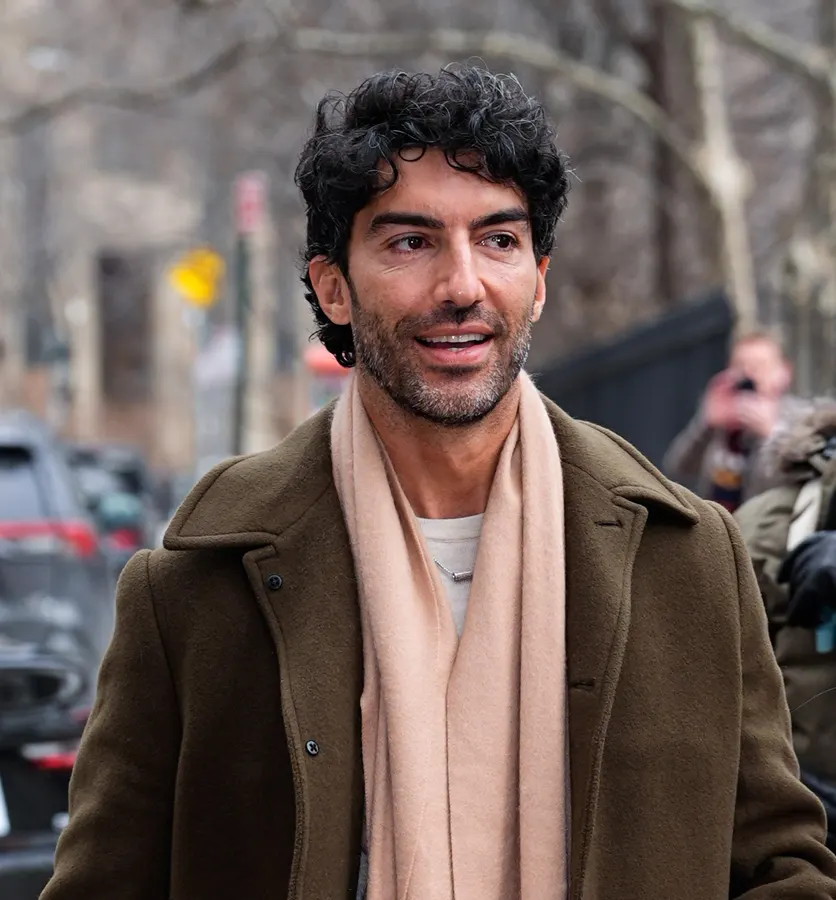
The legal world is currently buzzing over a massive bill landing on the desk of actor-director Justin Baldoni, and it’s fair to say his camp is far from amused. Following the conclusion of the protracted and public legal battle between Baldoni and his It Ends With Us co-star, Blake Lively, the courtroom drama has shifted from the merits of their claims to the astronomical price tag of defending them. Lively’s legal team has petitioned the court for roughly $8 million—split between legal fees and litigation expenses—a figure that has prompted Baldoni’s lawyers to fire back with extreme skepticism. In recent court filings, they characterized the demand as “stunning” and “extraordinary,” formally requesting that the judge either slash the amount significantly or toss it out entirely.
At the heart of the dispute is the sheer volume of work Lively’s attorneys claim to have performed. Baldoni’s defense team points to a staggering 7,000 billable hours submitted by Lively’s side. They argue that this number is not only “over-inclusive” but mathematically nonsensical when compared to standard industry practices for defamation cases. According to their analysis, the hours billed are roughly twenty times higher than what courts typically deem reasonable for similar litigation. The tension here lies in the definition of “necessary work.” Baldoni’s lawyers contend that Lively is trying to offload the costs of every single maneuver made during the trial onto him, including efforts for claims that were ultimately dismissed or abandoned, which they argue he should not be forced to subsidize.
To put the scale of this request into perspective, Baldoni’s team compared it to a recent high-profile case involving the New York Times. In that instance, the publication sought roughly $181,000 in legal fees after a judge dismissed a suit Baldoni had filed against them regarding his press coverage. The contrast between that $181,000 figure and Lively’s $8 million request is, according to Baldoni’s counsel, a clear indicator that the fees are being used as a punitive tool rather than a reflection of legitimate legal labor. They hold the position that if the court does approve any reimbursement, it needs to be grounded in reality, not in what they perceive as an attempt to financially overwhelm the actor-director.
The discord extends well beyond spreadsheets and billing hours, as the emotional toll of the conflict has recently spilled into the public eye. Just last week, for the first time since the ordeal began, Justin Baldoni broke his silence. In a video posted alongside his wife, Emily, the couple spoke openly about the “traumatic” nature of the proceedings. Emily Baldoni voiced deep frustration, characterizing the legal fight as an “injustice” that was unfairly framed as a defense of women’s rights. From their perspective, the process has been a harrowing manipulation of the legal system, leaving them to grapple with the fallout of a narrative that, in their view, has been intentionally distorted.
The origins of this financial clash stem from a ruling last month where a federal judge allowed Lively’s request for fees to proceed, citing California laws intended to protect survivors of sexual abuse from retaliatory defamation suits. However, the judge notably rejected Lively’s bid for additional punitive damages, citing strict federal procedural rules. This ruling followed a settlement that left both parties claiming a “victory.” Lively’s team described the resolution as a triumph in their fight against an alleged attempt to “silence and intimidate,” while Baldoni’s camp maintained that he was “ecstatic” with the outcome, despite the confidential nature of the settlement terms.
Ultimately, this latest filing represents the final messy chapter of a production that was supposed to be a career-defining project for both stars. Instead, It Ends With Us became the stage for a bitter, multi-front legal war involving harassment allegations, smear campaign accusations, and now, a debate over what constitutes “reasonable” legal costs in Hollywood. As the court prepares to rule on whether the $8 million bill is legitimate or a gross overreach, the public is left to watch a quintessential piece of industry theater where the behind-the-scenes drama has far eclipsed the film everyone originally set out to make. The court’s decision will likely serve as a final punctuation mark on a case that has tested both the financial limits and the reputations of its lead players.